A new crab is settling in the Mediterranean: early evidence of establishment of a Lessepsian species in the Ionian Sea

New research reveals the rapid expansion of the portunid crab, Gonioinfradens giardi, highlighting ongoing biological changes in the Mediterranean Sea.

Guest blog post by Francesco Tiralongo

The Mediterranean Sea is undergoing rapid ecological transformations driven by climate change and human-mediated species introductions. Among the most striking processes is the increasing arrival and establishment of non-indigenous species entering through the Suez Canal, a phenomenon known as Lessepsian migration.

A new study published in Acta Ichthyologica et Piscatoria documents the rapid expansion of the Indo-Pacific swimming crab Gonioinfradens giardi in the Ionian Sea, off the coast of Italy. Following the first confirmed Italian record – a single specimen collected at Portopalo di Capo Passero in November 2025 – researchers documented 11 additional individuals between November 2025 and January 2026, providing early evidence that the species has moved beyond sporadic occurrence and may already be establishing stable populations in the region.

@pensoft.publishers

🦀A new study highlights the rapid expansion and early establishment of the non-indigenous Indo-Pacific swimming crab, Gonioinfradens giardi, along the Ionian coast of Sicily in the Mediterranean Sea The research was published in the open-access journal Acta Ichthyologica et Piscatoria. 👉Full article here: Tiralongo F, Leotta P, Accolla H, Tibullo D, Felici A (2026) Rapid expansion of a Lessepsian migrant crab, Gonioinfradens giardi (Crustacea, Brachyura, Portunidae), in the Ionian Sea: New records and early evidence of establishment. Acta Ichthyologica et Piscatoria 56: 145-149. https://doi.org/10.3897/aiep.56.185183 #invasivespecies #conservation #italy

♬ Aesthetic – BoominBeats

Our findings suggest that Gonioinfradens giardi is transitioning from occasional records to a more consistent presence in the central Mediterranean. This raises important questions about its potential ecological role and interactions with native species.

explains Francesco Tiralongo, lead author of the study

To reconstruct the current distribution of the species, the newly collected data integrates recent records with field observations obtained through a collaboration with local fishers utilizing standard artisanal fishing gears.

The haul of a dozen individuals within a two-month period indicates that environmental conditions are becoming more favorable for its persistence. Furthermore, these captures mark the westernmost presence of the species in the Mediterranean Sea to date.

Distribution map of Gonioinfradens giardi; new records along the Ionian coast of Sicily are shown in yellow (circles), while the red circle indicates the first published record. Credit to Tiralongo et al., 2026

The rapid emergence of this species highlights how dynamic and responsive Mediterranean ecosystems are to ongoing environmental changes. Documenting these early phases of establishment is crucial for understanding future ecological scenarios and supporting informed management decisions.

adds Alberto Felici, co-author of the study

The establishment of non-indigenous crustaceans may have cascading effects on local ecosystems, including competition with native species and potential implications for fisheries. While the long-term impacts of G. giardi remain uncertain, its rapid spread reflects broader changes already underway in Mediterranean marine biodiversity.

Gonioinfradens giardi, credit to Francesco Tiralongo.

This case adds to a growing list of species reshaping Mediterranean ecosystems. Continuous monitoring, including contributions from fishers and citizen scientists, will be essential to track these dynamics and support adaptive management strategies.

Tiralongo adds
A YouTube video by the study’s lead author, Francesco Tiralongo, in which he introduces Gonioinfradens giardi – a species relatively unknown in the Mediterranean – explains its origin, describes how it entered the ecosystem, and outlines its current distribution in Italian waters as well as its potential impacts on ecosystems and fisheries.

The study contributes to the expanding body of evidence that the Mediterranean Sea is becoming a hotspot for biological invasions, emphasizing the need for coordinated research and monitoring efforts at regional and basin-wide scales.

Original source:

Tiralongo F, Leotta P, Accolla H, Tibullo D, Felici A (2026) Rapid expansion of a Lessepsian migrant crab, Gonioinfradens giardi (Crustacea, Brachyura, Portunidae), in the Ionian Sea: New records and early evidence of establishment. Acta Ichthyologica et Piscatoria 56: 145-149. https://doi.org/10.3897/aiep.56.185183

How are invasive fish entering the Mediterranean Sea?

A new study explores how shipping, currents and habitat factors carry alien species through the Suez Canal.

In 1869, the construction of the Suez Canal was completed, connecting two marine regions previously separated for 16 million years and initiating major ecological changes that continue to this day.

Now more than 100 fish species native to the Indo-West Pacific Ocean – including the ‘devil firefish’ – have crossed to become established in the Mediterranean Sea.

But how do they make the journey?

Researchers from the American University of Beirut and the American University in Dubai analysed how invasive fish from the Indo-Pacific region colonise the Mediterranean. Combining ocean current modelling, shipping data, and environmental analysis, they examined records of 136 fish species to map the natural and human-driven factors that enable these invaders to thrive.

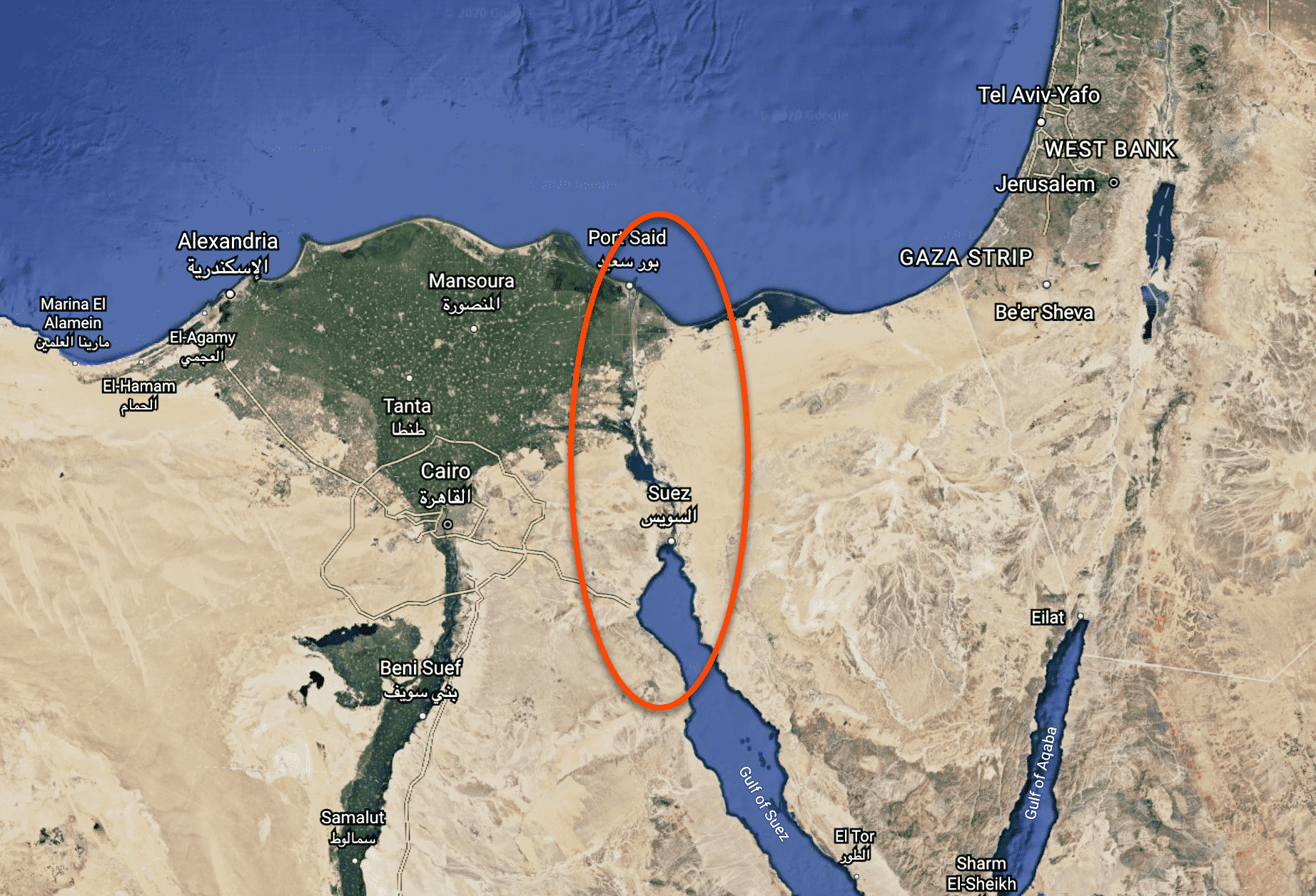
Location of the Suez Canal.

Published in NeoBiota, the findings indicate that the primary drivers for the initial entry of invasive fish into the Mediterranean are proximity to the Suez Canal and sea currents transporting fish larvae into nearby eastern Mediterranean regions. However, while sea currents play an important role early in the invasion stage, they cannot explain how species cross into the western Mediterranean.

Indeed, cargo shipping has become increasingly influential, with focal points like Malta acting as key stepping stones for the spread of non-native fish, especially to western Mediterranean areas. Over time, the odds of a region being colonised via shipping have grown significantly.

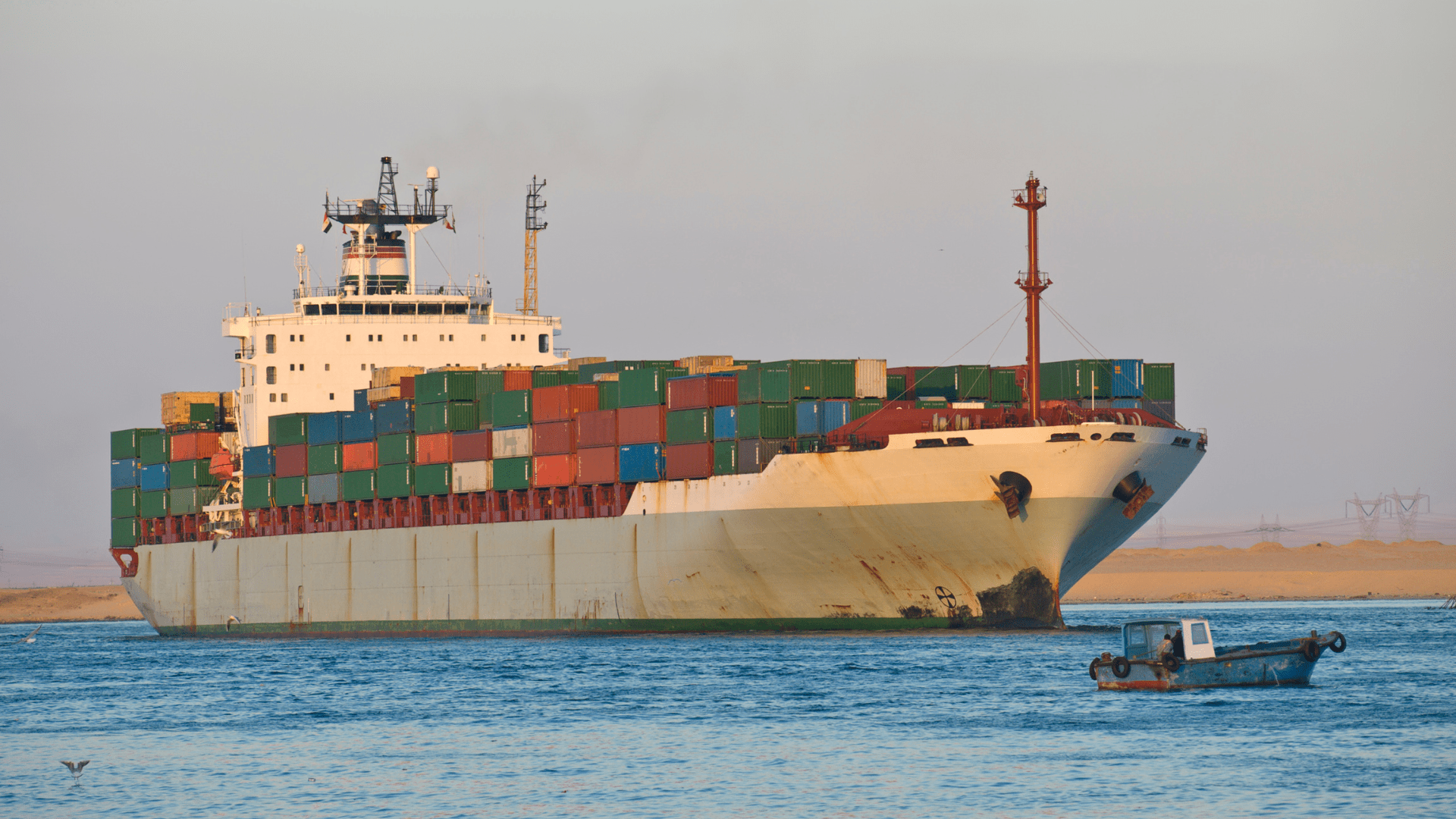
A ship passing through the Suez Canal in Egypt.

Additionally, local conditions such as high salinity in Mediterranean waters boost the likelihood of invasive species establishing permanent populations, as these fish tend to be pre-adapted to saline environments from their native habitats.

“Scientists have long suspected that the anti-clockwise spread of invasive species in the eastern Mediterranean is due to currents and the high number of first records in Malta is due to shipping.

“Our use of sea current simulations and shipping data could confirm these conjectures and provide quantitative estimates of the effects.”

Heinrich zu Dohna, lead author of the paper.

Logistic regression models indicate that  in some regions shipping leads to a sixfold increase of the odds of receiving invasive species,  indicating targeted management and monitoring is needed at major shipping hubs.

Better data on ballast water release and ship movements in the Mediterranean are needed, as cargo shipping’s impact on biological invasions is now clear. Malta’s role as a major shipping hub makes it a particular hotspot for secondary introductions and warrants special attention by policymakers and marine managers.

Original source

zu Dohna H, Lakkis I, Bariche M (2025) The spread of Indo-Pacific origin fish species in the Mediterranean Sea is influenced by sea currents, habitat factors, and increasingly by shipping. NeoBiota 101: 73-89. https://doi.org/10.3897/neobiota.101.157775

Follow NeoBiota on Bluesky and Facebook.