Tiny habitant from Abrolhos bank (Brazil) sheds light on tropical Atlantic biogeography

For the first time, the bivalve mollusc Guyanella clenchi has been reported from Abrolhos Bank, Brazil.

For the first time, the bivalve mollusc Guyanella clenchi has been reported from Abrolhos Bank, Brazil. This almost unknown bivalve had previously been reported solely from the Caribbean region. Apart from being the southernmost record for the species, its presence also helps the experts to determine the way the marine fauna from the Caribbean interacts with its South American relatives.

The bivalve, which is a minute mollusc of only a few millimetres, had been known from Suriname, Guadeloupe, Colombia and French Guiana for nearly half a century. However, it is almost absent from the bibliographical registers and zoological collections.

Then, unexpectedly, during recent cruises to Abrolhos Bank (Bahia, Brazil), carried out as part of the Pro-Abrolhos project at Instituto Oceanografico da Universidade de Sao Paulo (IO-USP), enough specimens were retrieved to document the mysterious species from the Brazilian site.

The resulting study is published in the open-access journal Check List by Dr Barbara Louise Valentas-Romera, Museu de Zoologia da Universidade de Sao Paulo (MZSP), together with MSc Flavia Maria Pereira Costa and Dr Ana Maria Setubal Pires-Vanin, both affiliated to Instituto Oceanografico da Universidade de Sao Paulo (IO-USP).

According to the scientists, the discovery is very important for the understanding of the interaction between the mollusc faunas from the Caribbean and Southern Atlantic regions. While a mixture of these had long been known at both localities, serving as evidence that many species are indeed capable of crossing the geographical barriers between the two oceanic areas, it seems that no one had managed to answer how exactly this is happening. Now, the discovery of the tiny species shows that even small-sized molluscs have the ability to disperse so widely.

Additionally, the discovery of fresh specimens, complete with the body inside the shell, brings to light new information about the anatomy of the species itself, since the existing knowledge had only been derived from dry shells. Now, the secretive bivalve is to finally undergo molecular analyses.

The researchers behind the study explain:

“Despite its small size, the new occurrence of Guyanella clenchi brings new key data needed to understand the biogeography of the Caribbean and Southern Atlantic regions and improve our knowledge of the molluscs inhabiting the Brazilian coast, specifically the Abrolhos Bank, which is an important South Atlantic biodiversity hotspot.”

Abrolhos Bank is the largest and most species-rich coral reef in the Southern Atlantic. It is located in the Abrolhos Archipelago area and is part of the Abrolhos Marine National Park. Its most notable peculiarity is the giant coral structures shaped like mushrooms, locally known as “Chapeiroes”. A “chapeirao” can reach up to 25 metres in height and 50 metres in diameter. The region is considered the most biodiverse spot in the Southern Atlantic Ocean, providing home to several species that occur nowhere else.

Abrolhos Bank region (Bahia, Brazil).
Image by Dr Bárbara Louise Valentas-Romera.

###

Original source:

Valentas-Romera BL, Costa FMP, Pires-Vanin AMS (2019) Range extension of Guyanella clenchi (Altena, 1968) (Bivalvia, Lucinidae) with new records from Abrolhos Bank, Brazil. Check List15(4): 549-554. https://doi.org/10.15560/15.4.549

Wakanda Forever! Scientific divers describe new purple species of “twilight zone” fish from Africa

Named for Black Panther’s mythical nation of Wakanda, a dazzling new “Vibranium” Fairy Wrasse enchants with purple scales and a preference for deep, little-known mesophotic reefs up to 260 feet below the surface

Africa has new purple-clad warriors more than 200 feet beneath the ocean’s surface. Deep-diving scientists from the California Academy of Sciences’ Hope for Reefs initiative and the University of Sydney spotted dazzling fairy wrasses—previously unknown to science—in the dimly lit mesophotic coral reefs of eastern Zanzibar, off the coast of Tanzania. 

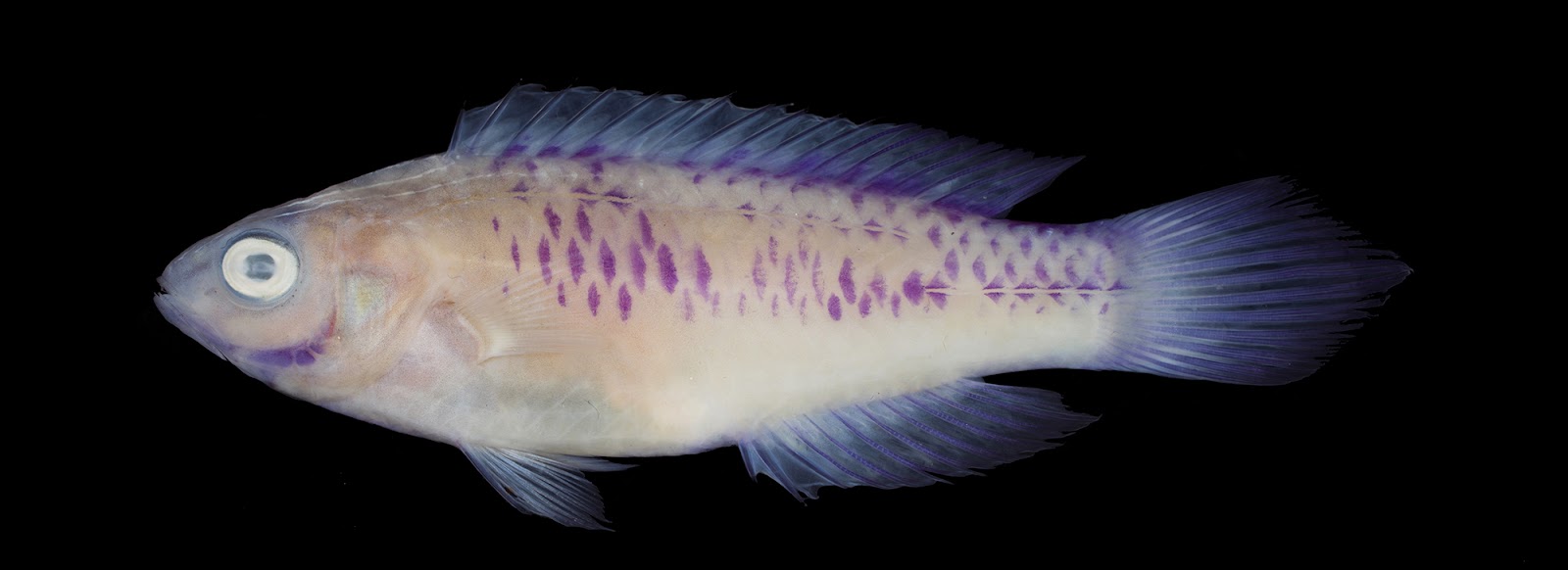
Preserved specimen of Vibranium fairy wrasse (Cirrhilabrus wakanda) retains its striking coloration.
Photo by Jon Fong © 2018 California Academy of Sciences.

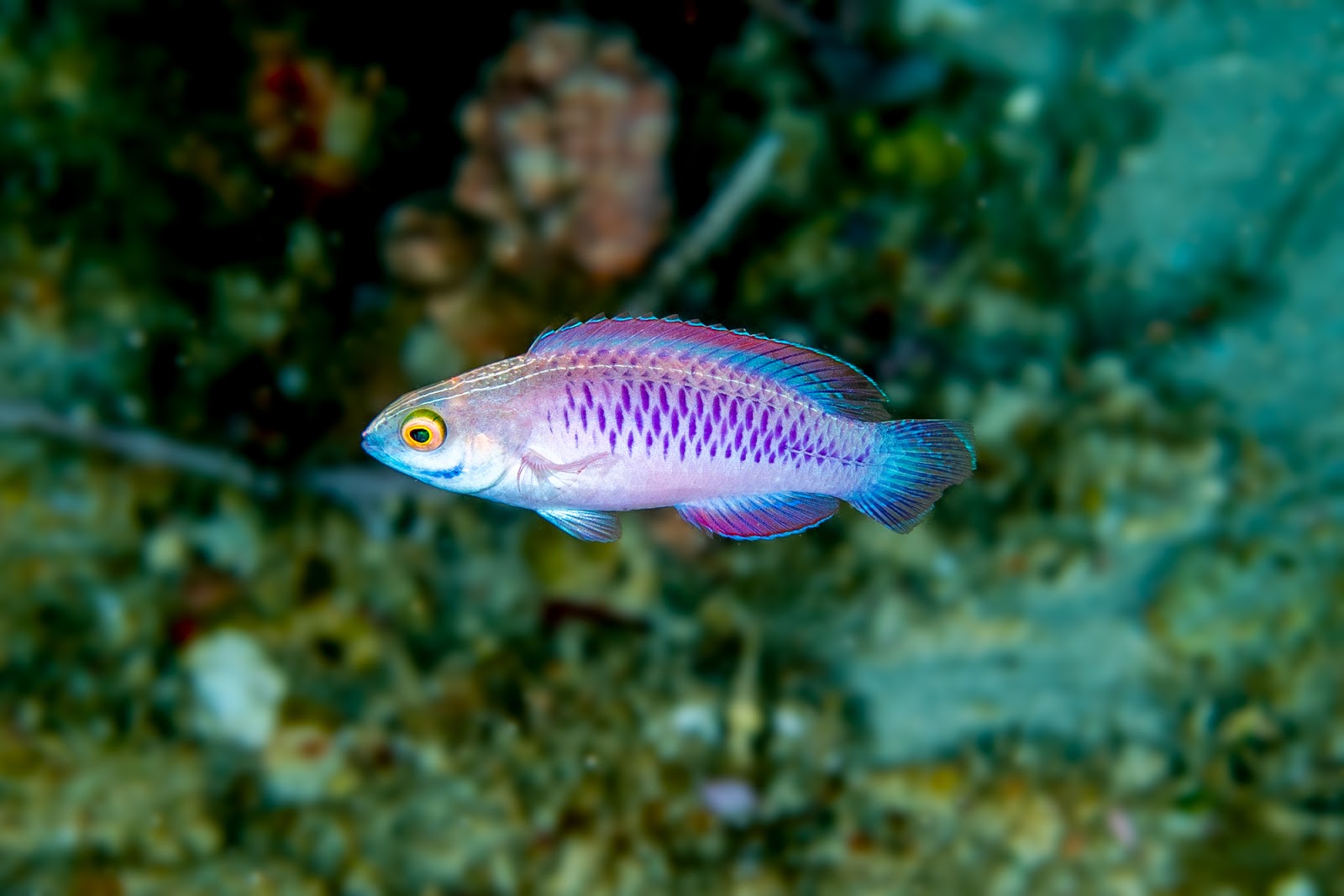
The multicolored wrasses sport deep purple scales so pigmented, they even retain their color (which is typically lost) when preserved for research. The scientists name this “twilight zone” reef-dweller Cirrhilabrus wakanda (common name “Vibranium Fairy Wrasse”) in honor of the mythical nation of Wakanda from the Marvel Entertainment comics and movie Black Panther. The new fish is described in the open-access journal Zookeys.

Female specimen of Vibranium fairy wrasse (Cirrhilabrus wakanda) in its natural habitat (Zanzibar). Photo by Luiz Rocha © 2018 California Academy of Sciences.

Yi-Kai Tea, lead author and ichthyology PhD student from the University of Sydney, says:

“When we thought about the secretive and isolated nature of these unexplored African reefs, we knew we had to name this new species after Wakanda. We’ve known about other related fairy wrasses from the Indian Ocean, but always thought there was a missing species along the continent’s eastern edge. When I saw this amazing purple fish, I knew instantly we were dealing with the missing piece of the puzzle.”

The Academy scientists say Cirrhilabrus wakanda’s remote home in mesophotic coral reefs—below recreational diving limits—probably contributed to their long-hidden status in the shadows of the Indian Ocean. 

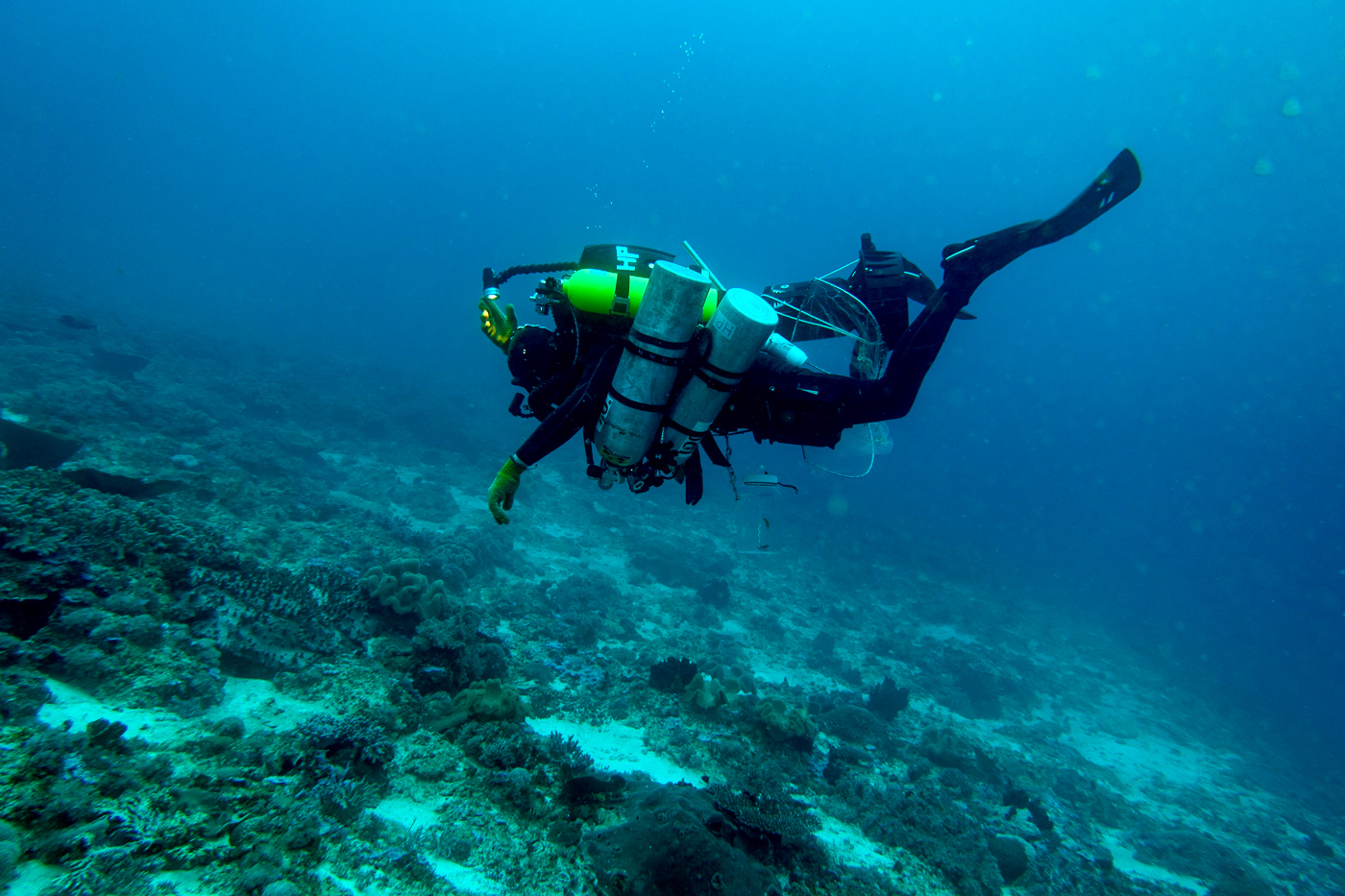
A California Academy diver on an expedition in the Indian Ocean.
Photo by Bart Shepherd © 2018 California Academy of Sciences.

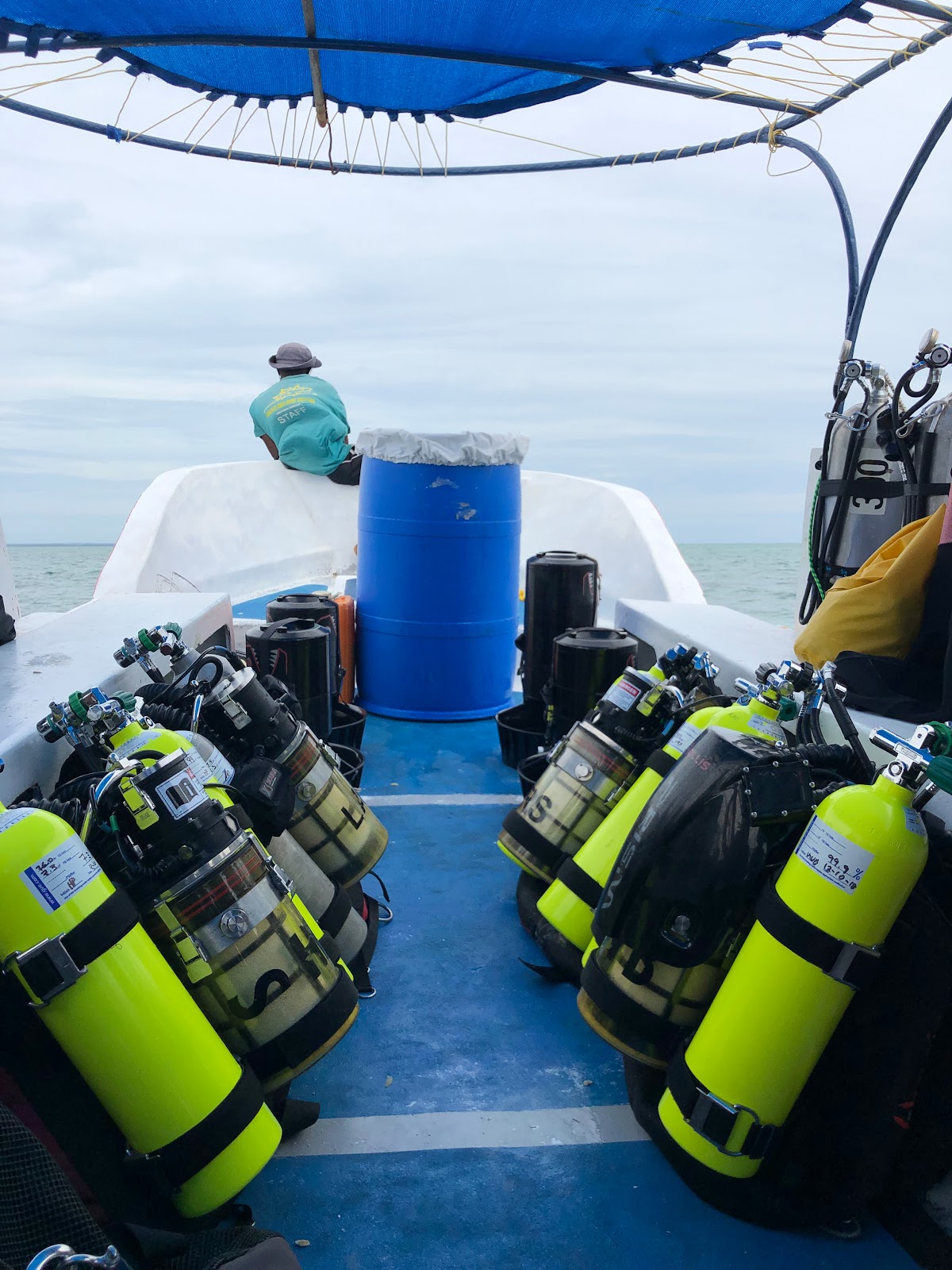
Therefore, Hope for Reefs’ scientific divers are highly trained for the dangerous process of researching in these deep, little-known mesophotic reefs, located 200 to 500 feet beneath the ocean’s surface. Accessing them requires technical equipment and physically intense training well beyond that of shallow-water diving. The team’s special diving gear (known as closed-circuit rebreathers) includes multiple tanks with custom gas blends and electronic monitoring equipment that allow the divers to explore deep reefs for mere minutes before a lengthy, hours-long ascent to the surface.

Dr. Luiz Rocha, Academy Curator of Fishes and co-leader of the Hope for Reefs, comments:

“Preparation for these deep dives is very intense and our dive gear often weighs more than us. When we reach these reefs and find unknown species as spectacular as this fairy wrasse, it feels like our hard work is paying off.”

California Academy’s “twilight zone” dive gear prepped for Zanzibar.
Photo by Luiz Rocha © 2018 California Academy of Sciences.

Using a microscope, the team examined the specimens’ scales, fin rays, and body structures. DNA and morphological analyses revealed the new fairy wrasse to be different from the other seven species in the western Indian Ocean as well as other relatives in the Pacific. The new species’ common name is inspired by the fictional metal vibranium, a rare, and, according to Rocha, “totally awesome” substance found in the nation of Wakanda. The Vibranium Fairy Wrasse’s purple chain-link scale pattern reminded the scientists of Black Panther’s super-strong suit and the fabric motifs worn by Wakandans in the hit film.

Precious life in deep reefs

In a recent landmark paper, the Academy team found that twilight zone reefs are unique ecosystems bursting with life and are just as vulnerable to human threats as their shallow counterparts. Their findings upended the long-standing assumption that species might avoid human-related stressors on those deeper reefs. The Hope for Reefs team will continue to visit and study twilight zone sites around the world to shed light on these often-overlooked ecosystems.

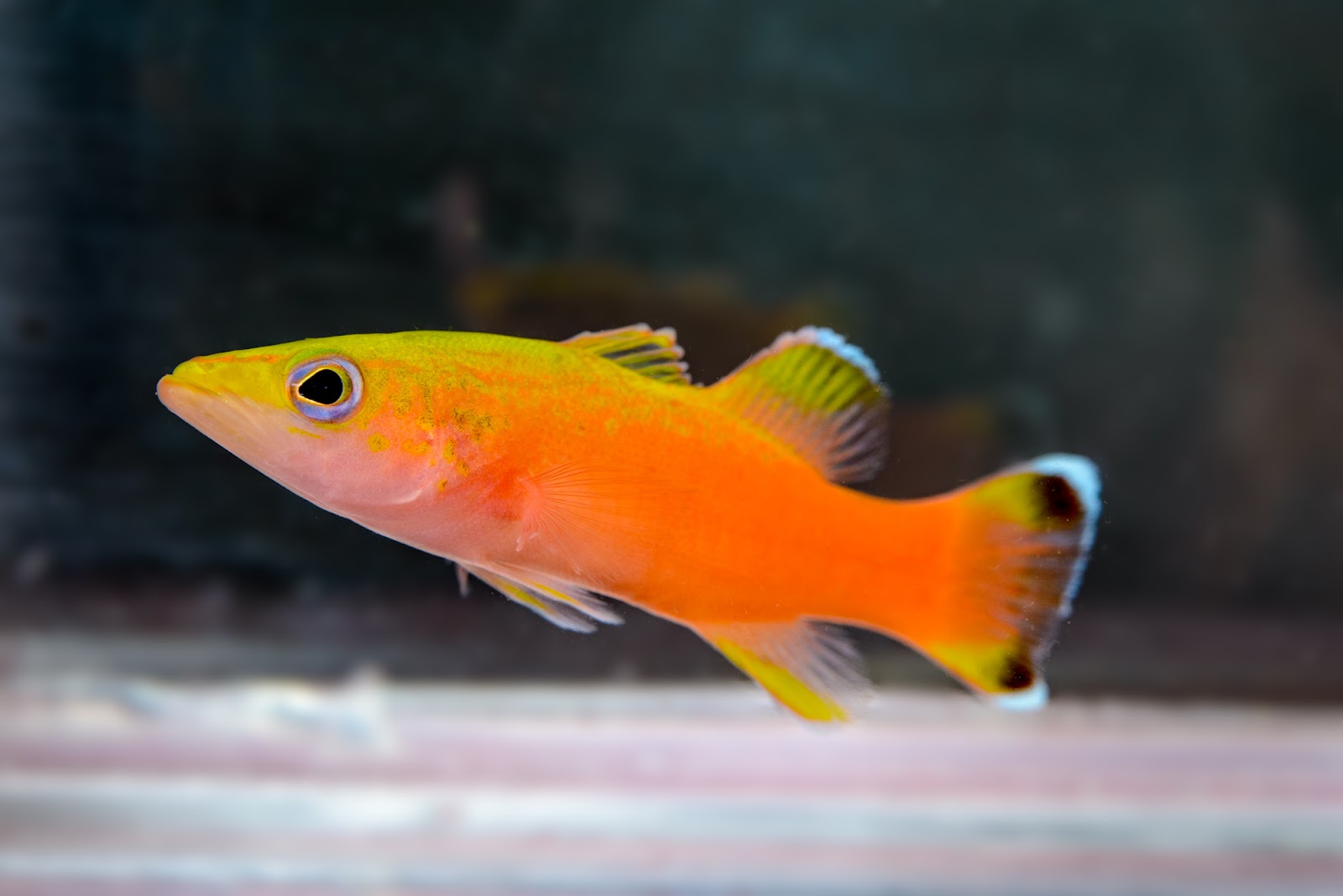
Newly described Pohnpei fish (Liopropoma incandescens). Photo by Luiz Rocha © 2018 California Academy of Sciences.

In addition to this new fish from Zanzibar, Rocha and his colleagues recently published descriptions of mesophotic fish from Rapa Nui (Easter Island) and Micronesia. Luzonichthys kiomeamea is an orange, white, and sunny yellow dwarf anthias endemic to Rapa Nui, and the basslet Liopropoma incandescens (another new species published today in Zookeys) inhabits Pohnpei’s deep reefs—a neon orange and yellow specimen collected from a rocky slope 426 feet beneath the ocean’s surface.  

“It’s a time of global crisis for coral reefs, and exploring little-known habitats and the life they support is now more important than ever,” concludes Rocha. “Because they are out of sight, these deeper reefs are often left out of marine reserves, so we hope our discoveries inspire their protection.”

###

(Text by the California Academy of Sciences, USA)

###

Research articles:

Tea YK, Pinheiro HT, Shepherd B, Rocha LA (2019) Cirrhilabrus wakanda, a new species of fairy wrasse from mesophotic ecosystems of Zanzibar, Tanzania, Africa (Teleostei, Labridae). ZooKeys 863: 85–96. https://doi.org/10.3897/zookeys.863.35580.

Pinheiro HT, Shepherd B, Greene BD, Rocha LA (2019) Liopropoma incandescens sp. nov. (Epinephelidae, Liopropominae), a new species of basslet from mesophotic coral ecosystems of Pohnpei, Micronesia. ZooKeys 863: 97–106. https://doi.org/10.3897/zookeys.863.33778.

WoRMS’ Top 10 Marine Species (2018): ZooKeys journal scores 5/10 in the prestigious yearly list

The World Register of Marine Species (WoRMS) announced the

Top 10 Marine Species of 2018 just in time for

Taxonomist Appreciation Day

What could be better timing to take a look back on the most spectacular animals described as new to science throughout 2018 than 19th March, Taxonomist Appreciation Day?

For the sixth time around, biologists from across the world are all hyped-up about this special date when we celebrate the experts who put things in order by giving names, identities and belonging to what the world has thought non-existent only a moment ago. After all, no sooner is a species formally acknowledged than it can be studied, understood and protected.

Having said that, at Pensoft and ZooKeys we’re immensely proud of becoming a prime publication choice for marine taxonomists from around the globe. Amongst them are the authors of not one or two, but FIVE exceptional animal curiosities, now recognised by a selected committee and the World Register of Marine Species (WoRMS), and featured in the TOP 10 Marine Species of 2018.


The “Japan Pig” which is also a… seahorse (Hippocampus japapigu)

Photo by Richard Smith.

We fail to find the obvious reason why locals diving in the waters of Hachijo-jima Island (Japan) had already likened this dazzling seahorse to a “tiny baby pig”, when a research team collected specimens and identified them as a species new to science. Naturally, the scientists assigned it with the name japapigu, which translates to “Japan Pig” in Japanese.

One thing is for sure, though, the stunning seahorse wouldn’t demand a degree in Zoology to attract anyone’s attention, had it not been for its expertise in camouflaging itself against the colourful algae-covered rocks.

News story by Douglas Main via National Geographic.

###

Check out the study by Graham Short, California Academy of Sciences (USA), Dr Richard Smith, Pipefish Stickleback Specialist Group (UK), Dr Hiroyuki Motomura and Healy Hamilton, both of the Kagoshima University Museum (Japan), and David Harasti, Port Stephens Fisheries Institute, published in the open-access journal ZooKeys at: https://doi.org/10.3897/zookeys.779.24799.


The crab that chooses an animal ‘blanket’ over a shell (Paguropsis confusa)

Photo by DST/NRF ACEP – Spatial Solutions project team.

Sure, who would go for a rigid shell left behind by a random gastropod – just like “ordinary” hermit crabs do – when they could reach for a light, soft and elastic “blanket” instead?

That’s exactly what the blanket-hermit crab Paguropsis confusa and its sibling species have been doing as they evolved to live in a cosy symbiosis with sea anemones. While the translucent anemone peacefully “shares” the crab’s meals and grows its zoophytes around the soft-bodied crustacean, the latter is free to easily draw them up and down – as if they were a real silky duvet – and even completely cover its head whenever it feels threatened.

The crab species name is “con­fuso” in reference to its morphological resemblance to the closely related species Paguropsis typica. In fact, had it not been for the similarity, what we now call Paguropsis confuso would’ve most likely been described well over a century ago.

###

Find more in the research article by Dr Rafael Lemaitre (Smithsonian’s National Museum of Natural History, USA), Dr Dwi Rahayu (Indonesian Institute of Sciences) and Dr Tomoyuki Komai (Natural History Museum and Institute, Japan) published in ZooKeys at: https://doi.org/10.3897/zookeys.752.23712


The ‘flower’ of Okinawa (Hana hanagasa)

Photo by Yee Wah Lau

Amidst ongoing talks and grim forecasts of declining coral reefs spelling demise for the world as we know it, the discovery of this endemic to Okinawa Island (Japan) flower-like octocoral comes as a stunning reminder of Nature’s supremacy.

Described as a new genus, as well as a species new to science, the octocoral was aptly named Hana hanagasa, where “Hana” translates to “flower” in Japanese, while “hanagasa” is a traditional Okinawan headpiece, crafted in the form of hibiscus and worn by female dancers at ceremonies.

###

Find the study by the team of Yee Wah Lau and Dr James Reimer of the University of the University of the Ryukyus (Japan) and their colleagues Frank Robert Stokvis and Dr Leen van Ofwegen at Naturalis Biodiversity Center (the Netherlands) in ZooKeys at: https://doi.org/10.3897/zookeys.790.28875.


The distinctly hairy-foot shrimp (Odontonia bagginsi)

Illustration by Franz Anthony.

Upon writing up the description of this species of Indonesian shrimp, Leiden University’s then BSc student Werner de Gier is unlikely to have thought twice before coming up with the name bagginsi, as in Frodo and Bilbo Baggins – the most famous hobbits from J. R. R.Tolkien’s The Lord of the Rings and The Hobbit.                             

News story by Mike Wehner via New York Post.

After all, what the researcher was looking at was a creature tiny enough to call another marine invertebrate – a tunicate – its snug home. Also, it had extremely hairy feet, a feature that would require for the identification key for all members of the species group to be updated.

###

Find the study by Werner de Gier and Dr Charles Fransen of the Naturalis Biodiversity Center published in ZooKeys at: https://doi.org/10.3897/zookeys.765.25277.


The ‘secretive’ dogfish shark from Hawai’i (Squalus hawaiiensis)


Photo by Dr Toby S. Daly-Engel.


One might think that an animal as large as a shark – especially if it’s the only shark species found in the waters of the Hawaiian Archipelago – would’ve “told” all its “secrets” by now, but that wasn’t the case with what we now refer to as the Hawaiian Spurdog.

Long mistaken for a stray population of a dogfish shark species originally from Japan, it wasn’t before US scientists deployed a range of elaborate tools used in species identification that it became apparent there was a previously unknown to science, short-ranged endemic shark trying to find shelter in Hawai’i.

Sadly, while the species is being depleted as bycatch, it has also demonstrated the lowest rate of genetic diversity known in a shark population to date.

###

Find the study by Dr Toby Daly-Engel, Florida Institute of Technology, Amber Koch, University of West Florida, Dr James Anderson, University of Hawaii at Mānoa, and Charles Cotton and Dean Grubbs, both affiliated with the Florida State University Coastal and Marine Laboratory published in ZooKeys at: https://doi.org/10.3897/zookeys.798.28375.


Happy Taxonomist Appreciation Day from Pensoft!

Let us conclude with the words of ecologists and entomologist Dr Terry McGlynn, who started the Taxonomist Appreciation Day tradition in 2013:

“Even if you’re working on a single-species system, or are a theoretician, the discoveries and methods of systematists are the basis of your work,” he once told the Consortium of European Taxonomic Facilities (CETAF). “We need active work on taxonomy and systematics if our work is going to progress, and if we are to apply our findings. Without taxonomists, entire fields wouldn’t exist. We’d be working in darkness”.

Six new sponge species and new symbiotic associations from the Indonesian coral triangle

Comprising more than 17,000 islands, the Indonesian archipelago is one of the world’s most biodiverse places on Earth.

Sponges, aquatic organisms whose bodies consist of numerous pores to allow the ingress of water, are key components of this richness and play a fundamental role in the survival of coral reef habitats. Furthermore, they are also known for their medicinal benefits.

Unfortunately, due to the paucity of taxonomic expertise, the sponges from the Indonesian reefs are often ignored in monitoring surveys and conservation programmes, while their diversity is largely underestimated.

Researchers from the Italian Università Politecnica delle Marche and Università degli Studi di Genova, PharmaMar, Spain, and University of Sam Ratulangi, Indonesia, describe six new species in their paper in the open access journal, ZooKeys.

Inspired by their extraordinary biodiversity, the researchers teamed up with the pharmaceutical company PharmaMar to conduct several expeditions in the waters of North Sulawesi Island.

Psammocinia albaThe authors reported a total of 94 demosponge species belonging to 33 families living in the North Sulawesi Island. Amongst them, there are six species new to science and two previously unknown symbiotic relationships.

Seven of the recorded species were collected for the very first time since their original description.

However, these findings are still scarce, given the abundance of the sponges in similar localities in the Indonesian archipelago.

In conclusion, the authors note that the marine diversity in Indonesia is still far from being well known.

“Thanks to this impressive diversity, these areas are important spots for diving tourism and require the urgent development of sustainable tourism practices,” they say.

###

Original source:

Calcinai B, Bastari A, Bavestrello G, Bertolino M, Horcajadas SB, Pansini M, Makapedua DM, Cerrano C (2017) Demosponge diversity from North Sulawesi, with the description of six new species. ZooKeys 680: 105-150. https://doi.org/10.3897/zookeys.680.12135

New species of crab with unusual outgrowths has its name written in the stars

A new species of crab with star-shaped tubercles all over its body has been collected from red coral beds during a survey at a small seamount by Peng-Chia-Yu Island, Taiwan. It has also been found in the Philippines. It is described in the open access journal ZooKeys.

This astonishing creature is distinct with its carapace and chelipeds covered in pointy protrusions. Interestingly, these change with age, becoming shorter, blunter and mushroom-shaped to resemble wart-like outgrowths and granules. Regardless of their sex, as the crabs grow larger, their carapaces also get proportionately rounder and wider.

The curious protuberances on the bodies reminded the research team of Dr. Peter Ng, National University of Singapore, and Dr. Ming-Shiou Jeng, Biodiversity Research Center, Academia Sinica, Taiwan, of stars. Hence, the crab was given the name Pariphiculus stellatus, where stellatus translates as ‘starry’ from Latin.

The colouration of P. stellatus varies among specimens. While predominantly orange with white patches, their shade could be either dull, pale or intense. The white spots might cover some of the protrusions or extend over most of the body. The underside of the body is dirty white to light brown.

Acanthodromia margaritaAnother rare crab species, Acanthodromia margarita, has been reported for the first time from Taiwan in the same study, having previously been known from the Andaman Sea in the eastern Indian Ocean, Japan and the Philippines. The collected female specimen is one of the largest representatives of the species known so far.

“With their bright orange to pink bodies, these hedgehog-like crabs are truly striking in life!” says Dr. Peter Ng.


###

Original source:

Ng PKL, Jeng M-S (2017) Notes on two crabs (Crustacea, Brachyura, Dynomenidae and Iphiculidae) collected from red coral beds in northern Taiwan, including a new species of Pariphiculus Alcock, 1896. ZooKeys 694: 135-156. https://doi.org/10.3897/zookeys.694.14871

Behind Green Eyes: New species of deep-water hermit crab finds itself unusual shelters

‘Green-eyed hermit crab’ is the common name for a new species recently discovered off the West Coast of South Africa. Apart from its magnetic stare, however, there is a number of characteristic morphological traits and an unusual home preference that all make the crustacean unique.

Lara Atkinson_SAEON_offshore benthic ecologistFormally named after the University of Cape Town (UCT) alumnus Dr Lara Atkinson, the new hermit crab Paragiopagurus atkinsonaeis described by PhD candidate Jannes Landschoff, UCT, and Dr Rafael Lemaitre, Smithsonian Institution, USA, in the open access journal ZooKeys.

The Green-eyed hermit crab measures merely 70 mm in length and sports a coloration of mottled orange nuanced with cream to white. Among its distinct traits is the significant sexual dimorphism, where the males grow much larger right chelipeds in comparison to females.

Much like other hermit crabs in its family (Parapaguridae), the little crustacean does not use the shells of other molluscs to shelter its vulnerable body, but rather finds a home in the soft, polypy masses built from sand and material created by sea anemones which go on to live on the backs of these crabs in an amazing symbiosis.

“So, when you hold it [the hermit crab], it’s just organic material glued together with some sand,” explains Jannes in the UCT’s announcement about their discovery.

“Even more curiously, parapagurids start off in the usual way, occupying a tiny gastropod shell. But these eventually become deposited within this non-calcified ‘amalgam’ created by the anemones. As the hermit crab grows, its live ‘shell’, or carcinoecia, grows with it.”

2017-07-11-Sympagurus_dimorphus

The new species was discovered during a three-week survey back in 2013, conducted by the Department of Forestry and Fisheries and the South African Environmental Observation Network in the shallower deep waters (199 m to 277 m) off the West Coast of South Africa. Lara was on board one of the vessels when an unusual green-eyed crab turned up among the numerous specimens collected in one of the trawls. It was at that moment that she noticed that there was something peculiar about it and sent it for identification.

Restricted to a surprisingly small area for no obvious reason, the new species might be just bringing up some very important conservation messages.

“The area isn’t noticeably biologically or oceanographically distinct, but more detailed sampling from the area will tell us more about the habitat conditions. Future studies need to take this into account and give the area more research attention. If there’s something unusual about the site, you’d want to be careful, especially with mining operations along the West Coast,” says Jannes.

“Incidents like these are flags for future protection. The bottom line is we know so little about these offshore habitats from an ecological point of view. And if you’re planning for a marine protected area, you have to know what it is you’re protecting in that area.”

###

Original source:

Landschoff J, Lemaitre R (2017) Differentiation of three common deep-water hermit crabs (Crustacea, Decapoda, Anomura, Parapaguridae) from the South African demersal abundance surveys, including the description of a new species of Paragiopagurus Lemaitre, 1996. ZooKeys676: 21-45. https://doi.org/10.3897/zookeys.676.12987