Imperial Woodpecker returns to life as a detailed digital specimen

An open-access 3D model of the world’s largest woodpecker brings an extinct Mexican bird into the public eye.

Researchers have created a detailed, animated 3D model of the Imperial Woodpecker (Campephilus imperialis), a spectacular bird that has not been confirmed in the wild since 1956. The model, built from a museum specimen and the only known film footage of the living bird, is freely available to scientists, educators and the public.

The study, led by Joshua Medina at the University of Massachusetts Amherst, is published in the open-access journal Natural History Collections and Museomics (NHCM). The research team also includes colleagues from the Moore Laboratory of Zoology at Occidental College in Los Angeles and Oregon State University.

3D model of an Imperial Woodpecker mid-flight with wings extended. The left wing (A) has been labelled and colour-coded according to feather type present in the model. The right wing (B) exposes the underlying 3D armature that drives the motion and articulation of the wing. Image credit: Joshua Medina et al., 2026.

The Imperial Woodpecker was the largest woodpecker on record, reaching more than 60 centimetres in length. It lived in the old-growth pine forests of Mexico’s Sierra Madre Occidental and is presumed extinct following widespread logging of its habitat. Around 100 preserved specimens exist in museums worldwide, and the only moving images of the species are a few seconds of grainy film shot in 1956.

“The Imperial Woodpecker hasn’t been seen in the wild for nearly 70 years. Creating a digital specimen let us re-capture a glimpse of the bird’s real likeness and behaviour in a way that’s easy to access and share.”

The Research Team

From museum skin to moving bird

The reconstruction began with a female specimen held at the Moore Laboratory of Zoology, which houses the world’s largest collection of Mexican birds. The team photographed the specimen 288 times from every angle and used photogrammetry, a technique that turns overlapping photographs into a 3D surface, to capture its shape with sub-millimetre accuracy. Measurements of the head, bill, body, wings and tail were taken throughout to keep the digital bird true to the original.

3D model of an Imperial Woodpecker ascending a tree. The model is shown fully rendered with colour derived from 3D specimen scans and photographs (A), with the underlying mesh exposed in the image to the right (B). Below, still frames of a live female Imperial Woodpecker in the Sierra Madre Occidental, Mexico show the bird climbing (C) and mid-flight (D). Video frames reproduced from Lammertink et al. (2011, fig. 1). Image credit: Joshua Medina et al., 2026.

Feathers proved the greatest challenge. Because it is difficult to see individual feathers on a specimen, the team modelled individual feather shapes on those of the Pileated Woodpecker, the largest living woodpecker in North America, then resized and adjusted them to match the known proportions of the Imperial Woodpecker. Wing patterning was drawn from scientific illustrations and checked against the available visual record.

Wing-tip displacement over the course of the animation sequence, tracked from the tip of the terminal phalanx. Graphs show displacement in the mediolateral (x) axis, the dorsoventral (y) axis and the anteroposterior (z) axis, each measured in metres, plotted against animation frame number. Peaks and troughs in each axis correspond to discrete wingbeat cycles, with intervening plateaus reflecting periods of soaring where wing-tip movement is minimal. Image credit: Joshua Medina et al., 2026.

Using the open-source software Blender, the researchers then built a digital skeleton to drive the model’s movement. Ten primary, ten secondary and twelve tail feathers were each individually modelled and rigged, so that they can spread, bend and fold independently. To the team’s knowledge, this makes the model one of the first open, specimen-based bird reconstructions to combine a photogrammetric body with individually animated feathers.

Two animations bring the model to life: a looping flight sequence and a short clip of the bird climbing a tree trunk and drumming against the bark. Both are grounded in the 1956 film footage, supplemented by behavioural video of the Pileated Woodpecker and published data on woodpecker wingbeat timing.

Four phases of the wingbeat cycle of C. imperialis, shown in dorsal view (A) and lateral view (B). Beginning with the wings fully extended at the top of the upstroke (1), the wingtips sweep downward through the downstroke to their lowermost point (2), before the wings fold and draw back towards the body (3) and finally extend again as they rise to complete the upstroke (4). Image credit: Joshua Medina et al., 2026.

A tool for science and for public awareness

Beyond its visual appeal, the model is designed as a reproducible scientific resource. Researchers can use it to estimate body volume and surface area, compare shape with living relatives, or run simulations of flight and feather movement. The authors note it could also inform the design of bird-inspired flying robots.

The team hopes the work will also reach audiences far beyond the laboratory:

“The Imperial Woodpecker might be the last bird species to have gone extinct in continental North America, but arguably 99.9% of people have never heard of it.

If a digital specimen can increase public awareness of extinct species by even a fraction of a percent, that’s millions of people who have an idea for what extinction can erase from the planet.”

Russell Campbell measuring the Imperial Woodpecker specimen. Image credit: Joshua Medina.

The study also highlights the cultural dimension of the species. The Imperial Woodpecker features in the traditions of Indigenous communities of the Sierra Madre Occidental, yet few, if any, museum specimens are held in Mexico. The authors suggest that freely shared digital models may help to offset these geographic and institutional barriers, while acknowledging that whether such work can contribute to the repatriation of biological and cultural heritage remains an open question.

Imperial Woodpecker 3D Model.

The researchers are candid about the model’s limits. It is based on a single female specimen, and aspects such as soft tissue and flight kinematics rely on informed estimation from living relatives. They hope future work will digitise further specimens to capture variation between sexes and individuals.

“The fact that this was created by such a small team will hopefully be a proof of concept that results in more museum specimens being brought to life and shared with the larger scientific community.”

The model, skeleton and animations are available to view and download through Sketchfab.

Original source

Medina J, Campbell R, Martin J, McCormack JE, Irschick DJ (2026) A digital specimen of the extinct Imperial Woodpecker: integrating museum scans, historical film and animated feather articulation. Natural History Collections and Museomics 3: e204314. https://doi.org/10.3897/nhcm.3.204314


Natural History Collections and Museomics: Facebook and Bluesky

New Journal of Scientific and Technological Innovations launches on ARPHA

The journal is an international, multidisciplinary academic journal supervised by Ho Chi Minh City University of Industry and Trade (HUIT).

Pensoft Publishers is pleased to announce the publication of the first issue of the Journal of Scientific and Technological Innovations (STI), an international journal for cutting-edge research across the scientific and technological spectrum. 

The journal notably adopts Pensoft’s ARPHA platform, an innovative end-to-end full-featured publishing solution that streamlines the entire publication workflow – from initial manuscript submission to indexing, distribution, hosting and archiving through one coordinated platform. To date, ARPHA provides “a home” to about 100 open-access journals across scientific fields.

About the journal

The Journal of Scientific and Technological Innovations is an international, multidisciplinary academic journal supervised by Ho Chi Minh City University of Industry and Trade (HUIT). The journal publishes original, peer-reviewed research contributions.

Its editorial purview encompasses a broad range of scientific and technological domains:

  • Food Science – biotechnology, traceability, safety and quality assurance, chemistry and toxicology, packaging, nanotechnology, sensory evaluation, sustainability, health and nutrition, and product innovation
  • Environmental Science – catalysis and energy conversion, carbon capture and utilisation, hydrogen and biomass technologies, agricultural and environmental biotechnology, bioremediation and wastewater treatment, sustainable chemistry, and computational approaches
  • Chemical Engineering – green and sustainable chemistry, computational methods, analytical and synthetic chemistry, pharmaceutical chemistry, catalytic technologies, and process development
  • Materials Science – nanomaterials, biomaterials, ceramics and composites, electronic and optical materials, polymers, surface coatings, eco-materials, and semiconductors

Editorial board

The journal is led by an international team of scholars:

Editor-in-Chief: Thi Hong Anh Le, Ho Chi Minh City University of Industry and Trade, Vietnam

Deputy Editors-in-Chief: Tuyen Truong, RMIT University, Australia; Thanh-Binh Nguyen, National Kaohsiung University of Science and Technology, Taiwan

Featured articles

The first issue of STI presents six contributions spanning food science, materials science, and applied food technology:

A cost-benefit analysis of small-holder floating-house fish farming in Chau Doc City, Vietnamese Mekong Delta 

A study of 35 Mekong Delta fish farmers reveals significant disparities in farm profitability across different river reaches, with operations facing demographic vulnerabilities and heavy reliance on unpaid labour. 

Read more: Farzana H, Tran DD, Nguyen TD, Park E (2026) A cost-benefit analysis of small-holder floating-house fish farming in Chau Doc City, Vietnamese Mekong Delta. Journal of Scientific and Technological Innovations 1: e209236. https://doi.org/10.3897/sti.e209236

Ultrasound-assisted pullulanase modification increases resistant starch content and alters the structure–function properties of water caltrop starch 

A combined ultrasound and enzymatic treatment increased resistant starch content in water caltrop starch from 21.72% to 28.15%, whilst enhancing its water and oil absorption capacities. The approach offers potential for developing resistant starch-enriched functional food ingredients.

Read more: Phan VM, Ngo TMP, Do TTN, Luyen TTH, Duong TT, Tran NM, Tran CH (2026) Ultrasound-assisted pullulanase modification increases resistant starch content and alters the structure–function properties of water caltrop starch. Journal of Scientific and Technological Innovations 1: e209539. https://doi.org/10.3897/sti.e209539 

Effects of Melatonin/β-cyclodextrin Treatment on Physicochemical and Bioactive Attributes of Cherry Tomatoes during Storage

Melatonin complexed with β-cyclodextrin reduced cherry tomato weight loss by up to 56% during refrigerated storage and proved more effective than free melatonin in preserving colour, acidity, and polyphenol content. The complex formation provides a viable strategy for extending shelf-life in harvested produce.

Read more: Tran THC, Dong TT, Nguyen PH,Le NH,Kuo C-H (2026) Effects of Melatonin/β-cyclodextrin Treatment on Physicochemical and Bioactive Attributes of Cherry Tomatoes during Storage. Journal of Scientific and Technological Innovations 1: e212043. https://doi.org/10.3897/sti.e212043

Design, Functionalities, and Emerging Applications of Ti3C2Tx MXene-Based Composites: A Review 

This review synthesises current knowledge on titanium carbide-based MXenes, two-dimensional materials with exceptional conductivity and mechanical properties. MXene-based composites demonstrate applications in gas sensing, photocatalytic carbon dioxide reduction, and energy storage devices.

Read more: Ta QTH, Pham NN, Tran QN, Lu TMT, Noh JS (2026) Design, Functionalities, and Emerging Applications of Ti3C2Tx MXene-Based Composites: A Review. Journal of Scientific and Technological Innovations 1: e205045. Design, Functionalities, and Emerging Applications of Ti3C2Tx MXene-Based Composites: A Review

Chemical Composition, Bioactivities, and Cosmetic Applications of Coconut Oil and Its Derivatives

Recent evidence demonstrates that coconut oil, when appropriately applied, offers dermatological benefits, with antimicrobial, anti-inflammatory, and antioxidant properties. The research clarifies interactions between coconut oil and skin microflora and explains previous inconsistencies in published findings.

Read more: Dat NM, Phong DT, Long HB, Dat NT, Thy LTM (2026) Chemical Composition, Bioactivities, and Cosmetic Applications of Coconut Oil and Its Derivatives. Journal of Scientific and Technological Innovations 1: e205088. https://doi.org/10.3897/sti.e205088 

Retention of bilberry anthocyanins in wood hemicelluloses coated microcapsules under the impact of humidity and packaging conditions 

Storage at 8% relative humidity limited bilberry anthocyanin degradation to 17-22% over 24 weeks, with wood hemicelluloses providing comparable protection to conventional gum Arabic. The findings establish moisture control as important for developing shelf-stable natural functional powders with sustainable coating materials.

Read more: Halahlah A, Piironen V, Mikkonen KS, Ho TM (2026) Retention of bilberry anthocyanins in wood hemicelluloses coated microcapsules under the impact of humidity and packaging conditions. Journal of Scientific and Technological Innovations 1: e207689. https://doi.org/10.3897/sti.e207689

A platform for scientific advancement

The diversity of contributions in this first issue reflects STI’s multidisciplinary scope. Researchers interested in submitting manuscripts are invited to consult the journal’s guidelines and submission portal.

***

Access the full first issue here.

New “demon flower” species discovered in Thai national park

Researchers have described a new species of plant in western Thailand, and its otherworldly appearance has earned it a dramatic name: Thismia daemona, the “devil flower”.

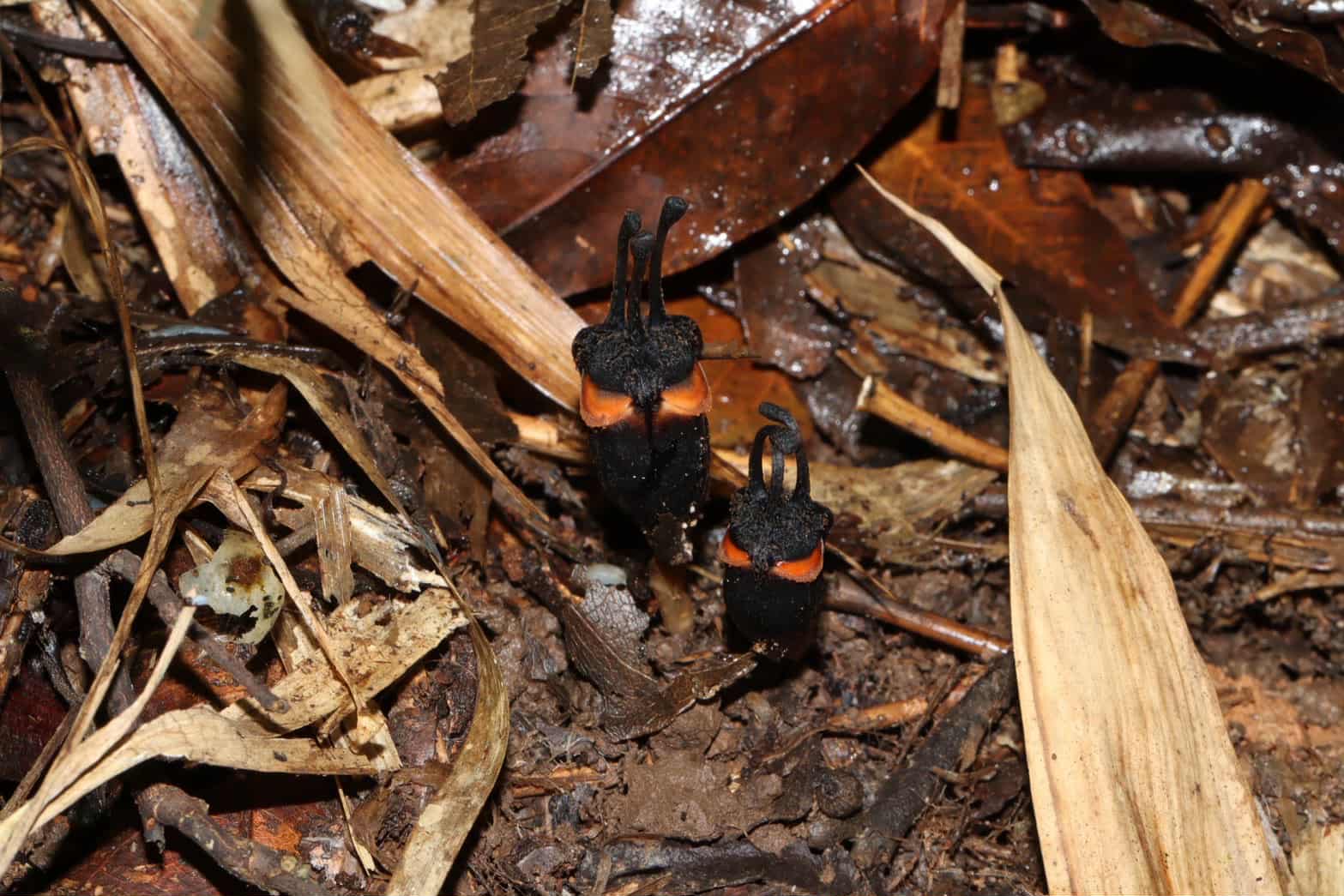
Researchers have described a new species of leafless flowering plant found on the forest floor of a national park in western Thailand, and its otherworldly appearance has earned it a fittingly dramatic name: Thismia daemona, the “demon flower”.

The species belongs to Thismia, a genus of small plants sometimes called “fairy lanterns”. Unlike most plants, they contain no chlorophyll and cannot photosynthesise, instead drawing nutrients from underground fungi and spending almost their entire lives hidden beneath leaf litter.

The new species was found by botanists from Chulalongkorn University and Prince of Songkla University during surveys of Thong Pha Phum National Park, growing at nearly 1,000 metres elevation, which is an unusually high and seasonally dry setting for the genus.

“Finding Thismia daemona in Thong Pha Phum National Park was indeed a major surprise.

Typically, Thismia species are known to occur in perennially humid lowland rainforests, however, this population was discovered in a seasonal, montane evergreen forest at an elevation of nearly 1,000 metres above sea level.”

Dr Sahut Chantanaorrapint, Prince of Songkla University
Thismia daemona in natural habitat. Credit: Neeranuch Taosiri.

The find matters well beyond Thailand’s borders too. The new species belongs to Thismia section Geomitra, previously known only from Peninsular Malaysia, Borneo and Sumatra, so its discovery pushes the known range of the whole section northwards for the first time.

Its looks live up to the name. The flower is mostly black, with horn-like appendages crowning a dome shaped “mitre”, while patches of vivid reddish orange around its base recall a demon’s glowing eyes.

“Combined with its hidden, subterranean and mysterious lifestyle on the forest floor, our team unanimously agreed that naming it Thismia daemona perfectly captured its enigmatic and demon-like essence.”

Dr Chantanaorrapint

Despite its interesting appearance, its future is precarious. Known from a single population of fewer than 50 individuals in an area smaller than a football pitch, it has provisionally been assessed as Critically Endangered, partly because its habitat sits within a national park popular with tourists.

Thismia daemona. Credit: Tosak Seelanan.

Dr Chantanaorrapint sees community involvement as key to its survival:

“A key next step is adopting a sustainable conservation approach aligned with the UNESCO Man and the Biosphere concept, harmonising biodiversity conservation with human engagement.

Inspiring local people to take pride in their natural heritage not only safeguards the microhabitat, but also supports sustainable, community led ecotourism.”

The study, published in the open-access journal PhytoKeys, brings the number of Thismia species recorded in Thailand to sixteen.

Original source

Seelanan T, Chantapram I, Taosiri N, Chuchuea C, Chantanaorrapint S (2026) Thismia daemona (Thismiaceae), a new species from Thailand supported by morphological and molecular evidence. PhytoKeys 278: 177-189. https://doi.org/10.3897/phytokeys.278.202868


Make sure to follow PhytoKeys on Facebook and Bluesky for more interesting articles on plants.