A new PollinERA policy brief proposes regional budget system for pesticide management for Europe

The brief proposes assigning ecological regions an annual toxic-unit (TU) budget linked to environmental carrying capacity.

A new policy brief from the PollinERA project calls for a major shift in EU pesticide regulation, arguing that current assessments of individual substances fail to address the cumulative environmental impacts of pesticide use across landscapes, and that many pesticide bans are unnecessary if the scale of use is managed.

The brief, “A Regional Budget System for Pesticide Management: Systems-first environmental risk assessment: the case for change,” proposes assigning ecological regions an annual toxic-unit (TU) budget linked to environmental carrying capacity. Farmers would register pesticide applications digitally, with approvals dependent on available regional budget capacity.

The authors, Christopher John Topping, Johan Axelman and James Henty Williams, argue that the approach would better align pesticide regulation with EU environmental obligations under the Water Framework Directive, Natura 2000 and the Nature Restoration Law. The brief also outlines key advantages, including environmental protection, regulatory simplification, resistance management, improved farmer access, fair access, and stronger market incentives for lower-impact products.

The brief also proposes implementation through three targeted amendments within the current EU Omnibus process: linking pesticide use conditions under Regulation (EC) 1107/2009 to regional ecological limits; introducing Regional Pesticide Management Plans under the Sustainable Use Directive (2009/128/EC); and aligning regional budget calibration with Water Framework Directive and Nature Restoration Law targets. According to the authors, no new legislative framework would be required.

The policy brief is accompanied with a commentary for further reading, “Pesticide Regulation and the Omnibus Process: A systems-based regional management approach: operational framework, fair access, and market incentives.” Both the policy brief and technical support document are available on the Research Ideas and Outcomes (RIO) journal, in PollinERA’s open-access collection, as well as on PollinERA’s website. 

Read the policy brief here.

About PollinERA
PollinERA (Understanding pesticide-Pollinator interactions to support EU Environmental Risk Assessment and policy) is a four-year Horizon Europe project that aims to move the evaluation of the risk and impacts of pesticides and suggestions for mitigation beyond the current situation of assessing single pesticides in isolation on honey bees to an ecologically consistent assessment of effects on insect pollinators.

You can follow RIO Journal on Facebook, Bluesky and LinkedIn.

Assessment, monitoring, and mitigation of chemical stressors on the health of wild pollinators: Pensoft joins WildPosh

Pensoft is amongst the participants of a new Horizon Europe project aiming to better evaluate the risk to wild pollinators of pesticide exposure, enhancing their health & pollination services.

Wild fauna and flora are facing variable and challenging environmental disturbances. One of the animal groups that is most impacted by these disturbances are pollinators, which face multiple threats, driven to a huge extent by the spread of anthropogenic chemicals, such as pesticides. 

WildPosh (Pan-european assessment, monitoring, and mitigation of chemical stressors on the health of wild pollinators) is a multi-actor, transdisciplinary project whose overarching mission and ambition are to significantly improve the evaluation of the risk to wild pollinators of pesticide exposure, and enhance the sustainable health of pollinators and pollination services in Europe.

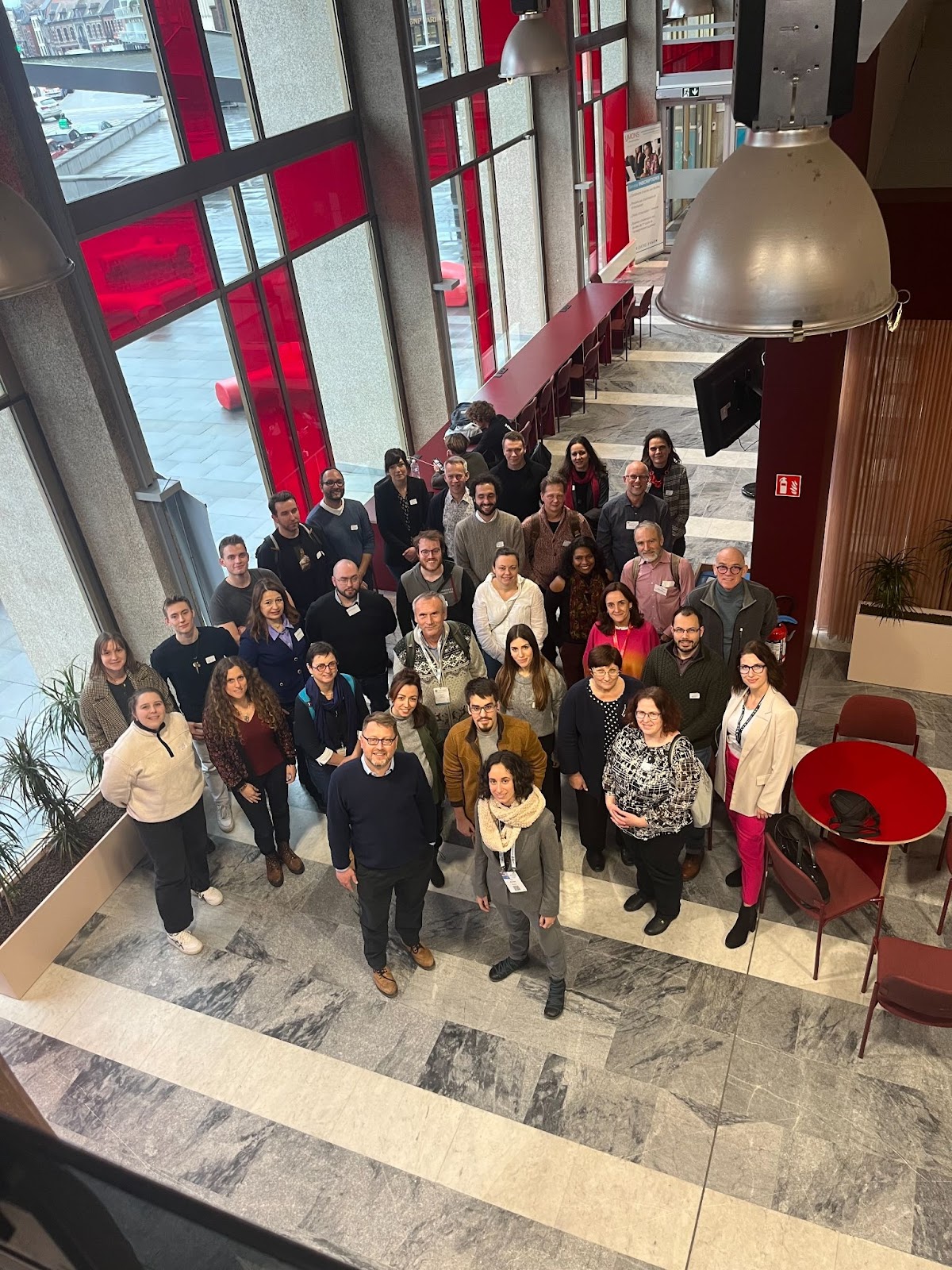
On 25 and 26 January 2024, project partners from across Europe met for the first time in Mons, Belgium and marked the beginning of the 4-year endeavour that is WildPosh. During the two days of the meeting, the partners had the chance to discuss objectives and strategies and plan their work ahead. 

This aligns with the objectives of the European Green Deal and EU biodiversity strategy for 2030, emphasising the need to reduce pollution and safeguard pollinators. WildPosh focuses on understanding the routes of chemical exposure, evaluating toxicological effects, and developing preventive measures. By addressing knowledge gaps in pesticide risk assessment for wild pollinators, the project contributes to broader efforts in biodiversity conservation.

During the kick-off meeting in Mons, WildPosh’s project coordinator Prof. Denis Michez (University of Mons, Belgium) gave an introductory presentation.

As a leader of Work Package #7: “Communication, knowledge exchange and impact”, Pensoft is dedicated to maximising the project’s impact by employing a mix of channels in order to inform stakeholders about the results from WildPosh and raise further public awareness of wild and managed bees’ health.

Pensoft is also tasked with creating and maintaining a clear and recognisable project brand, promotional materials, website, social network profiles, internal communication platform, and online libraries. Another key responsibility is the development, implementation and regular updates of the project’s communication, dissemination and exploitation plans, that WildPosh is set to follow for the next four years.

“It is very exciting to build on the recently concluded PoshBee project, which set out to provide a holistic understanding of how chemicals affect health in honey bees, bumble bees, and solitary bees, and reveal how stressors interact to threaten bee health. WildPosh will continue this insightful work by investigating these effects on wild pollinators, such as butterflies, hoverflies and wild bee species, with the ultimate goal of protecting these small heroes who benefit the well-being of our planet,”

says Teodor Metodiev, WildPosh Principal Investigator for Pensoft.

For the next four years, WildPosh will be working towards five core objectives: 

1) Determine the real-world agrochemical exposure profile of wild pollinators at landscape level within and among sites 

2) Characterise causal relationships between pesticides and pollinator health 

3) Build open database on pollinator traits/distribution and chemicals to define exposure and toxicity scenario

4) Propose new tools for risk assessment on wild pollinators

5) Drive policy and practice.


Consortium:

The consortium consists of 17 partners coming from 10 European countries. Together, they bring extensive experience in Research and Innovation projects conducted within the Horizon programmes, as well as excellent scientific knowledge of chemistry, modelling, nutritional ecology, proteomics, environmental chemistry and nutritional biology.

  1. University of Mons
  2. Pensoft Publishers
  3. Eesti Maaülikool (Estonian University of Life Sciences)
  4. BioPark Archamps
  5. French National Agency for Food, Environmental and Occupational Health & Safety
  6. French National Centre for Scientific Research
  7. Martin Luther University Halle-Wittenburg
  8. Albert Ludwigs University Freiburg
  9. UFZ Helmholtz Centre for Environmental Research
  10. University of Turin
  11. Italian National Institute of Health
  12. National Veterinary Research Institute – State Research Institute
  13. University of Novi Sad Faculty of Sciences
  14. University of Novi Sad, BioSense Institute-Research Institute for Information Technologies in Biosystems
  15. University of Murcia
  16. Royal Holloway and Bedford New College
  17. The University of Reading

Visit can follow WildPosh on BlueSky (@wildposh.eu) X/Twitter (@WildPoshProject), Instagram (/wildposhproject) and Linkedin (/wildposh-eu)