Pensoft has been awarded the Seal of Recognition for the FAO AGRIS Active Data Provider of the Year for 2027. The seal is granted by the Food and Agriculture Organisation of the United Nations through its AGRIS initiative, and it recognises institutions that consistently share open-access agricultural research with the global community.
Notably, Pensoft joined the FAO AGRIS network back in 2024, and the organisation has renewed our seal every year since, a recognition we’re proud to have kept.
What has changed is the scale of our contribution. In 2024, Pensoft’s records on AGRIS numbered just under 15,000. Today, that figure has doubled to nearly 30,000, drawn from all 51 of our journals that fall within the scope of FAO AGRIS. The subjects covered are wide-ranging, spanning taxonomy, biodiversity, conservation and biogeography – these are all areas that feed directly into sustainable agriculture and natural resource management.
Through AGRIS, this research travels well beyond our own journals to researchers, policymakers and practitioners worldwide, adding to the shared pool of open knowledge that supports global food security and environmental sustainability. We’re glad to keep contributing to that effort, and look forward to continuing our work with FAO AGRIS in the years to come.
About FAO
The Food and Agriculture Organisation (FAO) is a specialised agency of the United Nations that leads international efforts to defeat hunger. Its goal is to achieve food security for all, ensuring that people have regular access to enough high-quality food to lead active, healthy lives. With 194 members, 193 countries and the European Union, FAO works in over 130 countries worldwide.
About Pensoft
Founded in 1992 “by scientists, for scientists,” Pensoft is an academic open-access publishing company well known worldwide for its cutting-edge publishing tools, workflows and methods for text and data publishing of journals, books and conference materials. In 2010, Pensoft became the first scientific publisher to introduce semantic enrichments in scholarly publications. Through its Research and Technical Development department, the company is involved in a range of research and technology projects.
A new study published in the open-access Biodiversity Data Journal suggests that spider webs – particularly those incorporating environmental debris – can serve as natural, non-destructive collectors of fungal material in agricultural ecosystems. The findings show that viable fungi can be recovered from these structures, including lineages that may represent previously undocumented diversity.
“Spider webs are often overlooked structures in the environment, yet they can function as natural collectors of biological material. Our findings suggest that they can be used as a complementary approach to access microbial communities without disturbing the surrounding ecosystem.”
Thanakron Into (Student at Thammasat University)
Researchers from Thammasat University and the National Center for Genetic Engineering and Biotechnology (BIOTEC), Thailand, investigated whether the adhesive and particle-trapping properties of spider silk could be used to capture and culture fungi associated with airborne and environmental particles. Unlike DNA-based methods, which detect genetic material regardless of viability, this approach allows for the recovery of living organisms that can be further studied.
The study focused on tropical rice fields, using webs of the orb-weaving spider Cyclosa mulmeinensis, a species known for constructing distinctive “trashline” decorations – linear accumulations of plant fragments, insect remains, and other debris within the web. These structures can intercept a variety of particles, some of which may carry fungal propagules.
Representative orb webs of Cyclosamulmeinensis illustrating web architecture and debris decoration. Image credit: Thanakron Into et al.
Webs were collected from rice-field embankments in Pathum Thani, Nakhon Nayok, and Phetchaburi provinces using sterile techniques. In the laboratory, material retained on the silk was gently removed and cultured, yielding 112 viable fungal isolates. These isolates were grouped into 23 taxa across six genera, including Alternaria, Aspergillus, Cladosporium, Fusarium, Penicillium, and Talaromyces.
“We were particularly surprised that many of the fungi recovered from the webs remained viable and could be cultured. This enables further investigation beyond presence or absence, including their biological characteristics.”
Thanakron Into
Locations of paddy fields where Cyclosamulmeinensis spider webs were collected in Thailand (left). Composition of culturable fungal taxa across genera in individual sampled webs, expressed as the number of taxa recovered per web (right). Image credit: Thanakron Into et al.
Some genetic lineages – particularly within Cladosporium and Talaromyces – did not match currently described species in available databases, indicating that additional, undocumented diversity may be present in these systems.
Conventional approaches to fungal monitoring typically rely on soil, air, or plant sampling, or on molecular methods that may not distinguish between living and non-living material. In this context, spider webs may provide a useful supplementary sampling surface for capturing biologically relevant particles.
Because spider webs are naturally maintained and, in some species, periodically rebuilt, this method can be applied with minimal disturbance to both the organisms and their environment. Importantly, the spiders themselves were not harmed during sampling, as only small sections of the web were collected.
“The ability to recover living fungi from these naturally occurring structures adds a practical dimension to biodiversity studies. It provides a way to link environmental sampling with downstream biological work.”
Thanakron Into
The idea that something as familiar as a spider web could quietly capture a hidden layer of biodiversity highlights how much of the natural world remains overlooked in plain sight.
While further work is needed to evaluate how broadly this approach can be applied, the study demonstrates the potential of spider webs as an additional tool for exploring microbial diversity in agricultural landscapes.
Diagram displaying an overview of the study. Image credit: Booppa Petcharad.
Original source:
Into T, Petcharad B, Boonyuen N, Chanklan R, Pannanusorn S, Mongkolsamrit S, Kobmoo N, Nuankaew S, Kwanthong P (2026) Spider webs as reservoirs of culturable fungal diversity: evidence from orb-weaving Cyclosa mulmeinensis spider in Thai rice agroecosystems. Biodiversity Data Journal 14: e187035. https://doi.org/10.3897/BDJ.14.e187035
Yunnan Province in southwestern China is a global biodiversity hotspot, accommodating an incredible variety of plants and animals. It is also the heart of China’s coffee industry, with Yunnan accounting for almost all of the country’s coffee production. However, coffee plants are very common hosts for many types of fungi, which can act as harmful diseases, harmless residents, or natural recyclers – these factors can impact the plant’s health and how much coffee it produces.
A new study published in the open-access journal MycoKeys, and led by Mei-Yan Han of Chiang Mai University, revealed two novel species of Neohelicomyces fungi: Neohelicomyces coffeae and Neohelicomyces puerensis. While studying the fungi that live on Coffea arabica, the team spotted these unique organisms growing on dead coffee branches. This discovery underscores the need for further investigations into the fungal diversity of the region.
Both species are characterised by their coil-shaped structures which appear as glistening white patches on coffee plants. Specifically, N. coffeae features short stems and small, multi-sectioned spores, while N. puerensis is distinguished by its tightly coiled filaments and unbranched stems. While the former is named after the host genus Coffea, the latter references the locality in which both species were found: Pu’er City.
Neohelicomyces coffeae (GMB-W1490, holotype). Photo credit: Mei-Yan Han et al.
Neohelicomyces puerensis (GMB-W1485, holotype). Photo credit: Mei-Yan Han et al.
Importantly, these fungi are classified as saprophytic because they were found growing exclusively on the dead branches of coffee plants rather than on living tissue. Functioning as nature’s essential recyclers, they obtain their energy by breaking down complex organic materials like wood and cellulose. Therefore, by decomposing this dead matter, both play a vital role in the coffee ecosystem by unlocking trapped nutrients and returning them to the soil. This incentive subsequently helps support the growth of the surrounding living coffee plants.
Saprophytic fungi are additionally being studied as potential sources for new medicines and agricultural tools. Scientists have found that the family to which these new species belong, Tubeufiaceae, can produce natural chemicals that fight off bacteria, other fungi, and even certain types of cancer. Specifically, researchers have already discovered compounds related to Neohelicomyces species that show promise in slowing the growth of human cancer cells.
As of 2026, there are 36 known species of Neohelicomyces, with the vast majority found in China – particularly in Guizhou and Yunnan provinces – though they also appear in Europe and North America. By expanding their known diversity specifically in agricultural environments, researchers have shed light on their ecological potentials, and have called attention to their future biotechnological applications.
Following these discoveries, it is certain that the future of fungal research is starting to brew.
Original source:
Han M-Y, Yang J-Y, Karunarathna SC, Kumla J, Lu L, Zheng D-G, Elgorban AM, Alfagham AT, Yu F-Q, Dai D-Q, Zhang L-J, Suwannarach N, Tibpromma S (2026) Two new Neohelicomyces species (Tubeufiaceae, Tubeufiales) associated with Coffea arabica L. in Yunnan Province, China. MycoKeys 127: 343-362. https://doi.org/10.3897/mycokeys.127.173937
The new Horizon project is to assist the transition of agriculture to a positive force for biodiversity, crop pollination services, ecosystems and people. Pensoft will lead the communication, dissemination, exploitation and synergies with other projects.
Threats to pollinators and pollination services that support agriculture and provide benefits to people are a worldwide problem, recognized by intergovernmental scientific assessments, national or transnational initiatives as well as policies.
Intensive agriculture is among the principal threats to pollinator biodiversity and the crop pollination services that pollinators provide. Moreover, typically crop breeding has tended to overlook the benefits of pollination for sustained crop yields in favour of other crop traits.
Coordinated by Dr. Adam Vanbergen (INRAE) and funded by Horizon Europe, the AGRI4POL project takes an ambitious and achievable interdisciplinary and transdisciplinary approach to achieve a transition towards sustainable pollinator-friendly farming.
The project aims to deliver an integrated state-of-the-art analysis of the crop – farming system – pollinator interplay across levels of biological organisation from the crop gene to the agroecosystem.
AGRI4POL launched in January 2025 and will be running until the end of 2028.
To achieve its goals, AGRI4POL project has outlined seven objectives:
Work with a multi-actor community on research and solutions for promoting pollinator-friendly farming.
Evaluate crop genetics, varieties and floral traits governing pollinator attraction to stimulate breeding of future pollinator-smart crops.
Establish the benefits of pollinator-friendly farming systems for farmers and farming.
Optimise ecological and landscape features for crop pollination, pollinator biodiversity and multiple ecosystem benefits.
Assess the social and economic opportunities and obstacles presented by pollinator friendly farming options.
Evaluate how policies and practitioner awareness influence uptake of pollinator-friendly farming from national to international scales.
Communicate and promote the benefits of pollinator-friendly farming.
AGRI4POL’s coordinator Dr. Adam Vanbergen (INRAE) gave an introductory presentation during the project kick-off meeting in Brussels (January 2025, Belgium).
Pensoft’s role
Building on its experience in communication, dissemination, and exploitation of results, Pensoft will focus on maximizing the project’s impact and long-term legacy. This encompasses a wide array of activities, ranging all the way from building a project’s visual identity and online presence and creating a podcast to translating results into policy recommendations. Moreover, Pensoft will be facilitating collaboration opportunities with other projects, leveraging on its involvement in numerous EU-funded projects. As of now, Pensoft takes part in six EU Pollinator projects, which serves well to facilitate synergies.
International consortium
The AGRI4POL consortium comprises twenty partners from fourteen European institutions. The consortium covers a wide diverse range of scientific disciplines spanning from pollinator ecology and agriculture to stakeholder engagement and communications.
Pensoft will lead the communication, dissemination and exploitation activities of the Horizon Europe project, which aims to reverse pollinator population declines and reduce impacts of pesticides.
Plant protection products (PPP), also known as pesticides, have been identified as one of the primary triggers of pollinator decline. However, significant knowledge gaps and critical procedural limitations to current pesticide risk assessment require attention before meaningful improvements can be realised. The functional group is currently represented by only one species, the honey bee, which does not necessarily share other species’ biological and ecological traits.
Coordinated by The Social-Ecological Systems Simulation (SESS) Centre, Aarhus University and Prof. Christopher J. Topping, PollinERA (Understanding pesticide-Pollinator interactions to support EU Environmental Risk Assessment and policy) aims to move the evaluation of the risk and impacts of pesticides and suggestions for mitigationbeyond the current situation of assessing single pesticides in isolation on honey bees to an ecologically consistent assessment of effects on insect pollinators.
This will be achieved through the development of a new systems-based environmental risk assessment (ERA) scheme, tools and protocols for a broad range of toxicological testing, feeding to in silico models (QSARS, toxicokinetic/toxicodynamic, and ALMaSS agent-based population simulations).
Using a strong stakeholder co-development approach, these models will be combined in a One System framework for risk assessment and policy evaluation including an international long-term monitoring scheme for pollinators and pesticides.
The One System framework builds on the recent roadmap for action on the ERA of chemicals for insect pollinators, developed within the IPol‐ERA project, funded by the European Food Safety Authority (EFSA). The framework will expand the ERA tools currently used for honey bees to include wild bees, butterflies, moths and hoverflies.
With an overall goal of reversing pollinator population declines and reducing the harmful impacts of pesticides, for the next four years, PollinERA will follow four specific objectives:
Fill ecotoxicological data gaps to enable realistic prediction of the source and routes of exposure and the impact of pesticides on pollinators and their sensitivity to individual pesticides and mixtures.
Develop and test a co-monitoring scheme for pesticides and pollinators across European cropping systems and landscapes, developing risk indicators and exposure information.
Develop models for predicting pesticide toxicological effects on pollinators for chemicals and organisms, improve toxicokinetic/toxicodynamic (TKTD) and population models, and predict environment fate.
Develop a population-level systems-based approach to risk and policy assessment considering multiple stressors and long-term spatiotemporal dynamics at a landscape scale and generate an open database for pollinator/pesticide data and tools.
Between 17 and 18 January 2024, experts from various realms of knowledge – from pollinator ecology, pesticide exposure and toxicological testing, to stakeholder engagement and communications – gathered in Aarhus, Denmark, to officially launch PollinERA. The two-day event seeded fruitful discussions on the project’s specific objectives, mission, methodology, outcomes and expected results.
With more than 20 years of experience in science communication, Pensoft is leading Work Package 6: Communication, Dissemination and Exploitation, that will ensure the effective outreach of PollinERA to its multiple target audiences. Based on the tailor-made communication, dissemination, exploitation and engagement strategies, Pensoft will provide a recognisable visual identity of the project, along with a user-friendly website, social media profiles, promotional materials, newsletters, infographics and videos. Pensoft will also contribute to the stakeholder mapping process and the organisation of various workshops and events.
PollinERA’s coordinator Prof. Christopher J. Topping (The Social-Ecological Systems Simulation Centre, Aarhus University) gave a warm welcome during the kick-off meeting of the project in Aarhus, Denmark.
Coordinated by Prof. Denis Michez (University of Mons), WildPosh aims to significantly improve the evaluation of risk to pesticide exposure of wild pollinators, and enhance the sustainable health of pollinators and pollination services in Europe.
Collaboration mechanisms between the PollinERA and the WildPosh projects include joint communication activities and events, joint data management strategy and alignment of activities to solidify the quality of final outputs.
Prof. Denis Michez (University of Mons), the coordinator of PollinERA’s sister-project WildPosh, presented the missions, objectives and methods, as well as the similarities, differences and collaboration potential between the two projects at PollinERA’s kick-off meeting in Aarhus, Denmark.
“It is fantastic that the European Commission puts so much effort into preserving wild pollinators and the countless benefits they bring to our society! The One System framework will hopefully become a fundamental part for the environmental risk assessment of chemicals for insect pollinators. I am really looking forward to implementing this insightful project, in close collaboration with its sister project WildPosh, where Pensoft is leading the dissemination efforts as well.”
says Teodor Metodiev, Principal Investigator for Pensoft at both PollinERA and WildPosh.
The PollinERA consortium comprises partners from eight European countries that represent a diverse range of scientific disciplines spanning from pollinator ecology, pesticide exposure and toxicological testing, to stakeholder engagement and communications.
Pensoft is amongst the participants of a new Horizon Europe project aiming to better evaluate the risk to wild pollinators of pesticide exposure, enhancing their health & pollination services.
Wild fauna and flora are facing variable and challenging environmental disturbances. One of the animal groups that is most impacted by these disturbances are pollinators, which face multiple threats, driven to a huge extent by the spread of anthropogenic chemicals, such as pesticides.
WildPosh (Pan-european assessment, monitoring, and mitigation of chemical stressors on the health of wild pollinators) is a multi-actor, transdisciplinary project whose overarching mission and ambition are to significantly improve the evaluation of the risk to wild pollinators of pesticide exposure, and enhance the sustainable health of pollinators and pollination services in Europe.
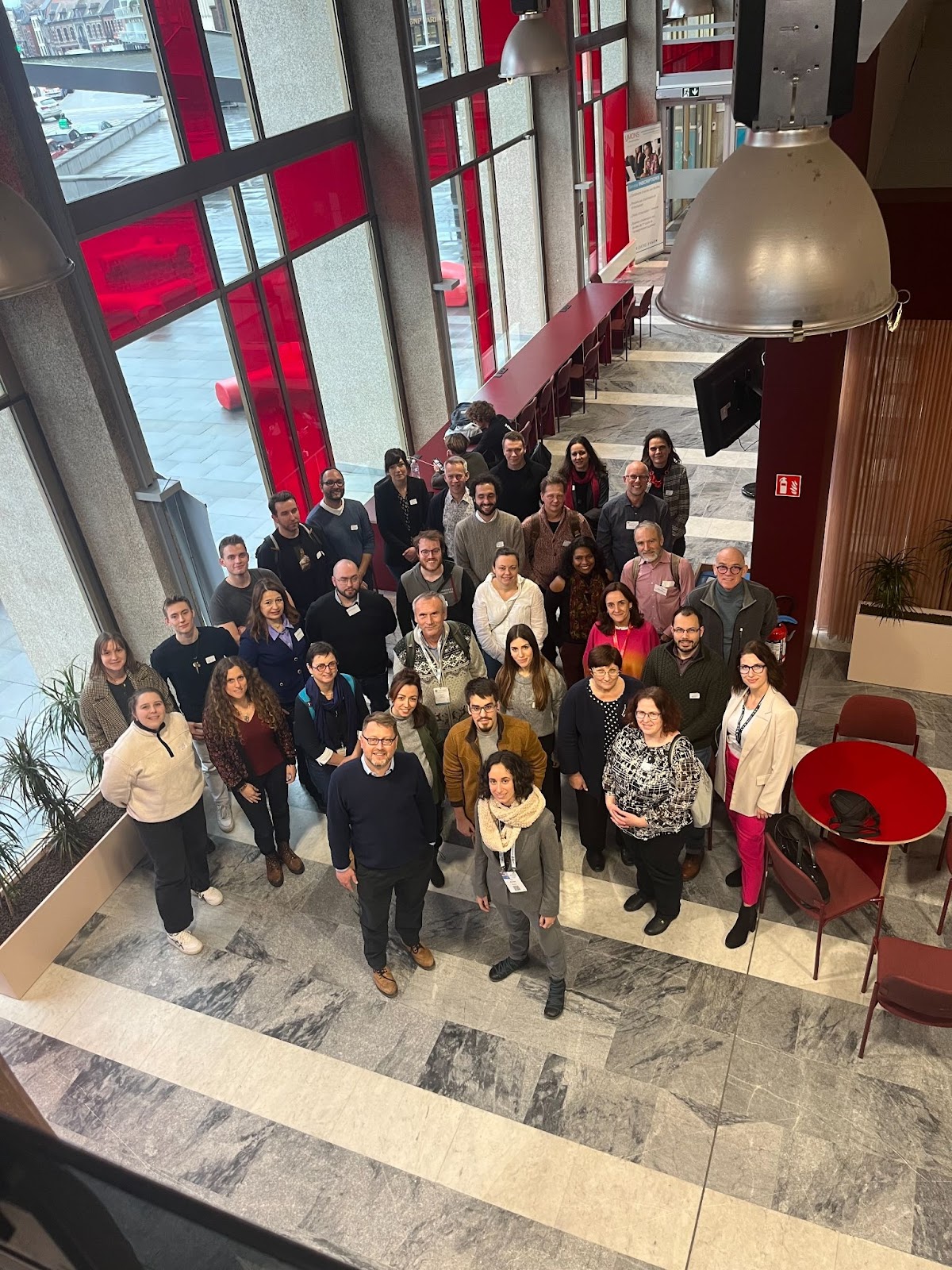
On 25 and 26 January 2024, project partners from across Europe met for the first time in Mons, Belgium and marked the beginning of the 4-year endeavour that is WildPosh. During the two days of the meeting, the partners had the chance to discuss objectives and strategies and plan their work ahead.
This aligns with the objectives of the European Green Deal and EU biodiversity strategy for 2030, emphasising the need to reduce pollution and safeguard pollinators. WildPosh focuses on understanding the routes of chemical exposure, evaluating toxicological effects, and developing preventive measures. By addressing knowledge gaps in pesticide risk assessment for wild pollinators, the project contributes to broader efforts in biodiversity conservation.
During the kick-off meeting in Mons, WildPosh’s project coordinator Prof. Denis Michez (University of Mons, Belgium) gave an introductory presentation.
As a leader of Work Package #7: “Communication, knowledge exchange and impact”, Pensoft is dedicated to maximising the project’s impact by employing a mix of channels in order to inform stakeholders about the results from WildPosh and raise further public awareness of wild and managed bees’ health.
Pensoft is also tasked with creating and maintaining a clear and recognisable project brand, promotional materials, website, social network profiles, internal communication platform, and online libraries. Another key responsibility is the development, implementation and regular updates of the project’s communication, dissemination and exploitation plans, that WildPosh is set to follow for the next four years.
“It is very exciting to build on the recently concluded PoshBee project, which set out to provide a holistic understanding of how chemicals affect health in honey bees, bumble bees, and solitary bees, and reveal how stressors interact to threaten bee health. WildPosh will continue this insightful work by investigating these effects on wild pollinators, such as butterflies, hoverflies and wild bee species, with the ultimate goal of protecting these small heroes who benefit the well-being of our planet,”
says Teodor Metodiev, WildPosh Principal Investigator for Pensoft.
For the next four years, WildPosh will be working towards five core objectives:
1) Determine the real-world agrochemical exposure profile of wild pollinators at landscape level within and among sites
2) Characterise causal relationships between pesticides and pollinator health
3) Build open database on pollinator traits/distribution and chemicals to define exposure and toxicity scenario
4) Propose new tools for risk assessment on wild pollinators
5) Drive policy and practice.
Consortium:
The consortium consists of 17 partners coming from 10 European countries. Together, they bring extensive experience in Research and Innovation projects conducted within the Horizon programmes, as well as excellent scientific knowledge of chemistry, modelling, nutritional ecology, proteomics, environmental chemistry and nutritional biology.
Fusarium is one of the most important fungal plant pathogens, affecting the cultivation of a wide range of crops. All over the world, thousands of farmers suffer agricultural losses caused by Fusarium oxysporum f. sp. cubense (referred to as Foc for short), which directly affects their income, subsistence, and nourishment.
As a soil-borne fungus, Foc invades the root system, from where it moves into the vascular tissue that gradually deteriorates, until eventually the plant dies. What makes it particularly hard to deal with is that, even 20 years after all infected plants and tissue are removed, spores of it still remain in the soil.
One industry significantly affected by Foc is global banana export, largely dependent on the cultivation of members of the Cavendish subgroup, which are highly susceptible to some of the Foc strains.
For over 100 years, the fungus has affected banana production worldwide. Researchers predict it will continue spreading intensively in Asia, affecting important banana-producing countries such as China, the Philippines, Pakistan, and Viet Nam.
For Viet Nam, predictions on the impact of Foc for the future are dramatic: an estimated loss in the banana production area of 8% within the next five years, and up to 71% within the next 25 years. In particular, the recent rise of the novel TR4 strain has resulted in worldwide anxiety about the future of the well-known Cavendish banana and many other cultivars. Fusarium oxysporum f. sp. cubense is, however, not limited to TR4 or other well-known strains, like Race 1 or Race 2; it is a species complex that plant pathologists are yet to fully disentangle.
In Viet Nam, like in the rest of Asia, Africa, Latin America, and the Caribbean, most bananas are consumed and traded locally, supporting rural livelihood. This means that any reduction in crop harvest directly affects local people’s income and nourishment.
It has thus become necessary to find out what are the individual species causing the Fusarium wilt among Vietnamese bananas. Only by understanding which species are infecting the cultivated bananas can concrete measures be taken to control the future spreading of the disease to other regions.
The study shows that approximately 3 out of 4 Fusariuminfections of the northern Vietnamese bananas are caused by the species F. tardichlamydosporum, which can be regarded as the typical Race 1 infections. Interestingly, Foc TR4 is not yet a dominant strain in northern Viet Nam, as the species causing the disease – F.odoratissimum – only accounts for 10% of the Fusarium infections. A similar proportion of Fusarium infections is caused by the species Fusarium cugenangense – considered to cause Race 2 infections among bananas.More importantly, Fusarium wilt was not only found in cultivated bananas: the disease seemed to also affect wild bananas. This finding indicates that wild bananas might function as a sink for Fusarium wilt from where reinfections towards cultivars could take place.
Research article:
Le Thi L, Mertens A, Vu DT, Vu TD, Anh Minh PL, Duc HN, de Backer S, Swennen R, Vandelook F, Panis B, Amalfi M, Decock C, Gomes SIF, Merckx VSFT, Janssens SB (2022) Diversity of Fusarium associated banana wilt in northern Viet Nam. MycoKeys 87: 53-76. https://doi.org/10.3897/mycokeys.87.72941
A new fungal genus and species Ochraceocephala foeniculi causes fennel yield losses of about 20-30% for three different cultivars. It damages the crops with necrotic lesions on the crown, root and stem.
International research group makes the first step in handling the new fennel disease by publishing their paper in the open-access journal Mycokeys.
A new fennel fungal disease caused by a new genus and species – Ochraceocephala foeniculi, was observed for the first time in 2017 on 5% of the “Apollo” fennel cultivar grown in the sampled localities in Catania province, Italy. Now, it has spread to 2 more cultivars: “Narciso” and “Pompeo”, causing crop losses of around 20-30%. The new pathogen damages the fennel with necrotic lesions on the crown, root and stem.
Fennel, a crop native in arid and semi-arid regions of southern Europe and the Mediterranean area is massively used as a vegetable, herb and seed spice in food, pharmaceutical, cosmetic and healthcare industries with Italy taking the world-leading production. It is an important and widely cultivated crop in Sicily (southern Italy).
Symptoms caused by Ochraceocephala foeniculi on fennel plants Credits: Dalia Aiello License: CC-BY 4.0
Worldwide, fennel crops are affected by several fungal diseases. In Italy, amongst soilborne diseases, there have been reports of brown rot and wilt caused byPhytophthora megasperma and crown rot caused by Didymella glomerata.
International research group, led by Ms. Dalia Aiello from the University of Catania, made the first step in handling the new fennel disease by identifying the causal agent obtained from symptomatic plants and publishing the results of their research in the open-access journal Mycokeys.
In order to understand the origin of the causal agent, scientists collected 30 samples during several surveys in the affected areas in Sicily, and studied the consistently grown fungal colonies from symptomatic tissues.
“The fungal species obtained from symptomatic tissues was identified based on morphological characters and molecular phylogenetic analyses of an ITS-LSU-SSU rDNA matrix, resulting in the description of the fennel pathogen as a new genus and species, Ochraceocephala foeniculi,”
shares Dr. Dalia Aiello.
According to the pathogenicity tests, O. foeniculi causes symptoms on artificially inoculated plants of the same cultivar. Preliminary evaluation of fennel germplasm, according to the susceptibility to the new disease, shows that some cultivars (“Narciso”, “Apollo” and “Pompeo”) are more susceptible and some are less susceptible (“Aurelio”, “Archimede” and “Pegaso”), but this is a subject yet to be confirmed by additional investigations. More studies are required in order to plan further effective disease management strategies.
Holotype of Ochraceocephala foeniculi Credits: Mr. Hermann Voglmayr License: CC-BY 4.0
“On the basis of the disease incidence and severity observed in the field, we believe that this disease represents a serious threat to fennel crop in Sicily and may become a major problem also to other areas of fennel production if accidentally introduced,”
concludes Dr. Dalia Aiello.
***
Original source: Aiello D, Vitale A, Polizzi G, Voglmayr H (2020) Ochraceocephala foeniculi gen. et sp. nov., a new pathogen causing crown rot of fennel in Italy. MycoKeys 66: 1-22. https://doi.org/10.3897/mycokeys.66.48389
Non-conventional, yet pivotal research results: data, models, methods, software, data analytics pipelines and visualisation methods, related to the field of viticulture, find a place in a newly launched, open-access and peer-reviewed Viticulture Data Journal.
Non-conventional, yet pivotal research results: data, models, methods, software, data analytics pipelines and visualisation methods, related to the field of viticulture, find a place in a newly launched, open-access and peer-reviewed Viticulture Data Journal (VDJ). The journal went live with the publication of an introductory editorial and a data paper.
The publishing venue is one of the fruits borne during the collaboration between scholarly publisher and technology provider Pensoft, its self-developed ARPHA Platform and the EU project AGINFRA+, whose mission is to provide a sustainable channel and data infrastructure for the use of cooperating, but not fully connected user communities working within the agricultural and food sciences.
The novel journal brings together a wide range of topics related to the field of viticulture: from genetic research, food safety of viticultural products to climate change adaptation of grapevine varieties through grape specific research. Amongst these are:
Phenotyping and genotyping
Vine growth and development
Vine ecophysiology
Berry yield and composition
Genetic resources and breeding
Vine adaptation to climate change, abiotic and biotic stress
Vine propagation
Rootstock and clonal evaluation
Effects of field practices (pruning, fertilization etc.) on vine growth and quality
Sustainable viticulture and environmental impact
Ampelography
Plant pathology, diseases and pests of grapevine
Microbiology and microbiological risk assessment
Food safety related to table grapes, raisins, wine, etc.
With the help of the ARPHA Platform’s signature writing tool, authors are able to use a set of pre-defined, yet flexible manuscript templates: Data Paper, Methods, Emerging Techniques, Applied Study, Software Description, R Package and Commentary. Furthermore, thanks to the advanced collaborative virtual environment provided by the tool, authors, but also reviewers, editors and other invited contributors enjoy the convenience of working within the same consolidated online file all the way from the authoring and peer review stages to copy editing and publication.
“The Viticulture Data Journal was created to respond to the major technological and sociological changes that have influenced the entire process of scholarly communication towards Open Science,”
explain the editors.
“The act of scientific publishing is actually the moment when the long effort of researchers comes to light and can be assessed and used by other researchers and the wider public. Therefore, it is little wonder that the main arena of transition from Open Access to Open Science was actually the field of academic publishing,”
they add.
***
The first research publication made available in VDJ is a data paper by the research team from Agricultural University of Athens: Dr Katerina Biniari, Ioannis Daskalakis, Despoina Bouza and Dr Maritina Stavrakaki. In their study, they assess and compare both the qualitative and quantitative characters of the grape cultivars ‘Mavrodafni’ and ‘Renio’, grown in different regions of the Protected Designation of Origin Mavrodafni Patras (Greece). The associated dataset, containing the mechanical properties, the polyphenolic content and the antioxidant capacity of skin extracts and must of berries of the two cultivars, is available to download as supplementary material from the article.
***
During the AGINFRA+ project, ARPHA has been extended to be used from the AGINFRA+ Virtual Research Environment (VRE), which would allow the authors to use the VRE as an additional gate to the AWT and the journal, as well as to benefit from the integration of AWT with several other services offered by the AGINFRA+ platform. The AGINFRA+ platform has been designed as a Gateway providing online access through a one-stop endpoint to services, aiming at the integration of the traditional narrative of research articles with their underlying data, software code and workflows.
A farmer sets a pheromone trap to fight tomato leaf miner. Photo by CABI.
The Centre for Agriculture and Bioscience International (CABI) has led an international team of non-native species (NNS) specialists who have compiled a list of recommendations to improve the way in which the impact of a range of invasive pests – such as the tomato leaf miner Tuta absoluta – are assessed, potentially helping towards ensuring greater global food security.
Lead authors Dr Pablo González-Moreno and Dr Marc Kenis, Senior Researchers at CABI are two of 89 NNS experts from around the world who have collaborated on the paper, published in NeoBiota, that calls for ‘more robust and user-friendly’ impact assessment protocols to predict the impacts of new or likely invaders as well as to assess the actual impact of established species.
The manuscript is the outcome of an enormous collective effort using 11 different protocols to assess the potential impact of 57 NNS to Europe yielding a total of 2614 separate assessments. This unique dataset has allowed the authors to identify which are the main factors increasing the robustness of protocols and provide recommendations on how the robustness and applicability of protocols could be enhanced for assessing NNS impacts.
As reported in the study, entitled ‘Consistency of impact assessment protocols for Non-Native Species’, Dr González-Moreno and fellow scientists – from 80 institutions including the UK-based Centre for Ecology & Hydrology (CEH), University of Milan, University of Bern and Queens University Belfast – argue that ‘assessment of the realised or potential impacts of NNS is particularly important for the prioritization of management actions.’
Millions of the world’s most vulnerable people face problems with invasive weeds, insects and plant diseases, which are out of control and have a major impact on global prosperity, communities and the environment. Developing countries are disproportionately affected.
The scientists believe that, currently, the large variety of metrics adopted to measure the impacts of invasive species undermines direct comparison of impacts across species, groups of taxa, localities or regions. They go on to argue that in general we have ‘little understanding of the patterns in consistency of impact scores across assessors and protocols, and more importantly, which factors contribute to high levels of consistency.’
Dr González-Moreno said,
“There is an increasing demand for robust and user-friendly impact assessment protocols to be used by professionals with different levels of expertise and knowledge.
Robust NNS impact protocols should ideally result in accurate and consistent impact scores for a species even if applied by different assessors, as long as they have the adequate expertise in the assessed species and context.
Several key factors should be taken into account when selecting or designing an NNS risk assessment protocol, such as the aim, the scope, the consistency and the accuracy of the outcomes, and the resources available to perform the assessment – for example time or information available.”
In compiling a list of recommendations for improved NNS impact protocols, Dr González-Moreno and the team of researchers used 11 different protocols to assess the potential impact of 57 species not native to Europe and belonging to a very large array of taxonomic groups (plants, animals, pathogens) from terrestrial to freshwater and marine environments.
They agree that using a ‘5-level scoring, maximum aggregation method and the moderation of expertise requirements’ offers a good compromise to reducing inconsistencies in research findings without losing discriminatory power or usability.
Dr González-Moreno added, “In general, we also advise protocol developers to perform sensibility tests of consistency before final release or adoption. This is crucial as if a protocol yields inconsistent outcomes when used by different assessors, then it is likely that decisions taken based on the results could be variable and disproportionate to the actual impacts.”
Original source:
González-Moreno P, Lazzaro L, Vilà M, Preda C, Adriaens T, Bacher S, Brundu G, Copp GH, Essl F, García-Berthou E, Katsanevakis S, Moen TL, Lucy FE, Nentwig W, Roy HE, Srėbalienė G, Talgø V, Vanderhoeven S, Andjelković A, Arbačiauskas K, Auger-Rozenberg M-A, Bae M-J, Bariche M, Boets P, Boieiro M, Borges PA, Canning-Clode J, Cardigos F, Chartosia N, Cottier-Cook EJ, Crocetta F, D’hondt B, Foggi B, Follak S, Gallardo B, Gammelmo Ø, Giakoumi S, Giuliani C, Guillaume F, Jelaska LS, Jeschke JM, Jover M, Juárez-Escario A, Kalogirou S, Kočić A, Kytinou E, Laverty C, Lozano V, Maceda-Veiga A, Marchante E, Marchante H, Martinou AF, Meyer S, Michin D, Montero-Castaño A, Morais MC, Morales-Rodriguez C, Muhthassim N, Nagy ZA, Ogris N, Onen H, Pergl J, Puntila R, Rabitsch W, Ramburn TT, Rego C, Reichenbach F, Romeralo C, Saul W-C, Schrader G, Sheehan R, Simonović P, Skolka M, Soares AO, Sundheim L, Tarkan AS, Tomov R, Tricarico E, Tsiamis K, Uludağ A, van Valkenburg J, Verreycken H, Vettraino AM, Vilar L, Wiig Ø, Witzell J, Zanetta A, Kenis M (2019) Consistency of impact assessment protocols for non-native species. NeoBiota 44: 1-25. https://doi.org/10.3897/neobiota.44.31650
Additional information:
The paper is based upon work from the COST Action TD1209: ALIEN Challenge. COST (European Cooperation in Science and Technology) is a pan-European intergovernmental framework. The mission of COST is to enable scientific and technological developments leading to new concepts and products and thereby contribute to strengthening Europe’s research and innovation capacities.
Dr Pablo González-Moreno was supported by the CABI Development Fund (with contributions from ACIAR (Australia) and DFID (UK) and by Darwin plus, DPLUS074 ‘Improving biosecurity in the SAUKOTs through Pest Risk Assessments’.