Assessment, monitoring, and mitigation of chemical stressors on the health of wild pollinators: Pensoft joins WildPosh

Pensoft is amongst the participants of a new Horizon Europe project aiming to better evaluate the risk to wild pollinators of pesticide exposure, enhancing their health & pollination services.

Wild fauna and flora are facing variable and challenging environmental disturbances. One of the animal groups that is most impacted by these disturbances are pollinators, which face multiple threats, driven to a huge extent by the spread of anthropogenic chemicals, such as pesticides. 

WildPosh (Pan-european assessment, monitoring, and mitigation of chemical stressors on the health of wild pollinators) is a multi-actor, transdisciplinary project whose overarching mission and ambition are to significantly improve the evaluation of the risk to wild pollinators of pesticide exposure, and enhance the sustainable health of pollinators and pollination services in Europe.
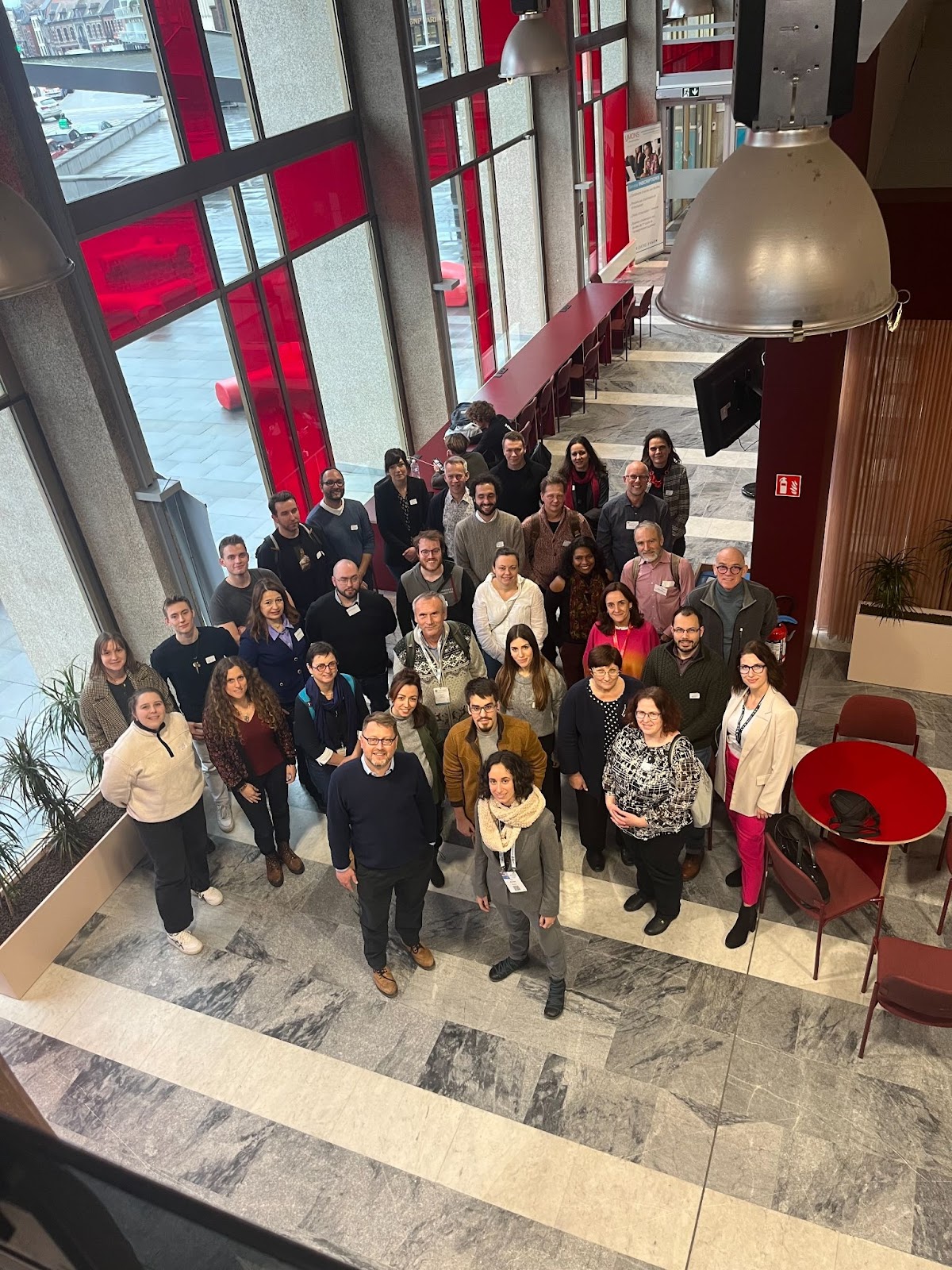
On 25 and 26 January 2024, project partners from across Europe met for the first time in Mons, Belgium and marked the beginning of the 4-year endeavour that is WildPosh. During the two days of the meeting, the partners had the chance to discuss objectives and strategies and plan their work ahead. 

This aligns with the objectives of the European Green Deal and EU biodiversity strategy for 2030, emphasising the need to reduce pollution and safeguard pollinators. WildPosh focuses on understanding the routes of chemical exposure, evaluating toxicological effects, and developing preventive measures. By addressing knowledge gaps in pesticide risk assessment for wild pollinators, the project contributes to broader efforts in biodiversity conservation.

During the kick-off meeting in Mons, WildPosh’s project coordinator Prof. Denis Michez (University of Mons, Belgium) gave an introductory presentation.

As a leader of Work Package #7: “Communication, knowledge exchange and impact”, Pensoft is dedicated to maximising the project’s impact by employing a mix of channels in order to inform stakeholders about the results from WildPosh and raise further public awareness of wild and managed bees’ health.

Pensoft is also tasked with creating and maintaining a clear and recognisable project brand, promotional materials, website, social network profiles, internal communication platform, and online libraries. Another key responsibility is the development, implementation and regular updates of the project’s communication, dissemination and exploitation plans, that WildPosh is set to follow for the next four years.

“It is very exciting to build on the recently concluded PoshBee project, which set out to provide a holistic understanding of how chemicals affect health in honey bees, bumble bees, and solitary bees, and reveal how stressors interact to threaten bee health. WildPosh will continue this insightful work by investigating these effects on wild pollinators, such as butterflies, hoverflies and wild bee species, with the ultimate goal of protecting these small heroes who benefit the well-being of our planet,”

says Teodor Metodiev, WildPosh Principal Investigator for Pensoft.

For the next four years, WildPosh will be working towards five core objectives: 

1) Determine the real-world agrochemical exposure profile of wild pollinators at landscape level within and among sites 

2) Characterise causal relationships between pesticides and pollinator health 

3) Build open database on pollinator traits/distribution and chemicals to define exposure and toxicity scenario

4) Propose new tools for risk assessment on wild pollinators

5) Drive policy and practice.


Consortium:

The consortium consists of 17 partners coming from 10 European countries. Together, they bring extensive experience in Research and Innovation projects conducted within the Horizon programmes, as well as excellent scientific knowledge of chemistry, modelling, nutritional ecology, proteomics, environmental chemistry and nutritional biology.

  1. University of Mons
  2. Pensoft Publishers
  3. Eesti Maaülikool (Estonian University of Life Sciences)
  4. BioPark Archamps
  5. French National Agency for Food, Environmental and Occupational Health & Safety
  6. French National Centre for Scientific Research
  7. Martin Luther University Halle-Wittenburg
  8. Albert Ludwigs University Freiburg
  9. UFZ Helmholtz Centre for Environmental Research
  10. University of Turin
  11. Italian National Institute of Health
  12. National Veterinary Research Institute – State Research Institute
  13. University of Novi Sad Faculty of Sciences
  14. University of Novi Sad, BioSense Institute-Research Institute for Information Technologies in Biosystems
  15. University of Murcia
  16. Royal Holloway and Bedford New College
  17. The University of Reading

Visit can follow WildPosh on BlueSky (@wildposh.eu) X/Twitter (@WildPoshProject), Instagram (/wildposhproject) and Linkedin (/wildposh-eu)

Study reveals new records for the Serbian wild bee fauna

This new study not only presents new records of bee species in Serbia and confirms some old ones, but also provides additional information about European distribution.

Pollinators play a crucial role in our ecosystems by pollinating flowering plants and crops, contributing to the planetary and human well-being. During the past decade, the decline in insect pollinators has become a more and more disturbing issue that countless scientific and public communities are trying to tackle every day.

Published in the Journal of Hymenoptera Research, a new study aims to contribute to updating the knowledge on wild bee diversity in Serbia, necessary for determining conservation priorities and future endeavours at the national level, but also for improving the understanding of the status of European pollinators. The study is also making an attempt to upgrade the exciting data provided by the recently published checklist of European bees, European bees country records, and, focusing on Serbia, a preliminary list of 706 bee species.

Map of Serbia showing the localities where bee specimens were collected.

To do that, researchers used data from the implementation of the national project SPAS, and within the EU-funded project Safeguard. With the aim of monitoring the diversity and abundance of insect pollinators in Serbia, 54 sites were surveyed three times throughout the 2022 season.

The transect walks and pan traps used for the assessment led to the discovery of 312 bee species. Results show that 25 of these have not been previously recorded for Serbia. Furthermore, the study confirms the presence of 26 species, without any available records from the 21st century.

Graphic view of the number of species detected depending on the sampling methods A at all studied sites B at a subset of sites where both sampling methods were conducted.

The authors also share that 79 of the examined species were known only from literature-based data and six of the recorded species are considered threatened with 67 (10 newly recorded) assessed as Data Deficient in the European Red List of Bees. In addition, the study manages to achieve the goal of updating the current knowledge of bee species occurring in Serbia. By recording 25 new species, the Safeguard study successfully extends the national list with new recordings – from 706 to 731 species.

This new study not only presents new records of bee species in Serbia and confirms some old ones, but also provides additional information about European distribution, required for new assessment at the European level.

Research article:

Mudri-Stojnić S, Andrić A, Józan Z, Likov L, Tot T, Grković A, Vujić A (2023) New records for the wild bee fauna (Hymenoptera, Anthophila) of Serbia. Journal of Hymenoptera Research 96: 761-781. https://doi.org/10.3897/jhr.96.107595

Natural history collections shed light on bumblebees’ modern struggles

Using pollen metabarcoding, researchers analyzed historical and recent bee specimens, revealing significant shifts in foraging patterns.

A new study highlights potential causes for changing foraging habits of bumblebees. Using advanced molecular techniques called pollen metabarcoding, researchers investigated interactions between bumblebees and plants in Cuxhaven, Germany, and how they changed over 60 years. Their findings can help us understand the connections between availability of floral resources and changing landscapes.

The study, led by the Botany Department of the University of Kassel (Germany) in collaboration with the Leibniz Institute for the Analysis of Biodiversity Change (Germany), used bumblebee specimens from historical museum collections dating back to 1968/69 and compared them with bumblebees collected in the field in 2019. By analyzing pollen samples attached to the bodies of the bees, the researchers were able to identify the plant species they had interacted with.

The results revealed significant shifts in the foraging habits of bumblebees between the late 1960s and more recent sampling periods. In particular, there was a noticeable decrease in interactions with Fabaceae plants in 2019 compared to the past. “This suggests that changes in the landscape have led to alterations in the availability of floral resources, which may contribute to the decline of specialized bee species,” the researchers explain.

“The successful application of scalable molecular techniques to analyze historical pollen samples highlights the value of museum collections as a valuable resource for biodiversity research,” they add. “This study, published in the journal Metabarcoding and Metagenomics, serves as a proof of concept for comparative analysis of recent and historical pollination data, providing important insights into the changes in foraging trends of bumblebees over time.”

“In conclusion, this study contributes to our understanding of bumblebee interactions with foraging resources and the impact of landscape changes on their foraging habits,” say the researchers. Their findings underscore the importance of conserving and restoring suitable habitats for pollinators.

“Future research in this field is expected to provide valuable insights for the conservation and management of pollinators and their critical role in maintaining ecosystems,” they conclude.

Original source:

Kolter A, Husemann M, Podsiadlowski L, Gemeinholzer B (2023) Pollen metabarcoding of museum specimens and recently collected bumblebees (Bombus) indicates foraging shifts. Metabarcoding and Metagenomics 7: e86883. https://doi.org/10.3897/mbmg.7.86883

Images by Andreas Kolter

Follow Metabarcoding and Metagenomics on social media:

Recruiting participants to the first European Red list of insect taxonomists

Contributors will enable the EU to take action to plug in the essential scientific knowledge to address insect declines

The ‘Red List of Taxonomists’ initiative, funded by the European Union, launches its registration portal, where professionals and citizen scientists are called to register on. The purpose is to build a database of European taxonomy experts in the field of entomology, the biological discipline dedicated to insects. The analysis of these data will elucidate the trends in available expertise, thereby forming the basis of key recommendations for policy makers to further allocate necessary efforts and funds to support taxonomists’ work and contribute to protecting European biodiversity and beyond.

Globally, insect populations have been catastrophically plummeting over the last decades. According to the first major Europe-wide survey of honeybee colonies, conducted in 2013, some European countries lost as many as one-third of their colonies every winter. On the other hand, estimates state, the European agriculture industry alone ‘owes’ at least €22 billion per year to honey bees and wild bees, in addition to many species from other insect orders, as together they ensure pollination for over 80% of crops and wild plants in Europe.

Insect pollination of plants is an irreplaceable service to people
Photo: Lenka Z (pexels)

The health of European pollinators on species and population level and other insects essential in our ecosystems strongly relies on our ability to rapidly turn the growing awareness about these worrying trends into swift, decisive actions. These decisions are crucial to mitigate the negative impacts of these alarming trends in human activities, mainly industrial agriculture. Taxonomists – the people who can identify, discover and monitor insect species – have a decisive role to play.

Often specialised in specific insect groups, they can investigate the diversity and abundance of insects. To a great concern, the numbers of trained insect taxonomists seem also to be fast declining. There is the real danger of losing numerous species before we get the chance to even learn about their existence! 

On a more positive note, while species extinction is an irreversible event, certain taxonomic expertise can be nourished and ‘brought back to life’ if only we have the data and analyses to bring to the attention of the relevant education institutions, governments and policy-makers, so that the necessary resources are allocated to education, training, career support and recognition.

This is how the ‘Red List of Taxonomists’ project, an initiative by the organisation uniting the most important and largest European natural science collections (CETAF), the world’s authority on assessing the risk of extinction of organisms: the International Union for Conservation of Nature (IUCN) and the scientific publisher with a long history in the biodiversity and ecology fields: Pensoft, and funded by the European Commission, comes into play. Launched earlier this year, the ‘Red List of Taxonomists’ aims to compile the very first inventory of taxonomic expertise for any group of organisms, understandably choosing the class of insects. 

Bringing together scientists, research institutions and learned societies from across Europe, the project will compare the trends and extract recommendations to overcome the risks, while preserving and further evolving the expert capacity of this scientific community.

The precious skills of insect taxonomists must be preserved and developed
Photo: Grafvision, Adobe Stock

As partners of the project, CETAF and IUCN are mobilising experts from their respective networks to populate the ‘Red List of Taxonomists’ database. In parallel, Pensoft is extracting further data of authors, reviewers and editors from taxonomic publications across its portfolio of academic journals and books, in addition to major relevant databases working with scholarly literature. 

To reach experts, including professionals not necessarily affiliated with partnering institutions, as well as citizen scientists, the team is now calling for European taxonomists to register via the newly launched ‘Red List of Taxonomists’ portal and provide their data by filling a short survey. Their data will not be publicly available, but it will be used for in-depth analyses and reports in the concluding stage of the project, scheduled for early 2022. The collection of the data is in full compliance with GDPR requirements.

***

Insect taxonomists, both professional and citizen scientists, are welcome to register on the Red List of Taxonomists portal at: red-list-taxonomists.eu and further disseminate the registration portal to fellow taxonomists.

***

Follow and join the conversation on Twitter using the #RedListTaxonomists hashtag. 

Bees thrive where it’s hot and dry: a unique biodiversity hotspot located in North America

The United States-Mexico border traverses through large expanses of unspoiled land in North America, including a newly discovered worldwide hotspot of bee diversity. Concentrated in 16 km2 of protected Chihuahuan Desert are more than 470 bee species, a remarkable 14% of the known United States bee fauna.

One of the late-summer desert bees, female Svastra sp. on flower of Verbesina enceliodes. Photo by Bruce D. Taubert

This globally unmatched concentration of bee species is reported by Dr. Robert Minckley of the University of Rochester and William Radke of the United States Fish and Wildlife Service in the open-access, peer-reviewed Journal of Hymenoptera Research.

Scientists studying native U.S. bees have long recognized that the Sonoran and Chihuahuan deserts of North America, home to species with interesting life histories, have high bee biodiversity. Exactly how many species has largely remained speculation. Together with students from Mexico, Guatemala and the United States, the authors made repeated collections over multiple years, identifying more than 70,000 specimens. 

Without such intensive collecting, a full picture of the bee diversity would not have been possible. Most of these bee species are solitary, without a queen or workers, which visit flowers over a 2-4 week lifespan and specialize on pollen and nectar from one to a few plants. Furthermore, these desert species experience periodic drought, which the immature stages survive by going into dormancy for years, much like the seeds of the desert plants they pollinate. 

One of the spring-active desert bees, female Centris caesalpiniae on flower of Krameria. Photo by Bruce D. Taubert

Additionally, bee diversity is notoriously difficult to estimate and compare among studies, because of differences in the collecting techniques and the size of the studied area. An unexpected benefit of the regular and intensive sampling for this study was the opportunity to test if the observed bee diversity approached the true bee diversity in this region, or if many more species were yet to be found. In this case, the larger San Bernardino Valley area is home to 500 bee species, only slightly above the number of species recovered along the border – an unusually robust confirmation of the researchers’ estimate. 

One of the spring-active desert bees, male Centris caesalpiniae on flower of Acacia. Photo by Bruce D. Taubert

What we know about the decline of bees due to human activity, along with that of other pollinators, is based primarily on diversity data from human-modified habitats. Needed is baseline information on native bees from pristine areas to help us assess the magnitude and understand the ways in which humans impact bee faunas. This study from the Chihuahuan Desert is therefore an important contribution towards filling that knowledge gap from one of the bee biodiversity hotspots in the world. 

Original source

Minckley RL, Radke WR (2021) Extreme species density of bees (Apiformes, Hymenoptera) in the warm deserts of North America. Journal of Hymenoptera Research 82: 317-345. https://doi.org/10.3897/jhr.82.60895

Scientists unravel the evolution and relationships for all European butterflies in a first

For the first time, a complete time-calibrated phylogeny for a large group of invertebrates is published for an entire continent. A German-Swedish team of scientists provide a diagrammatic hypothesis of the relationships and evolutionary history for all 496 European species of butterflies currently in existence. Their study provides an important tool for evolutionary and ecological research, meant for the use of insect and ecosystem conservation.

For the first time, a complete time-calibrated phylogeny for a large group of invertebrates is published for an entire continent. 

The figure shows the relationships of the 496 extant European butterfly species in the course of their evolution during the last 100 million years.
Image by Dr Martin Wiemers

In a recent research paper in the open-access, peer-reviewed academic journal ZooKeys, a German-Swedish team of scientists provide a diagrammatic hypothesis of the relationships and evolutionary history for all 496 European species of butterflies currently in existence. Their study provides an important tool for evolutionary and ecological research, meant for the use of insect and ecosystem conservation.

In order to analyse the ancestral relationships and history of evolutionary divergence of all European butterflies currently inhabiting the Old continent, the team led by Martin Wiemers – affiliated with both the Senckenberg German Entomological Institute and the Helmholtz Centre for Environmental Research – UFZ, mainly used molecular data from already published sources available from NCBI GenBank, but also contributed many new sequences, some from very local endemics for which no molecular data had previously been available.

The phylogenetic tree also includes butterfly species that have only recently been discovered using molecular methods. An example is this Blue (Polyommatus celina), which looks similar to the Common Blue. It used to be mistaken for the Common Blue in the Canary Islands and the southwestern part of the Mediterranean Region.
Photo by Dr Martin Wiemers

Butterflies, the spectacular members of the superfamily Papilionoidea, are seen as an important proponent for nature conservation, as they present an excellent indicator group of species, meaning they are capable of inferring the environmental conditions of a particular habitat. All in all, if the local populations of butterflies are thriving, so is their habitat.

Furthermore, butterflies are pollinating insects, which are of particular importance for the survival of humans. There is no doubt they have every right to be recognised as a flagship invertebrate group for conservation.

While many European butterflies are seriously threatened, this one: Madeiran Large White (Pieris wollastoni) is already extinct. The study includes the first sequence of this Madeiran endemic which was recorded in 1986 for the last time. The tree demonstrates that it was closely related to the Canary Island Large White (Pieris cheiranthi), another threatened endemic butterfly, which survives only on Tenerife and La Palma, but is already extinct on La Gomera.
Photo by Dr Martin Wiemers

In recent times, there has been a steady increase in the molecular data available for research, however, those would have been only used for studies restricted either to a selected subset of species, or to small geographic areas. Even though a complete phylogeny of European butterflies was published in 2019, also co-authored by Wiemers, it was not based on a global backbone phylogeny and, therefore, was also not time-calibrated.

In their paper, Wiemers and his team point out that phylogenies are increasingly used across diverse areas of macroecological research, such as studies on large-scale diversity patterns, disentangling historical and contemporary processes, latitudinal diversity gradients or improving species-area relationships. Therefore, this new phylogeny is supposed to help advance further similar ecological research.

The study includes molecular data from 18 localised endemics with no public DNA sequences previously available, such as the Canary Grayling (Hipparchia wyssii), which is only found on the island of Tenerife (Spain).
Photo by Dr Martin Wiemers

Original source: 

Wiemers M, Chazot N, Wheat CW, Schweiger O, Wahlberg N (2020) A complete time-calibrated multi-gene phylogeny of the European butterflies. ZooKeys 938: 97-124. https://doi.org/10.3897/zookeys.938.50878

How quickly do flower strips in cities help the local bees?

Insects rely on a mix of floral resources for survival. Populations of bees, butterflies, and flies are currently rapidly decreasing due to the loss of flower-rich meadows. In order to deal with the widespread loss of fauna, the European Union supports “greening” measures, for example, the creation of flower strips.

A group of scientists from the University of Munich, led by Prof. Susanne S. Renner, has conducted the first quantitative assessment of the speed and distance over which urban flower strips attract wild bees, and published the results of the study in the open-access Journal of Hymenoptera Research.

Flower strips are human-made patches of flowering plants that provide resources for flower-visiting insects and insect- and seed-feeding birds. Previous experiments have proved their conservation value for enhancing biodiversity in agricultural landscapes.

The success of flower strips in maintaining populations of solitary bees depends on the floristic composition, distance from suitable nesting sites, and distance from other habitats maintaining stable populations of bees. To study the attractiveness of the flower strips in urban landscapes, the scientists used an experimental set-up of nine 1,000 sq. meters flower strips recently established in Munich by a local bird conservation agency.

“We identified and counted the bees visiting flowers on each strip and then related these numbers to the total diversity of Munich’s bee fauna and to the diversity at different distances from the strips. Our expectation was that newly planted flower strips would attract a small subset of mostly generalist, non-threatened species and that oligolectic species (species using pollen from a taxonomically restricted set of plants) would be underrepresented compared to the city’s overall species pool,”

shared Prof. Susanne S. Renner.

Bees need time to discover new habitats, but the analysis showed that the city’s wild bees managed to do that in just one year so that the one-year-old flower strips attracted one-third of the 232 species recorded in Munich between 1997 and 2017.

Surprisingly, the flower strips attracted a random subset of Munich’s bee species in terms of pollen specialization. At the same time, as expected, the first-year flower-strip visitors mostly belonged to common, non-threatened species.

The results of the study support that flower strip plantings in cities provide extra support for pollinators and act as an effective conservation measure. The authors therefore strongly recommend the flower strip networks implemented in the upcoming Common Agricultural Policy (CAP) reform in the European Union.

###

Original source:

Hofmann MM, Renner SS (2020) One-year-old flower strips already support a quarter of a city’s bee species. Journal of Hymenoptera Research 75: 87-95. https://doi.org/10.3897/jhr.75.47507

Bee diversity and richness decline as anthropogenic activity increases, confirm scientists

The researchers compared wild bee communities in the tropical dry forest of Mexico living in three habitat conditions: preserved vegetation, agricultural sites and urbanised areas

Changes in land use negatively affect bee species richness and diversity, and cause major shifts in species composition, reports a recent study of native wild bees, conducted at the Sierra de Quila Flora and Fauna Protection Area and its influence zone in Mexico.

Having registered a total of 14,054 individual bees representing 160 species, 52 genera, and five families over the span of a year, the scientists conclude that the studied preserved areas demonstrated “significantly greater” richness and diversity.

In their paper, published in the open-access Journal of Hymenoptera Research, a research team from the University of Guadalajara, Mexico, led by Alejandro Muñoz-Urias, compare three conditions within the tropical dry forest study site: preserved vegetation, an agricultural area with crops and livestock, and an urbanised area.

This bee species (Aztecanthidium xochipillium) is known exclusively from Mexico.

The researchers confirm earlier information that an increase in anthropogenic disturbances leads to a decrease in bee richness and diversity. While availability of food and nesting sites are the key factors for bee communities, changes in land use negatively impact flower richness and floral diversity. Thereby, turning habitats into urbanised or agricultural sites significantly diminishes the populations of the bees which rely on specific plants for nectar and pollen. These are the species whose populations are threatened with severe declines up to the point of local extinction.

According to their data, about half of the bees recorded were Western honey bees (49.9%), whereas polyester bees turned out to be the least abundant (1.2 %).

On the other hand, some generalist bees, which feed on a wide range of plants, seem to thrive in urbanised areas, as they take advantage of people watering wild and ornamental plants at times where draughts might be eradicating native vegetation.

“That is the reason why bees that can use a wide variety of resources are often able to compensate when circumstances change, although some species disappear due to land use changes,” explain the scientists.

This is a tropical dry forest in the dry (left) and rainy season (right).

In conclusion, the authors recommend that the tropical dry forests of both the study area and Mexico in general need to be protected in order for these essential pollinators to be conserved.

“Pollinators are a key component for global biodiversity, because they assist in the sexual reproduction of many plant species and play a crucial role in maintaining terrestrial ecosystems and food security for human beings,” they remind.

###

Original source:

Razo-León AE, Vásquez-Bolaños M, Muñoz-Urias A, Huerta-Martínez FM (2018) Changes in bee community structure (Hymenoptera, Apoidea) under three different land-use conditions. Journal of Hymenoptera Research 66: 23-38. https://doi.org/10.3897/jhr.66.27367

A new hope: One of North America’s rarest bees has its known range greatly expanded

The Macropis Cuckoo Bee is one of the rarest bees in North America, partly because of its specialized ecological associations. It is a nest parasite of oil-collecting bees of the genus Macropis which, in turn, are dependent on oil-producing flowers of the genus Lysimachia.

In fact, the cuckoo bee – which much like its feather-bearing counterpart does not build a nest of its own, but lays its eggs in those of other species instead – is so rare that it was thought to have gone extinct until it was collected in Nova Scotia, Canada, in the early 2000s. As a result, the Macropis Cuckoo Bee was brought to the attention of the Committee on the Status of Endangered Wildlife in Canada (COSEWIC).

Recently, an individual reported from Alberta, Canada, brought new hope for the survival of the species. In addition to previously collected specimens from Ontario, this record greatly expands the known range of the cuckoo.

Scientists Dr Cory S Sheffield, Royal Saskatchewan Museum, Canada, who was the one to rediscover the “extinct” species in Nova Scotia, and Jennifer Heron, British Columbia Ministry of Environment & Climate Change Strategy, present their new data, and discuss the conservation status of this species in their paper, published in the open access journal Biodiversity Data Journal.

“This species has a very interesting biology,” they say, “being a nest parasite – or cuckoo – of another group of bees that in turn have very specialized dietary needs.”

Image 2 Macropis on flower

The hosts, bees of the genus Macropis (which themselves are quite rare) are entirely dependent on plants of the primrose genus Lysimachia. Moreover, they only go after those Lysimachia species whose flowers produce oil droplets, which the insects collect and feed to their larvae. Thus, Macropis bees require these oil-producing flowers to exist just like Macropis cuckoo bees need their hosts and their nests. Curiously, this reliance, as suggested by previous studies on related European species, has made the female cuckoos develop the ability to find their host’s nests by the smell of the floral oils.

“This level of co-dependence between flower, bee, and cuckoo bee, makes for a very tenuous existence, especially for the cuckoo,” the authors comment. “The recent specimen from Alberta lets us know that the species is still out there, and is more widespread than we thought.”

In conclusion, the authors suggest that continuing to monitor for populations of rare bees, and documenting historic records, are crucial for conservation status assessments of at-risk species.

Biodiversity Data Journal provides a great venue to share this type of information with our colleagues for regional, national, and international efforts for species conservation,” they note.

###

Original source:

Sheffield C, Heron J (2018) A new western Canadian record of Epeoloides pilosulus (Cresson), with discussion of ecological associations, distribution and conservation status in Canada. Biodiversity Data Journal 6: e22837. https://doi.org/10.3897/BDJ.6.e22837

Bee populations expanded during global warming after the last Ice Age

The Australian small carpenter bee populations appear to have dramatically flourished in the period of global warming following the last Ice Age some 18,000 years ago.

The bee species is found in sub-tropical, coastal and desert areas from the north-east to the south of Australia. Researchers Rebecca Dew and Michael Schwarz from the Flinders University of South Australia teamed up with Sandra Rehan, the University of New Hampshire, USA, to model its past responses to climate change with the help of DNA sequences. Their findings are published in the open access Journal of Hymenoptera Research.

“You see a rapid increase in population size from about 18,000 years ago, just as the climate began warming up after the last Ice Age,” says lead author Rebecca Dew. “This matches the findings from two previous studies on bees from North America and Fiji.”

“It is really interesting that you see very similar patterns in bees around the world,” adds Rebecca. “Different climate, different environment, but the bees have responded in the same way at around the same time.”

In the face of future global warming these finding could be a good sign for some of our bees.

However, the news may not all be positive. There are other studies showing that some rare and ancient tropical bees require cool climate and, as a result, are already restricted to the highest mountain peaks of Fiji. For these species, climate warming could spell their eventual extinction.

“We now know that climate change impacts bees in major ways,” says Rebecca, “but the challenge will be to predict how those impacts play out. They are likely to be both positive and negative, and we need to know how this mix will unfold.”

Bees are major pollinators and are critical for many plants, ecosystems, and agricultural crops.Image2

###

Original source:

Dew RM, Rehan SM, Schwarz MP (2016) Biogeography and demography of an Australian native bee Ceratina australensis (Hymenoptera, Apidae) since the last glacial maximum. Journal of Hymenoptera Research 49: 25-41. doi: 10.3897/JHR.49.8066