Pensoft at TDWG2026: Pushing the boundaries of innovation in biodiversity data management forward

Last week marked another annual meeting of the Biodiversity Information Standards network, otherwise known as TDWG, with the Norwegian capital Oslo hosting the event between 20 and 25 September.

Last week marked another annual meeting of the Biodiversity Information Standards network, otherwise known as TDWG, with the Norwegian capital Oslo hosting the event between 20 and 25 September.

TDWG is the international, non-profit organisation formerly known as the Taxonomic Databases Working Group, which develops and maintains the standards, such as Darwin Core, that allow biodiversity data to be shared, integrated and understood across institutions worldwide.

The six-day programme was a meeting point for over 300 stakeholders from research, practitioner and corporate circles, with proceedings centred around one central topic – “Research and Robot- Ready Biodiversity Data Standards”. In that sense, the themes of accessibility, responsibility, innovation and collaboration were foremost on the minds of participants as they contemplated how information on the biosphere should be extracted, consolidated and shared in the years to come.

As a long-standing partner of TDWG, Pensoft Publishers served as both a sponsor and an exhibitor for the event. In the latter capacity, the company contributed with a joint booth for three of the EU-funded projects it is leading the outreach efforts for:

  • BMD – an initiative working towards a Biodiversity Explorer for high-throughput biodiversity monitoring tools, biodiversity data and biodiversity analyses for better conservation across Europe
  • TETTRIX – a new arrival building a next-generation taxonomic system connecting knowledge, expertise and innovation for all across the Old Continent
  • ANERIS – a pan-European effort to mobilise a network of operational marine biology via a new technological infrastructure
The Pensoft team at the joint booth of the BMD, TETTRIX and ANERIS projects.

A number of other projects from Pensoft’s communication portfolio also found a place in the display, including BEAGLE, OneSTOP, B-Cubed, MAMBO, OBSGESSION and BioAgora. Furthermore, 14 of the company’s journals were in the spotlight, including Biodiversity Information Science and Standards (BISS), the official journal of the TDWG community (where all of the conference’s abstracts are set to be published).  

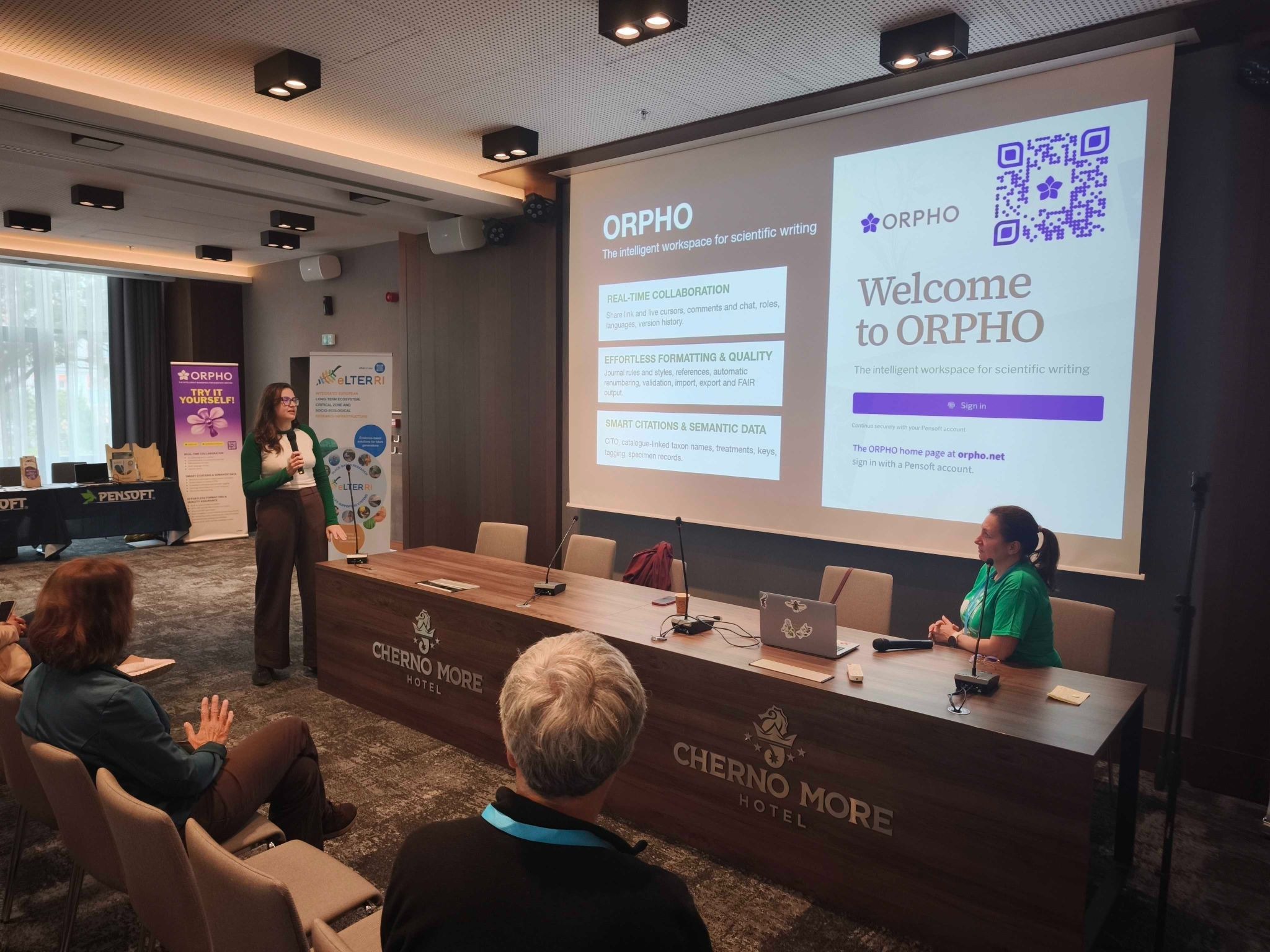
Crucially, the event also saw the official launch of ORPHO, Pensoft’s new collaborative workspace for scientific writing. Founder and CEO Prof. Lyubomir Penev and CTO Teodor Georgiev conducted live demos of the tool, showcasing how manuscripts crafted within it with full version control for authors become discoverable, interoperable and FAIR-compliant.

In the context of TDWG2026’s agenda, they also presented ORPHO’s integrated semantic annotation and communication instruments as part of the workshop “How Literature Services can Support & Benefit from Biodiversity Publication and Data Standards?” on 24 September. The workspace was received with anticipation and enthusiasm by attendees, with many expressing a desire to test it out for themselves.

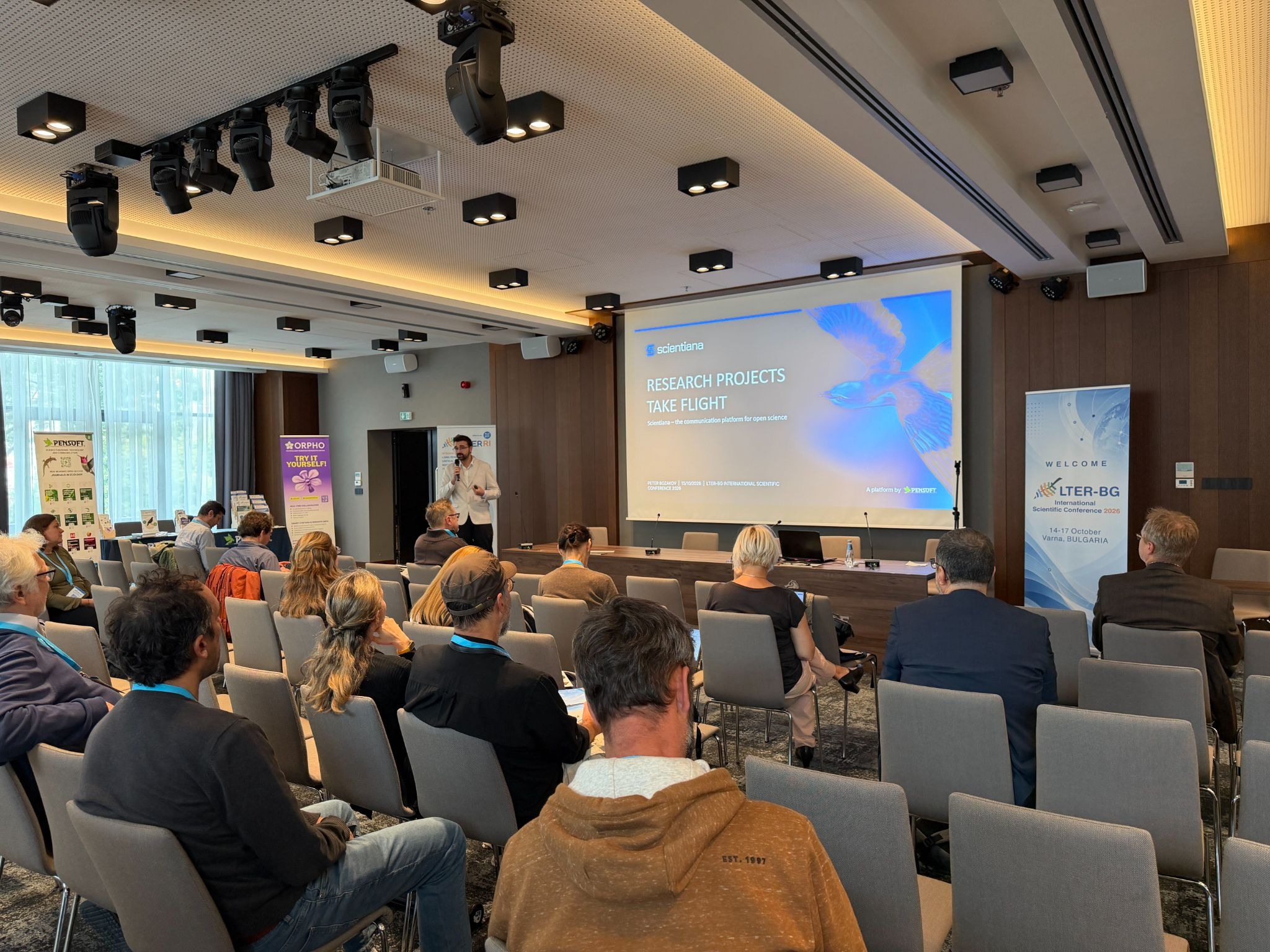
They were also treated with a tease of Pensoft’s next large-scale endeavour, as Senior Communications Officer Peter Bozakov pulled the curtain behind the forthcoming communication platform for research projects Scientiana.

As for other notable contributions to the wider conference agenda by researchers affiliated with Pensoft’s publishing or project activities:

  • The session “Operationalising Biodiversity Digital Twins within Data Space Ecosystems”, which was co-led by BMD coordinator and long-time author and reviewer across several Pensoft journals, including Biodiversity Data Journal and Research Ideas and Outcomes, Niels Raes, and showcased a number of innovative outputs from the project. As such, it was an important occasion to assess the initiative’s progress towards unifying Europe’s Data Space within a single Biodiversity Explorer.
Niels Raes presenting “Mainstreaming high-throughput biodiversity monitoring using AI” at TDWG 2026.
  • The symposium “Publishing and Communications Promoting Biodiversity, Natural History Collections, People, Data and Data Standards”, for which Deborah Paul (co-Editor-in-Chief of the National History Collections and Museomics (NHCM) journal) had the role of co-organiser. Within it, the TETTRIX project’s vision for the automated tracking of taxonomic research activities was laid out by consortium member David Fichtmüller. Moreover, Shelley James (co-Editor-in-Chief for NHCM) delivered an insightful talk on the creative promotion of biodiversity data and standards for success and recognition.
Co-Editors-in-Chief of NHCM, Shelley James and Deborah Paul, presenting “Hit or miss? Creative promotion of biodiversity data and standards for success and recognition” at TDWG 2026.

Notably, the Biodiversity Information Science and Standards (BISS) journal is the home for TDWG conference abstracts. TDWG 2026 presenters can currently submit their abstracts there and publish them in an extended abstract or mini-paper format completely free of charge. The journal also hosts abstracts from conferences held over the past decade. You can browse the TDWG 2026 collection here.

Last but not least, the company’s sponsorship supported two awards at TDWG2026 (with a free publication in a Pensoft journal as an accompanying prize):

  • Best Student Oral Presentation – awarded to Yeshan Qui for “Reporting structure and sampling-bias correction in citizen-science bird data across Asian cities”
  • Best Student Poster – awarded to Claudia Campanini for “Improving marine fieldwork documentation and metadata with Adaptable Standardised Methods Reporting (ASMR)”
Claudia Campanini receiving the Pensoft Best Student Poster Award at TDWG 2026.

Overall, TDWG2026 proved itself a crucial forum for mapping out the future of biodiversity monitoring and the management of the myriad data streams that emerge from it. Pensoft is proud to be an important actor in this process, contributing with innovative tools and solutions at the heart of the interface between research and practice. As summarised by Prof. Penev:

“Given its status as a large-scale conference centred around the future of biodiversity sciences in the age of AI, TDWG2026 was a crucial venue for unveiling Pensoft’s forward-looking vision for academic publishing and science communication. The “pearl” of these pursuits is undoubtedly the ORPHO workspace, a tool that is well-placed to introduce a new standard when it comes to collaborative AI-FAIR research in Europe and beyond.”

***


Follow us on Bluesky, Facebook, X, and LinkedIn for future conference updates.

Pensoft at the Nordic Oikos-GfÖ 2026 conference: Integrating the Diversity of Ecology

Between 13-17 September 2026, Pensoft Publishers joined the Nordic Oikos-GfÖ 2026 conference in Odense, Denmark.

Between 13-17 September 2026, Pensoft Publishers joined the Nordic Oikos-GfÖ 2026 conference, jointly organised by the Nordic Society Oikos and the Ecological Society of Germany, Austria and Switzerland (GfÖ) in Odense, Denmark.

Themed “Integrating the Diversity of Ecology”, the event welcomed over 1,000 researchers in the field from across career stages, who had the opportunity to enjoy conference talks across 36 thematic sessions, as many as six keynote talks, two poster sessions, several open society meetings and quite a few social events, including excursions and a conference dinner. 

Conference delegates enjoying the musical clock installation mounted on an elevated balcony on the glass façade of the ODEON building, where the Nordic Oikos-GfÖ 2026 conference took place between 14 and 17 September 2026.

Throughout the scientific event, conference delegates had the opportunity to also explore the various publishing services offered by Pensoft to authors of research, journal managers, conference organisers; the diverse portfolio of almost 100 open-access peer-reviewed journals published on Pensoft’s ARPHA Publishing Platform.

Beyond publishing solutions, a key focus was given to OBSGESSION: a Horizon Europe-funded project where Pensoft is actively involved. To better understand and predict changes in terrestrial and freshwater ecosystems, the OBSGESSION consortium integrates multi-source Earth Observation data (such as high-resolution satellite imagery and drone monitoring) with ground-based in-situ research, including advanced environmental DNA (eDNA) sampling. By coupling these data streams with cutting-edge detection-attribution modelling and machine learning algorithms, the project generates scalable Essential Biodiversity Variables (EBVs). These ecological approaches and analytical frameworks are actively tested and validated through six biodiversity pilots across diverse European ecosystems. In the open-science Research Ideas and Outcomes journal, you can find a collection of project outputs, including research papers, project reports and deliverables, and guideline papers published across journals and platforms.

As a leader of the “Dissemination, Multi-stakeholder outreach and synergies” work package at OBSGESSION, Pensoft is tasked with stakeholder engagement and community building, ultimately contributing to the high impact of the resulting outputs, methodologies, and policy recommendations that aim to strengthen public understanding of biodiversity change.  

At the Pensoft-OBSGESSION-branded booth, conference participants would stop by to chat with Pensoft’s Head of Journal development and PR: Iva Boyadzhieva and Senior Communications Officer: Desislava Raykova.

As a leader of the “Dissemination, Multi-stakeholder outreach and synergies” work package at OBSGESSION, Pensoft is tasked with stakeholder engagement and community building, ultimately contributing to the high impact of the resulting outputs, methodologies and policy recommendations that aim to strengthen public understanding of biodiversity change.

*

One of the six keynote talks was presented by Prof. Dr. Isabell Hensen (Martin Luther University Halle, Germany), who received the GfÖ Honorary Medal 2026 for her leading, forward-looking contributions to ecological research and the scientific community. Her work examines how genetic variation, environmental conditions, disturbance, and plant-animal interactions shape plant populations, with particular emphasis on rare species, biological invasions, and the regeneration of degraded forests.

In her talk, titled “One spark is enough: regeneration ecology of Andean forests under global change”, she reported on post-fire regeneration processes in tropical Andean forests, based on long-term field experiments and observational studies. 

Hensen focused on the well-studied endemic plant genus Polylepis, which forms the world’s highest-elevation forests and illustrates how fire has shaped ecosystem dynamics over millennia. Her talk also mentioned a 2022 monograph of the genus, published in the Pensoft journal PhytoKeys by Tatiana Erika Boza Espinoza (Pontificia Universidad Católica del Perú) and Michael Kessler (University of Zurich), which brought together results from 35 years of field and herbarium experience.

*

On Wednesday, Pensoft’s Iva Boyadzhieva delivered a presentation titled “Scholarly Communication: Lessons from the Publisher’s Kitchen”. She highlighted the vital role publishers play in helping researchers communicate their insights not only to peers, but also to decision-makers and the public. Emphasizing the publisher’s responsibility to support authors with robust infrastructure and dedicated human expertise, she outlined how Pensoft works to FAIRify scholarly publishing and future-proof scientific knowledge in an era of rapid AI development and expanding research output.

*

Pensoft’s team was delighted to meet up with dedicated readers, authors, reviewers, and editors from across Pensoft’s portfolio, as well as introduce Pensoft journals to attendees discovering them for the first time.

Unsurprisingly, well-established society journals published by Pensoft, such as Frontiers of Biogeography, NeoBiota, Vegetation Classification and Survey, Vegetation Ecology and Diversity and Italian Botanist drew plenty of attention, alongside long-standing Pensoft’s own titles like Nature Conservation, PhytoKeys, One Ecosystem and the Biodiversity Data Journal. 

Visitors were also particularly intrigued by several newly launched Pensoft journals. Developed in close collaboration with passionate researchers, these fresh outlets directly address key gaps in academic publishing. 

One of the newly launched journals in the spotlight was Agricultural and Ecological Modelling (AEM), which provides a unique scholarly outlet thanks to its modern approach to publishing by increasing transparency, giving credit to research objects across the entire modelling research lifecycle. This is achieved through publishing specialised article types, such as: Formal Model, Model Testing and Calibration, Model Implementation and Documentation, Data Papers and Software Descriptions. These new publishing formats are designed to keep pace with advances in Modelling research and to make it FAIR (Findable, Accessible, Interoperable, and Reusable) by enabling scholarly credit for diverse research outputs, often created by different groups of authors. For the time being, AEM remains a Diamond Open Access journal, meaning that it will not charge authors for open-access publication. 

Other recently founded journals addressing emerging and fast-developing disciplines within the ecological field that took the spotlight were:

  • Individual-Based Ecology: launched to support understanding and predicting ecological systems’ response to rapidly changing and novel conditions by linking individual responses to responses at higher levels of organisation.
  • Advances in Pollinator Research: a multidisciplinary journal publishing research on pollination ecology, pollinator-plant interactions, pollinator health and drivers of pollinator declines, crop and wild flower pollination, pollinator conservation practices, molecular ecology of pollinators, pollinator and pollination monitoring, decision support for policy and socio-economics.
  • Journal of Regeneration: a multidisciplinary journal for the dissemination of research results on regeneration and tissue repair across phyla. These mechanisms can be framed within an evolutionary framework and integrate a variety of cellular processes involving stem cells, dedifferentiating or even transdifferentiating cells. 

All of these journals operate with no article fees for either authors, nor readers.

To receive updates on new publications and relevant news, sign up for Email Alerts on any journal’s homepage. Creating a Pensoft account also allows users to  easily customise their notification preferences, follow additional journals, or filter updates by research topic. You can also follow journals on social media, including BlueSky, Facebook and Linkedin.

*

Supporting European Policy Through Priority Essential Biodiversity Variables (EBVs)

Delegates at the event showed strong interest in OBSGESSION’s first policy brief: “Prioritising Essential Biodiversity Variables (EBVs) to support European Union (EU) policy needs based on the EU’s Biodiversity Strategy for 2030.” To tackle a critical challenge in environmental monitoring, OBSGESSION focuses on prioritising key EBVs to directly support the EU Biodiversity Strategy 2030 – a roadmap designed to put Europe’s biodiversity on a path to recovery through 102 specific actions and sub-actions.

To align these policy needs with actionable data, the OBSGESSION team conducted an assessment to identify priority EBV candidates. By categorising EBV-applicable actions and indicators across different ecosystem realms and implementation stages, the project pinpointed the most essential variables needed to strengthen monitoring, reporting, and policy execution. The document is based on a deliverable by the project (D1.1 Policy Landscape and Needs Assessment).

This policy brief is part of a broader, ongoing effort within OBSGESSION to bridge the gap between biodiversity data and policy execution. To dive deeper into the science behind this topic, the project has hosted a dedicated seminar series exploring key aspects of the framework:

Bringing Methodologies to Life Across European Ecosystems

Beyond theoretical frameworks, OBSGESSION grounds its research in six biodiversity validation pilots across Europe. The case studies represent European biodiversity and ecosystem conservation challenges at scales varying from local to regional. Full details on each ecosystem pilot are now available in a collection of newly published pilot factsheets, which made their debut at the conference, where people could take a look at their digital versions. 

Reading those materials gives an insight into the practical testing environment to demonstrate how Earth observation, field research, and ecological modelling come together to deliver actionable biodiversity insights. You can also check out OBSGESSION’s biodiversity pilots on the project’s website.

The OBSGESSION in a Nutshell video presents a concise overview of the project’s overarching mission and components.

*

To relive the conference by exploring the detailed programme alongside the full abstracts, visit the conference website.

Keep up with future updates and news from Pensoft by following us on Bluesky, Facebook, X, and LinkedIn. 

Pensoft at the European Small Mammal Conservation Conference 2026

The inaugural conference took place in Sofia, Bulgaria, bringing together researchers, conservationists and practitioners to address gaps in small mammal research and monitoring. 

The inaugural European Small Mammal Conservation Conference (SMCC 2026) took place in Sofia, Bulgaria, from 21 to 25 September 2026, bringing together researchers, conservationists and practitioners from across Europe and beyond to address gaps in small mammal research and monitoring. 

Organised jointly by the Habitat Foundation, the Institute of Biodiversity and Ecosystem Research at the Bulgarian Academy of Sciences, the Dutch Mammal Society and Mammal Conservation Europe, with support from the Faculty of Biology at Sofia University, the conference formed part of the Life for Falcons project, funded by the EU LIFE Programme.

This year’s conference was held jointly with the 33rd Hamster Working Group and the VIII European Ground Squirrel Meeting, making hamsters and sousliks the primary focus, alongside broader topics including renewable energy development, agricultural impacts, reintroductions, predator–prey interactions and innovative methodologies in small mammal research.

Pensoft’s Participation

We were delighted to participate in SMCC 2026 with an exhibition booth, showcasing the breadth of publishing services we offer to the biodiversity and conservation community. It was a pleasure to present our portfolio of journals dedicated to advancing research across ecology, biodiversity and conservation.

We were particularly proud to present the following journals:

Meeting delegates from across the small mammal research community was tremendously rewarding, and we thoroughly enjoyed discussing how our journals can support and amplify their work.

Beyond our academic offerings, we were particularly excited to showcase beautiful art prints illustrated by our in-house scientific illustrator, Denitsa Peneva. The collection featured stunning depictions of otters, olinguitos and hamsters.

Pensoft’s art prints at SMCC 2026.

Conference Highlights

The scientific programme was exceptional, and we were privileged to attend many outstanding presentations that demonstrated the importance of innovative monitoring approaches and conservation action.

Lessons from Citizen Science for Small Mammal Conservation Monitoring in Great Britain

We were delighted to attend a talk by Matt Larsen-Daw, Chief Executive of the Mammal Society (UK), which presented a portfolio of citizen science programmes designed to address distribution knowledge and population monitoring across Great Britain. The programmes, united by the Mammal Mapper smartphone app, included the National Harvest Mouse Survey, the Searching for Shrews initiative, and the University Mammal Challenge. 

The presentation highlighted the value of standardised effort data, the differing trade-offs between structured and opportunistic recording, and the potential for these approaches to be applied across European contexts.

Matt Larsen-Daw presenting “Lessons from citizen science for small mammal conservation monitoring in Great Britain” at SMCC 2026.

Strong Decline of Hamster Populations in Bulgaria

We were equally impressed by Nedko Nedyalkov’s presentation documenting the significant decline in distribution and abundance of both the common hamster (Cricetus cricetus) and the Romanian hamster (Mesocricetus newtoni) across Bulgaria. The research revealed that population reductions, detected through owl pellet analysis and trapping methods, likely began in the 1950s with agricultural intensification and continue today. 

Given that both species are strictly protected under the EU Habitats Directive yet lack active conservation projects, the presentation substantiated the urgent need for targeted conservation measures. We are also pleased to note that Nedko serves as a subject editor for two of our open-access journals, ZooKeys and the Biodiversity Data Journal.

Nedko Nedyalkov presenting “Strong decline of the distribution and abundance of Cricetus cricetus and Mesocricetus newtoni (Mammalia: Cricetinae) in Bulgaria” at SMCC 2026.

Reintroduced Saker Falcons and Their Dependence on European Ground Squirrels

Yana Andonova’s presentation on the diet of Bulgaria’s reintroduced saker falcon population provided compelling evidence of the breeding birds’ overwhelming dependence on the European ground squirrel (Spermophilus citellus) as a primary food source.

Through food-remain analysis, visual observations and camera-trap monitoring, the research documented that ground squirrels comprised over 80 per cent of identified prey items, with small rodents accounting for 89 per cent overall! It is also worth mentioning that Andonova is an author in our open-access Biodiversity Data Journal.

Yana Andonova presenting “Reintroduced Saker Falcons (Falco cherrug Gray, 1834) are dependent on European ground squirrels during the breeding period in Bulgaria” at SMCC 2026.

Looking Forward

Attending SMCC 2026 was a genuine pleasure and particularly meaningful given that the conference took place in Sofia, the city in which our company is based. Connecting with researchers and conservationists working at the forefront of small mammal conservation, and sharing our commitment to advancing biodiversity research through open-access publishing, reinforced our dedication to supporting this important field. 

We look very much forward to engaging with this community again at future events!


Follow us on Bluesky, Facebook, X, and LinkedIn for future conference updates.

Pensoft launches ORPHO: A new intelligent workspace for scientific writing

The beta release of an innovative collaborative stand-alone authoring tool transforms manuscript preparation with semantic enrichment and real-time collaboration capabilities.

Scholarly publisher and technology provider Pensoft Publishers announces the beta launch of ORPHO, a revolutionary online platform designed to streamline collaborative scientific writing and produce AI-ready, future-proof scholarly literature. 

ORPHO presents a significant advancement in scholarly publishing technology, combining intuitive writing features with sophisticated semantic enrichment capabilities. The new platform builds upon Pensoft’s fifteen years of experience as a developer of semantic publishing infrastructure.

Key Features

Within a shared online workspace, researchers can start with built-in customisable templates, create their own or import an existing file. They can then team up with collaborators in real time using track changes, role-based user rights, inline comments, and document-level chat. More significantly, ORPHO automatically structures scientific content according to international publishing standards, making research outputs findable, discoverable, interoperable and reusable (FAIR) once published. 

Unlike its predecessor, the ARPHA Writing Tool, ORPHO is available as a standalone real-time collaborative workspace decoupled from journals hosted on Pensoft’s ARPHA Publishing Platform. Once a manuscript is ready, authors receive AI-FAIR machine-readable content that can be formatted to meet multiple journal requirements at the click of a button.

The platform’s adaptability to domain-specific workflows is currently being piloted in biodiversity science. ORPHO integrates seamlessly with leading biodiversity data aggregators, including the Global Biodiversity Information Facility (GBIF), Barcode of Life Data Systems (BOLD) and PlutoF, via import and export facilities for structured data, making ORPHO particularly valuable for researchers handling taxonomic, ecological and biodiversity data. 

Taxon names, for example, can be automatically imported and linked through persistent identifiers from sources like the Catalogue of Life (CoL), International Plant Names Index (IPNI), World Register of Marine Species (WoRMS) and World Flora Online (WFO).

Why ORPHO?

The name draws inspiration from multiple sources which reflect the tool’s philosophy and heritage. Named after Orphium: a unique plant genus endemic to South Africa whose sole species (Orphium frutescens) is known as the sea rose, ORPHO reflects the platform’s distinctive nature, heritage, and core philosophy.

It also evokes Orpheus, the legendary musician of ancient Thrace whose home region, the Rhodopi Mountains, lies in present-day Bulgaria, where ORPHO’s developer, Pensoft, is headquartered. The name thus honours the tool’s origins whilst embodying the exceptional creative performance it enables. 

***

Prof. Dr. Lyubomir Penev, founder and CEO of Pensoft, comments:

“We are well aware that researchers today face an overwhelming list of formatting requirements and technical demands in an AI-driven landscape. It is true that rapid technological advancement presents both immense opportunities and mounting complexities for researchers.

We built ORPHO to remove that friction by offering an intuitive, collaborative workspace that lets scientists focus on their research. As a scientific publisher, our mission is to make scholarly publishing a seamless, rewarding experience fit for the modern age.”

The beta release invites researchers, institutions and publishing platforms to trial ORPHO and provide feedback. Access is available at orpho.net.

Peer Review Week 2026: Building Capacity for the Long Run

Pensoft Publishers mark Peer Review Week 2026 by spotlighting some of its Editors-in-Chief across its diverse portfolio.

Every September since 2015, the scholarly publishing world has paused to examine the process that quietly underwrites the integrity of scientific knowledge. This year, Peer Review Week runs from 14 to 18 September, bringing together publishers, societies, funders, libraries and researchers to talk about the often unglamorous but essential job of reviewing each other’s work.

The 2026 theme was chosen by community vote – 2,115 votes in total, the highest participation in Peer Review Week’s history. “Peer Review Capacity: Volume, Speed, and Quality” emerged as the winner, taking 40% of the vote. The result reflects a strain the whole system is experiencing: submissions are rising faster than the pool of willing, qualified reviewers, while authors and funders expect faster decisions than ever. While editors are being asked to hold the line on rigour with the same volunteer hours they always had – or less.

So, to celebrate the essential work that reviewers do, highlight some of the strains the current system is under, and show how we at Pensoft are trying to support our reviewers, we wanted to spotlight our editors-in-chief, the people who see the submission pipeline every single day, by asking them what “capacity” really means to them, and what would need to change for peer review to become more sustainable.

Capacity starts with people

Person working on a laptop
Person working on a laptop. Credit to poungsaed_eco via Envato.

We asked our editors how they would describe “peer review capacity“. Almost every answer was rooted in the same place: people, and whether enough of them are still willing to do the work.

Mark Hauber, Editor-in-Chief of the journal Individual-based Ecology, points to:

It’s about people – their willingness to give the best scientific thought to review and evaluate a fellow scientist’s work.

Tammy Robinson, Editor-in-Chief of NeoBiota, described the day-to-day challenge of finding those people:

NeoBiota editors try to avoid repeatedly asking the same people to review, but it’s very difficult to get people to accept a review invitation these days.

While for Florian Leese, Editor-in-Chief of Metabarcoding and Metagenomics, the strain of growing submissions without letting quality or turnaround times slip is a daily balancing act he’s refreshingly candid about:

Submissions in MBMG are growing faster than the time I and our editors can give them – and I think it’s worth saying that openly.

Open Laptop Displaying a Blue Network of Data
Open Laptop Displaying a Blue Network of Data. Credit to GoldenDayz via Envato.

This is precisely the problem Pensoft set out to address earlier this year, when ARPHA – our end-to-end publishing platform – integrated with Prophy, an AI-driven reviewer-discovery tool that matches manuscripts to qualified researchers from a database of millions. Across more than 90 ARPHA-powered journals, editorial teams can now reach well beyond the small circle of familiar names, surfacing reviewers by expertise and research focus rather than by who comes to mind first – directly widening the pool editors like Robinson are struggling to tap.

Freeing up expertise for what matters most

Pensoft designed the ARPHA Publishing Platform to carry every manuscript through review, editing, publication, dissemination and archiving within a single collaborative environment – precisely so that the whole publishing process is made straightforward. 

ARPHA homepage
ARPHA homepage

As Leese reflects:

The workflow side is not the problem; ARPHA handles editor assignment, plagiarism checks and the mechanics of the process efficiently, and the Pensoft team is quick to spot where things are piling up and need fixes.

Where he sees the next opportunity is in the technical, time-consuming checks that sit just beneath editorial judgment: 

What no workflow tool currently helps with is the part that actually defines quality in our field: are the sequence data and metadata deposited and usable, are the bioinformatic steps reproducible, do the results actually support the conclusions? Those checks take time that has to be carved out of an already full working day, for editors as much as for reviewers.

As numbers rise, the honest answer is that editors will need support – trained data auditors, or validated AI-based tools from the publisher that pre-screen the technical parts – or the model of the volunteer editor/reviewer will not scale. We are not there yet, but we are at the point where that has to be said.

Prof. Benjamin Burkhard, Editor-in-Chief of One Ecosystem adds:

I think that One Ecosystem and ARPHA are providing a very straight-forward authoring, editing and reviewing system. Everything happens directly in the same platform, so no additional documents have to be filled. I also appreciate that the reviewers can (optionally) reveal their identity, which adds a lot of transparency to the whole process and helps to avoid/reduce unconstructive comments.

Making reviewing sustainable

“Recognition” was the word the editors returned to most often when the conversation turned to sustainability, and this is an area in which Pensoft has been investing for a decade and continues to develop.

Person working on a computer
Person working on a computer. Credit to puhhha via Envato.

Since 2016, ARPHA has been integrated with Publons (now part of Web of Science’s Reviewer Recognition Service), so every review logged through the platform becomes part of a reviewer’s visible professional record rather than disappearing into an inbox.

Editors and reviewers across the Pensoft portfolio also receive discounts on article processing charges.

Hauber shared his vision for sustainability in five years:

A broad reviewer base, with folks at all stages of their academic and industry careers, still willing to review and evaluate peer-workers’ studies.

Robinson sees growth coming from investing in the next generation:

Training courses for early career researchers so that they are upskilled and can be drawn in as skilled reviewers. This will be good for them and the system.

Burkhard notes:

I think the community needs to be strengthen and encouraged to do reviews. If each publishing author would review as many articles as they are submitting, the problem of reviewer fatigue would be solved rather easily. Otherwise we need to think about rewarding system for reviewers, perhaps even offering a small financial incentive.

Leese proposes fewer publications and a bit more visibility for reviewers’ input: 

Stop rewarding the number of papers. My proposal: publish less, and treat reviewing as an obligation to the community that scales with your own output. Review roughly twice as many papers as you publish, and make that visible as a metric. ‘Are you paying back?’ should be a question that counts in evaluations.

He also laid out what he sees as the two changes that would help most, and what’s at stake if the field doesn’t act on them:

Two things would help in parallel. First, better recognition or (even monetary) rewards for reviewers, as long as it does not end up inflating article processing charges. Second, and specifically for a data-heavy field like in our journal: the publishing field should take the necessary but tedious checks – data and metadata availability, code, reproducibility – away from reviewers and automate them, so that human expertise is spent where it is really needed: study design, context, whether the data support the claims, and whether something essential is missing that only an expert would notice. Classical peer review is at a turning point. It can be reformed, and I think it should be; the alternative is that it slowly gets replaced by AI-generated reviews that may often not do the job as we had hoped for.

Building toward that future

Past or future sign.
Past or future sign. Credit to fotodestock via Envato.

Having been around for 34 years, Pensoft treats Peer Review Week as more than a thank-you. Rather, it reflects a continued effort to build a publishing environment that makes reviewing sustainable, from AI-assisted reviewer matching to permanent recognition to the tools that take tedious checks off editors’ plates.

The record turnout in this year’s theme vote shows the community itself has named capacity as the defining challenge of this moment. As we look at insights from editors like Mark Hauber, Tammy Robinson, Florian Leese and Benjamin Burkhard, the message is clear: the field can only be sustainable if reviewing is treated as seriously as publishing.

A honey bee colony does not follow a calendar. Should its model?

New BEEHAVE-PPE links egg-laying rates to pollen foraging, brood size, and pheromone feedback, not just average weather.

Guest blog post by Dominik Lammers

Models help us ask a deceptively simple question: if the world works in a particular way, what should we expect to happen?

For honey bee colonies, answering that question is difficult. A colony’s development depends on food, weather, disease, the surrounding landscape, and the behaviour of thousands of individual bees. These influences do not act separately. They affect one another, sometimes in ways that are hard to isolate even in carefully designed experiments.

In a recent study with Fabrice Requier, Andreas Focks, and Jürgen Groeneveld, we explored one of these connections using BEEHAVE, a computer model of a honey bee colony. We developed an exploratory extension called BEEHAVE-PPE, asking whether seasonal colony development could arise from links between pollen, brood pheromones, egg laying, and temperature, rather than following a seasonal egg-laying pattern specified in advance.

The result is not a finished replacement for the original model. It is a hypothesis about processes inside the hive: one that can produce plausible colony dynamics, while also making clear where scientific understanding remains incomplete.

A starting point that made BEEHAVE useful

Wooden beehive boxes for beekeeping and honey collecting in blooming canola field.
Wooden beehive boxes for beekeeping and honey collecting in blooming canola field. Credit to stevanovicigor via Envato.

BEEHAVE has been used to investigate how food availability, weather, parasites, pesticides, and beekeeping practices can affect honey bee colonies. It links processes inside the hive with conditions in the surrounding landscape, allowing researchers to explore combinations of stressors that would be difficult to study directly in real colonies.

To give a simulated colony a realistic seasonal trajectory, the original BEEHAVE uses an annual curve that determines how many eggs the queen lays on each day of the year. This was an effective modelling choice. It allowed the colony to develop in a broadly realistic way under typical Central European conditions and made it possible to investigate many other questions.

At the same time, this relationship shapes much of the simulated colony’s development. The queen follows a known seasonal pattern, while real colonies are likely to adjust reproduction in response to conditions inside and outside the hive.

I was interested in what would happen if that central pattern was no longer specified in advance. That became less like removing a single line from a model and more like beginning a journey. Each change exposed a new problem: without the fixed curve, what would initiate colony growth? What would prevent it from continuing indefinitely? What processes might connect the colony’s nutritional state to its reproduction?

For me, this was both a creative and an intellectual task. It involved imagining possible biological explanations, searching the literature for evidence that could support them, and translating those ideas into code. BEEHAVE-PPE emerged from that process.

A feedback loop inside the hive

The resulting model is built around three linked ideas.

Conceptual overview of the relationships between stored pollen and egg-laying in BEEHAVE and the new version, BEEHAVE-PPE. Major differences are indicated in red. Credit to Lammers et al., 2026.

First, the amount of pollen stored in the colony influences the queen’s egg laying. Pollen is the main protein source for feeding brood, so a colony with more available pollen can plausibly support more reproduction.

Second, larvae produce brood pheromones: chemical signals that can influence the behaviour of worker bees.

Third, brood pheromones can encourage workers to collect more pollen rather than nectar. This helps replenish pollen stores and can support further egg laying.

Together, these processes create a feedback loop:

pollen availability -> egg laying -> brood pheromones -> pollen collection -> pollen availability

Temperature affects this loop. In BEEHAVE-PPE, warmer conditions increase the assumed degradation of brood pheromone. This weakens the signal encouraging pollen collection and can slow colony growth.

In one sense, temperature fulfills a role similar to the original seasonal egg-laying curve: it helps shape when growth slows and when a colony reaches its annual peak. But it does so differently. Rather than instructing the queen to lay a certain number of eggs on a particular date, it represents an environmental condition that can differ between places and years. This opens the possibility that the same underlying model could respond differently under different temperature regimes, provided that its temperature relationships can eventually be tested and calibrated.

Letting seasonal dynamics emerge

Bees Entering Hive
Bees Entering Hive on Wooden Frame. Credit to NaturesCharm via Envato.

Under the average weather conditions used in this study, BEEHAVE-PPE produced plausible seasonal colony dynamics. The simulated colonies grew in spring, reached a population peak in early summer, and declined afterwards. The number of adult bees in the simulated colonies followed the broad timing and shape of the French monitoring data used to calibrate the new module.

The model did not prove that real colonies work through precisely this mechanism. It cannot do that. A model can show that a proposed explanation is capable of generating an observed pattern; it cannot establish, by itself, that the explanation is the only or exact one used in nature.

What BEEHAVE-PPE does show is that the seasonal development of a colony need not be prescribed as a curve from the outset. A plausible combination of pollen availability, brood signalling, worker behaviour, and temperature can generate it.

That changes the role of the model. Instead of only reproducing a known seasonal pattern, it asks what biological connections could be responsible for that pattern.

Learning from where the model fails

bees on honeycomb
Bees on honeycomb. Credit to Kohanova via Envato.

The model also revealed a clear limitation. It produced plausible dynamics under averaged weather conditions, but it was vulnerable to prolonged periods in which bees could not collect pollen.

In the simulation, a long interruption weakens the feedback loop. Less pollen leads to reduced egg laying; fewer larvae produce less brood pheromone; and the weaker pheromone signal reduces the incentive to collect pollen when conditions improve. The colony can become trapped in a low-pollen, low-brood state.

This is unlikely to be the complete story in real colonies. Colonies can buffer difficult periods through stored resources and changes in brood and worker management. BEEHAVE already contains potentially relevant processes, including brood cannibalism and worker self-metabolism, but these are not yet represented in sufficient nutritional detail to support recovery within the new feedback loop.

That result gives the next steps a clearer direction. Rather than simply knowing that the model behaves unrealistically after sustained poor weather, we can identify the chain of events that causes it. This points to promising improvements, including better representation of nutrient reserves, resource recovery through brood cannibalism, and the colony processes that help it restart reproduction after a difficult period.

The data needed to go further

Honey bees flying into wooden beehive.
Honey bees flying into wooden beehive. Credit to cookelma via Envato.

Developing and testing a model depends on data. The French dataset used in this study, covering 250 colonies, was especially valuable because it provided an unusually broad picture of seasonal colony development under comparable climatic conditions. It made it possible to see not just how one colony behaved, but what a larger set of colonies broadly did over a season.

This kind of baseline information is more limited than it may seem. For several important aspects of honey bee colony development, some of the most detailed observations still trace back to research from decades ago. We have valuable knowledge about individual processes, but less information showing how pollen availability, egg laying, brood development, worker behaviour, temperature, and population size change together over time.

New long-term observation approaches, including continuously monitored colonies, could help fill this gap. Targeted measurements of these linked processes would make it possible to test not only whether BEEHAVE-PPE produces realistic patterns, but whether it does so for the right biological reasons.

Why this matters for future stressor research

BEEHAVE is often used to explore how poor forage, adverse weather, parasites, pesticides, and beekeeping practices may affect colony development. In the original model, these pressures act on a colony whose broad reproductive trajectory is already set by the annual egg-laying pattern.

Honey Bee on flower
Honey Bee on flower. Credit to IciakPhotos via Envato.

BEEHAVE-PPE changes that relationship. Because egg laying, brood production, pollen collection, and colony strength can influence one another, a stressor can affect more than one isolated part of the model. A shortage of pollen, for example, may not only reduce food available on a particular day. It may also reduce reproduction, alter brood signals, change later foraging behaviour, and affect the colony’s capacity to recover.

The current version may respond too strongly when the feedback loop is interrupted. But if these dynamics can be stabilised and supported by stronger empirical evidence, future versions could give a more complete picture of how stressors interact. They could help investigate when the effects of a stressor are amplified by the colony’s internal state, which combinations are most damaging, and where a colony’s natural buffering mechanisms provide protection.

This is particularly relevant as weather patterns, flowering times, forage availability, and temperature change together. BEEHAVE-PPE is not yet a forecasting tool for climate change or colony risk. It is a first step from an imposed seasonal pattern toward interacting biological mechanisms.

Its main value is that it makes both a plausible explanation and its remaining gaps visible. That is one of the strengths of models: they do not only tell us what we can predict. They show us what we still need to understand before prediction becomes possible.

Original source: 

Lammers D, Requier F, Focks A, Groeneveld J (2026) Food for thought: could the queen’s egg-laying rate in the BEEHAVE honey bee model emerge from the effects of brood pheromones, weather conditions, and pollen availability? Individual-based Ecology 2: e185721. https://doi.org/10.3897/ibe.2.185721

New Workflow Helps Ecologists Measure How Individual Animals Use Their Habitat

A new, reproducible R workflow that enables ecologists to standardise the measurement of individual differences in habitat use based on GPS data, demonstrated using data on 13 lapwings, has been published in Individual-Based Ecology.

The ecological niche concept describes the set of environmental conditions a species needs to survive and reproduce, but it has traditionally been applied at the species or population level – even though individual animals are known to vary widely in behavior, diet, and habitat choice.

Individuals belonging to the same species do not necessarily use or respond to their environment in the same way. This variation has been traditionally treated as statistical noise but now we know that it has important implications for the long-term survival of a species.

said Dr. Takola

Despite this, few tools exist to translate modern tracking data and space use patterns into practical, comparable measures of individual habitat specialisation. This new workflow aims to address this gap.

Dr. Elina Takola built an R workflow letting ecologists standardise individual habitat-use differences using GPS data of 13 lapwings.
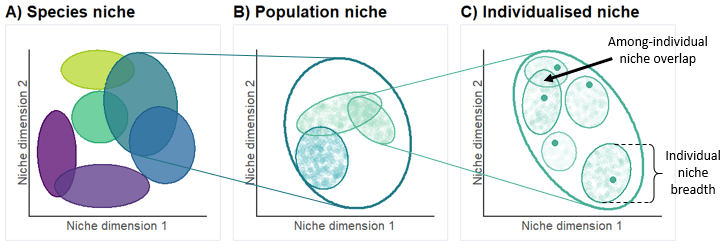
Heuristic representation of the different niche levels. A) A community can be represented as a set of species in which each occupies a different niche. B) A species can be represented as a set of metapopulations with different niches. C) A population consists of multiple individuals with different individualised niches (the potential niche is shown with transparent dots, and the realised niche is shown with bold dots). Adapted from Takola and Schielzeth (2022).

Working at the individual level, it treats each animal’s personal range of habitat conditions as its own ‘individualised niche’, distinguishing for each individual between the conditions it actually uses (its realised niche) and the conditions available to it but not necessarily used (its potential niche).

These concepts were defined in a previous study by E. Takola and H. Schielzeth. Takola has now taken these concepts a step further, translating them into a practical workflow for studying individual animals in the wild.

To achieve this, it uses combined mixed-effects resource selection functions such as statistical models that estimate both average habitat preferences and how much individuals deviate from that average with hypervolume exploration methods, a way of mapping all the environmental conditions an individual could occupy as a multidimensional space. 

The full worklfow is now published in the open-access, peer-reviewed Individual-based ecology journal.

How the Workflow Works

Graphical abstract
Graphical abstract of the workflow. Generated by Dr. Takola using ChatGPT.

Implemented entirely in R, the workflow draws on tools from ecological niche modeling, behavioral ecology, and spatial ecology. Further, the workflow is divided into three stages: data preparation, analysis, and output generation.

Throughout, it distinguishes between the environmental conditions available to an individual and the conditions it actually uses, allowing researchers to quantify niche breadth or how broad or narrow an individual’s habitat use is; niche overlap or how much individuals’ habitat use overlaps with one another; and repeatability – how consistent an individual’s habitat use is over time. 

The lapwing case study puts this into practice. By using publicly available GPS tracking data from 13 northern lapwings, the study shows how the workflow integrates multiple environmental layers such as earthworm abundance, human presence, pesticides, management, soil variables, and vegetation. 

Why Individual Variation Matters And Future Outlook

Individual organisms differ in genotype, morphology, life strategy, diet, and behavior. Individual-based approaches capture how animals adapt locally and respond to environmental stress in ways population-level averages can obscure.

This has real implications for conservation. Individual-based models, ones that account for energy costs, demographic trends, habitat-selection patterns, and life-history traits, offer a more accurate, mechanistic picture of wild population dynamics, and a better basis for predicting how populations will fare as conditions change. 

Although demonstrated on the northern lapwing, the workflow is designed to be transferable to other mobile species with GPS tracking data, giving ecologists a general-purpose tool for incorporating individual variation into habitat and conservation models.

explains Takola

The data and code underpinning the workflow are available on GitHub. 

By making individual specialisation measurable and comparable across taxa and datasets, the workflow can help researchers study niche specialisation and population-level heterogeneity across ecological scales, linking individual-level variation back to population- and species-level patterns, and giving conservationists a tool to move beyond population averages toward more targeted conservation methods. 

Original source:

Takola E (2026) The individualized niche in motion: Quantifying individual specialisation with movement data. Individual-based Ecology 2: e203247. https://doi.org/10.3897/ibe.2.203247

Pensoft at ESA 2026: Connecting with the Ecology Community in Salt Lake City, USA

Between 26-31 July, Pensoft Publishers joined more than 2,600 ecologists, researchers, and conservation professionals in Salt Lake City for the 111th Annual Meeting of the Ecological Society of America (ESA2026).

Pensoft Publishers joined more than 2,600 ecologists, researchers, and conservation professionals in Salt Lake City for the 111th Annual Meeting of the Ecological Society of America (ESA2026) between 26-31 July.

Ecology in an Era of Uncertainty

  • Opening ceremony of ESA 2026.
  • Opening ceremony of ESA 2026.

This year’s conference theme, “Ecology in an Era of Uncertainty,” could not have felt more timely. Uncertainty is nothing new to ecological research – it’s built into measurements, mechanisms, and predictions.

But new sources of uncertainty are now reshaping the field: the rise of artificial intelligence, post-pandemic shifts in career development, and growing instability in research funding. Throughout the week, the ESA community came together not only to share cutting-edge ecological research, but also to think collectively about how to navigate these emerging challenges – trading multidisciplinary, creative solutions to keep the field resilient in the face of what’s next.

The Opening Session

The Grand Ballroom was packed for the opening session, where Conference Chairs Daniel Stover and Andrea Swei welcomed attendees. Despite a challenging year for funding and travel, the 111th annual meeting of ESA 2026 hosted 2,600 registered attendees 330 sessions and 884 posters,

The opening address was delivered by Diane Pitaki, Chief Scientist and Vice President for Science at the National Wildlife Federation, who spoke about ecology standing at a crossroads amid the biodiversity crisis and shifting political headwinds, urging the community to actively “defend conservation science.”

Among the meeting’s standout moments was the plenary from Tanya Berger-Wolf, Professor of Computer Science and Ecology at Ohio State University and a leading figure in AI for ecology and biodiversity.

Notably, Berger-Wolf will be a keynote speaker at TDWG 2026 in Oslo (20-25 September) – where Pensoft Publishers will once again be exhibiting, so stay tuned for future updates.

Pensoft’s booth

Situated right at the entrance of the exhibition hall, Pensoft’s booth revelled in attention from attendees throughout the week.

  • Pensoft's team at ESA 2026 in Salt Palace Convention Center.
  • Pensoft's busy stand at the 111th Annual Meeting of the Ecological Society of America.
  • Pensoft's busy stand at the 111th Annual Meeting of the Ecological Society of America.
  • The beautiful Denitsa Peneva's illustrations at ESA 2026.

A particular highlight was our trio of diamond open-access journals – free to publish in and free to read – that drew considerable interest from attendees:

  • Individual-Based Ecology promotes a distinctive individual-based perspective on ecology, aiming to bridge individual behaviour and broader ecological patterns.
  • Advances in Pollinator Research is designed as an innovative platform for the full spectrum of pollinator science, from pollination ecology and pollinator-plant interactions to molecular ecology, conservation, and more.
  • Agricultural and Environmental Modelling (AEM), meanwhile, offers an innovative approach to publishing, dedicated to advancing both the science and practice of modelling across agriculture, food systems, natural resources, and environmental sciences.
  • Brochure of the diamond open-access Individual-Based Ecology Journal.
  • Close up photo of the Advances in Pollinator Research brochure at ESA 2026.
  • Nicole Nogoy, managing editor of Agricultural and Environmental Modelling at ESA 2026.

Attendees curious about AEM had the chance to speak directly with its Managing Editor, Nicole Nogoy, who was on site throughout the conference to discuss publishing opportunities and promote the journal’s search for Subject Editors. 

The booth also gave visitors a window into the rest of Pensoft’s open-access portfolio. On the conservation side, that meant Nature Conservation and Neotropical Biology and Conservation; on the ecosystem side, One Ecosystem, Frontiers of Biogeography, and NeoBiota. 

  • NeoBiota brochure presented at ESA 2026.
  • Neotropical Biology and Conservation brochure at ESA 2026.

Attendees also had the chance to learn more about our diamond open-access journal Estuarine Management and Technologies, which was accepted into the Directory of Open Access Journals (DOAJ) earlier this year. 

Estuarine Management and Technologies brochure.

Rounding out the display were several more specialised titles: Biodiversity Data Journal and Metabarcoding and Metagenomics; Quite popular amongst the visitors were also our our fungi-focused IMA Fungus and MycoKeys journals; and our vegetation titles, Vegetation Classification and Survey and Vegetation Ecology and Diversity.

We also introduced attendees to our newest addition, the diamond open-access Journal of Regeneration. For those interested in sharing early-stage research or project outcomes, Research Ideas and Outcomes (RIO) offered another avenue worth exploring, publishing everything from project proposals and data to policy briefs and null results.

Those looking for a new publisher or white-label solutions had the opportunity to explore ARPHA, Pensoft’s own publishing platform, which supports the full journey from manuscript writing and peer review to publication, dissemination, and archiving – all in one seamless workflow. 

Combined brochure of EU-Funded project in which Pensoft participates.

Beyond the journals and publishing solutions, the team took the opportunity to spotlight some of Pensoft’s ongoing EU-funded projects, including our pollination initiatives and our continued work with eLTER. 

Two Interactive Activities at Our Booth

Building on the success of interactive formats at previous events, namely the Fortune Wheel at the 8th European Congress of Conservation Biology in Leiden, our team brought two activities to ESA2026.

The Pensoft Species Quiz

Attendees taking our fun quiz at ESA 2026.

This time around, our team created “Pensoft Species Quiz,” challenging booth visitors to identify the correct Latin name for a series of species beautifully illustrated by Denitsa Peneva. Being more than just a fun activity, it became a natural conversation starter – leading into deeper discussions about Pensoft’s journals, services, and potential collaborations with attendees.

  • Some of the winners from our quiz at ESA 2026.
  • Some of the winners from our quiz at ESA 2026.
  • Some of the winners from our quiz at ESA 2026.
  • Attendees interacting with our fun quiz.

The Agricultural and Environmental Modelling Poster Award

AEM’s Managing Editor – Nicole Nogoy ran a poster competition at the meeting, and it turned out to be one of the highlights of our week. Three researchers stood out:

  • Julian Resasco (University of Colorado, Boulder) took home the prize for overall best presentation with a hand-drawn comic-book poster on climate change effects on Basque country thistles;
  • Gwendolyn Lloyd (Indiana University) impressed us with her research on arthropods and mites in agricultural soils;
  • Emily Redding (Fort Hays State University, KS) joined in with a poster on fire suppression’s effects on Juniper-dependent bird species, having been inspired to bring modelling into her own research. 

We also took part in a raffle organised by ESA, to which each exhibitor contributed a prize.

  • Kanchana Balasubramanian one of the winners of Pensoft Publishers' raffle prizes at ESA2026.
  • Elizabeth Afkhami Searcy received our book "Mapping Ecosystem Services" as part of the Ecological Society of America's conference raffle.

Looking Ahead

ESA2026 was a strong reminder of just how much energy – and uncertainty – is currently shaping the ecology community. Between thought-provoking plenaries on AI and conservation science, engaging conversations sparked by our species quiz, and the enthusiasm we saw around the AEM poster competition, it was a week full of meaningful connections for Pensoft.

We’re already looking forward to the next time, and we hope you’re looking forward to it, too!

Keep up with future updates and news by following us on Bluesky, Facebook, X, and LinkedIn.

Connecting Science and Conservation: Pensoft at the 21st Eurasian Grassland Conference

As a longstanding supporter of vegetation science publishing, and publisher of Vegetation Classification and Survey, Pensoft was proud to sponsor EGC 2026 and attend throughout the week.

From 19 to 23 July 2026, Sofia hosted the 21st Eurasian Grassland Conference (EGC 2026), organised by the Eurasian Dry Grassland Group (EDGG), a working group of the International Association for Vegetation Science (IAVS). EDGG is dedicated to research on, and the conservation of, natural and semi-natural grasslands across the Palaearctic biogeographic realm, spanning any taxonomic group, whether plants and vegetation, animals or fungi.

This year’s conference was held under the theme “Connecting science and conservation for grassland sustainability”, with the aim of highlighting how research into grassland ecosystems connects with management practices and conservation goals on the ground.

Grasslands, particularly species-rich semi-natural grasslands and Eurasian steppes, are among the most threatened habitat types in one of the most heavily urbanised and intensively managed regions in the world, despite providing a wide range of ecosystem services. Bringing scientific knowledge together with conservation practice was therefore a central thread running through the week.

The conference was hosted by the Institute of Biodiversity and Ecosystem Research (IBER) at the Bulgarian Academy of Sciences. IBER conducts research across fundamental and applied ecology, biodiversity, nature conservation and the sustainable use of biological resources. The institute also provides scientific and methodological support to state institutions and NGOs, making it a fitting host for a conference concerned with the practical application of grassland science.

As a longstanding supporter of vegetation science publishing, and publisher of Vegetation Classification and Survey (VCS), one of IAVS’s official journals, Pensoft was proud to sponsor EGC 2026 and attend with an information stand throughout the week.

A gathering of the grassland community

EGC 2026 brought together around 60 participants, from early-career researchers to established names in vegetation science. Among the attendees were several members of the editorial board of VCS, including Editors-in-Chief Idoia Biurrun and Jürgen Dengler, as well as members of the IAVS council:

We were also delighted to catch up with authors who have published with us across several of our journals, including Biodiversity Data Journal (Naim Berisha), PhytoKeys (Marcin Nobel) and VCS (Arkadiusz Nowak).

Our stand attracted a steady flow of visitors over the course of the week:

Throughout the event, we shared our vegetation science portfolio, including VCS and Vegetation, Ecology and Diversity (VED), with strong additional interest in our following open-access journals:

  • Biodiversity Data Journal (BDJ) – a community peer-reviewed journal, designed to accelerate publishing, dissemination and sharing of biodiversity-related data of any kind.
  • MycoKeys – dedicated to the taxonomy, phylogeny, biogeography, evolution and ecology of the fungal kingdom, including lichens, and publishing everything from new species descriptions to checklists, monographs and methodology papers.
  • Nature Conservation – a rapid, peer-reviewed journal spanning all aspects of nature conservation, from populations to whole ecosystems, and from microorganisms and fungi to higher plants and animals.

A new special feature on the way

We were pleased to learn, just ahead of the conference, of a forthcoming VCS special feature tied to the event: “Vegetation of the Balkan Peninsula”, edited by Jürgen Dengler, Erwin Bergmeier and Urban Šilc.

The special feature welcomes contributions on any vegetation type from the Balkan Peninsula, including syntaxon revisions at national or supranational level, regional vegetation monographs, synthetic overviews of a country’s or region’s syntaxa, nomenclatural proposals, habitat typologies and applications, and long and short database reports.

VCS offers Gold Open Access publishing, holds a Journal Impact Factor of 2.7, and provides reduced article processing charges for IAVS members, with the option of complete waivers. Further details on the special feature will be announced soon on the VegSciBlog and across Vegetation Classification and Survey’s channels.

Scientific highlights

The five-day scientific programme was organised around five sessions: patterns, classification and biogeography of Palaearctic grasslands; grasslands of the Balkan Peninsula; animals in Palaearctic grasslands; innovative methods, experimental approaches and open science in grassland research; and global change, conservation, restoration and management of Palaearctic grasslands.

One of the highlights of the week was our own Head of Journal Development and PR, Iva Boyadzhieva, presenting on how Pensoft supports FAIR publishing for biodiversity and conservation research. Her talk set out how, as biodiversity and sustainability research gains momentum through greater international and interdisciplinary collaboration and the pressures of an unfolding environmental crisis, bridging scientific knowledge and conservation practice has become ever more critical.

We also enjoyed Editor-in-Chief of VCS Jürgen Dengler’s talk on global change in European grasslands, which drew on regional resurveys of historic vegetation plots, combined analyses of multiple resurvey datasets, and decades of plot data from the European Vegetation Archive (EVA).

Anna Kuzemko’s talk on the impact of military actions on the steppe ecosystems of Ukraine was another highlight of the week. Her research offered a valuable basis for prioritising and planning the restoration of Ukraine’s damaged steppe habitats going forward.

Awards

Pensoft also sponsored a best presentation and poster competition at the conference. Best Presentation was awarded to Sara Nigro for her talk “Climate and management changes drive semi-natural grassland community assembly over twenty years”, based on the resurvey of 49 vegetation plots in central Italy over two decades, revealing how climatic warming and shifting management practices are reshaping mountain semi-natural grasslands.

Best Poster went to Nadiia Skobel for “Drivers of vascular plant diversity in cultural heritage sites: a case study of old cemeteries (southern Ukraine)”, which showcased how old cemeteries in the grass steppe zone of southern Ukraine act as important refuges for native and steppe specific flora amid widespread habitat loss elsewhere in the region.

Looking ahead

EGC 2026 offered a valuable opportunity to connect with the authors, editors and researchers who make up the vegetation science community, and to see first hand how grassland research is being put to work for conservation across the Palaearctic. The next Eurasian Grassland Conference will take place in 2027 in Dilijan, Armenia – stay tuned for further updates!

Follow us on Bluesky, Facebook, X, and LinkedIn for more future updates.

Pensoft at the European Congress of Conservation Biology 2026 in Leiden

Highlights from Pensoft’s booth from the 8th European Congress of Conservation Biology (ECCB 2026) in Leiden.

Between 6-10 July, more than 850 participants from 25 countries gathered in Leiden, the Netherlands, for the 8th European Congress of Conservation Biology (ECCB) 2026.

The congress was organised by the Society for Conservation Biology (SCB) and hosted at Leiden University (FWN/CML), in partnership with Hortus botanicus, Wageningen University & Research (WUR), and NIOO-KNAW, with support from the Leiden Biodiversity Network.

  • Opening ceremony of ECCB 2026
  • Pensoft's booth at ECCB 2026
  • Exhibitor and poster hall at ECCB 2026.

Effective Biodiversity Conservation

Under the theme “Effective Biodiversity Conservation,” the congress brought together researchers, policymakers, and practitioners to explore how biodiversity can be safeguarded over the long term. Its core message was that effective conservation cannot rest on the efforts of conservationists alone. It requires coordinated, multidisciplinary, science-based action across society.

  • Opening ceremony of ECCB 2026
  • Prof. Dr. Geert de Snoo and his "1% of GDP for safeguarding nature!" presentation

Dr. Laura Bosco, President of SCB Europe, opened the congress and set the scene for the week ahead. Prof. Dr. Geert de Snoo, one of the congress’s co-organisers, followed with the presentation: “1% of GDP for safeguarding nature!” – a call to set aside 1% of global GDP to help close the biodiversity funding gap, given that half of the world’s GDP depends on natural ecosystem services, and to protect 30% of the Earth’s land and oceans by 2030.

From there, the programme ran packed with symposia, roundtables, and workshops covering policymaking and effectiveness, conservation planning, new methods for measuring and quantifying biodiversity, eDNA for conservation, citizen science, and remote sensing, alongside a poster session held each day.

Pensoft’s booth

Pensoft at he 8th European Congress of Conservation Biology (ECCB) 2026.

Our stand stood out with professionally designed booth walls and enjoyed a strong flow of visitors throughout the congress. Delegates met Pensoft’s Head of Journal Development and PR, Iva Boyadzhieva, who answered questions about publishing opportunities and scholarly resources, including Advanced Books, Pensoft’s platform for publishing open-access monographs, edited volumes, and other book-length scholarly works.

She also shared updates from the Horizon Europe-funded projects Biodiversity Meets Data and SpongeBoost. 

  • Pensoft's Fortune Wheel at ECCB 2026.
  • Pensoft's Fortune Wheel at ECCB 2026.
  • People signing up to Pensoft's newsletter and spinning the wheel.

For the first time, our booth also ran an interactive game, where visitors could spin a wheel to win some prizes. The game rules were simple: visitors filled out a subscription form for one or more journals, spun a wheel featuring the names of journals relevant to the congress, and won a sticker matching the journal they landed on. 

Visitor at Pensoft’s booth at the 8th European Congress of Conservation Biology, interacting with the wheel.

Curiously, the illustrations on the vivid stickers are not coincidental: each features a scientific illustration by Denitsa Peneva of a species discussed in a publication from across Pensoft’s scholarly portfolio – a nod to the authors who chose one of our journals to share their research.

Our journal portfolio on display

Visitors had the chance to explore Pensoft’s diverse open-access portfolio, from conservation-focused titles like Nature Conservation and Neotropical Biology and Conservation, to ecosystem-focused journals such as One Ecosystem, Frontiers of Biogeography, and NeoBiota.

  • Several journal materials at Pensoft's booth at ECCB 2026.
  • Several journal materials at Pensoft's booth at ECCB 2026.

The stand also showcased more specialised outlets, including Biodiversity Data Journal and Metabarcoding and Metagenomics, alongside our fungi-focused IMA Fungus and MycoKeys, and our vegetation titles Vegetation Classification and Survey and Vegetation Ecology and Diversity. Attendees also had the chance to learn more about our newly launched diamond open-access Journal of Regeneration.

Close up of Individual-Based Ecology and Agricultural and Environmental Modelling journals.
Individual-Based Ecology and Agricultural and Environmental Modelling on focus at ECCB 2026.

A particular highlight was our trio of diamond open-access journals, free to publish in and free to read, that drew considerable interest from attendees: 

  • Individual-Based Ecology promotes a distinctive individual-based perspective on ecology, aiming to bridge individual behaviour and broader ecological patterns. 
  • Advances in Pollinator Research covers the full spectrum of pollinator science, from pollination ecology to conservation, designed as an innovative platform for the full spectrum of pollinator science, from pollination ecology and pollinator-plant interactions to molecular ecology, conservation and more. 
  • Agricultural and Environmental Modelling, meanwhile, offers an innovative approach to publishing, dedicated to advancing both the science and practice of modelling across Agriculture, Food Systems, Natural Resources, and Environmental Sciences. 

Familiar faces at the stand

  • Deputy Editor-in-Chief, Dr. Annegret Grimm-Seyfarth, at Pensoft's booth at ECCB 2026.
  • Prof. Davy McCracken, Subject Editor at Nature Conservation.
  • Dr. Niels Raes, project coordinator of Biodiversity Meets Data.
  • Martina Viti and Annika Zuleger, authors that have published across Pensoft's journal at ECCB 2026.

Our booth was visited by Nature Conservation’s Deputy Editor-in-Chief Annegret Grimm-Seyfarth. Earlier that week, she also co-organised a symposium, “How can Wildlife Detection Dogs contribute to effective biodiversity conservation in Europe?” As well as one of Nature Conservation’s Subject Editor, Prof. Davy McCracken and Dr. Niels Raes, the project coordinator of Biodiversity Meets Data.

We also met one of our authors, Andra Neagu, in person. We recently ran a PR campaign on her and her team’s research analysing more than 1,100 media reports from 2007 to 2024 to uncover patterns in wildlife poaching across Romania, which you can read here.

  • Andra Neagu, an author at Nature Conservation at Pensoft's booth at ECCB 2026.
  • Andra Neagu next to her scientific poster at ECCB 2026.

Looking ahead

  • Closing ceremony of ECCB 2026.
  • Closing ceremony of ECCB 2026.

It was a pleasure to be part of ECCB 2026 and to connect with so many researchers, policymakers, and practitioners working toward effective biodiversity conservation.

Save the date: SCB’s 33rd International Congress for Conservation Biology (ICCB 2027) will be held in Puebla, Mexico, at the end of June or beginning of July 2027.

Follow us on Bluesky, Facebook, X, and LinkedIn for more future updates.