Researchers from National Taiwan Ocean University, University of Taipei and the Smithsonian Institution have now described three new species of the conger eel genus Gnathophis, drawing on 130 specimens collected from the deep sea. The findings raise the number of Gnathophis species known from Taiwan from two to five.
Members of this genus are medium-sized eels of tropical and subtropical deep waters, recognisable by a blunt tail tip, a fleshy snout that projects beyond the teeth, and a small fleshy keel on the underside of the snout.
The team compared vertebral counts, the pores of the sensory lateral line, colouring and tooth patterns, and for two of the species they added DNA barcoding to confirm the distinction. The two barcoded species differ from each other by roughly 4.4 to 4.9 per cent in the gene examined, well beyond the variation seen within a single species.
Each name tells a small story about where the eel was found or how it looks:
Gnathophis kbalanensis (Kbalan’s conger): named after “Kbalan”, an ancient name for the Yilan region of northeastern Taiwan, in use roughly 800 to 1,300 years ago. It is also known as Cabaran in Spanish and Kat-má-lán in Taiwanese. The largest specimen measured 472 millimetres, and the species is recognised by its blackish fins and a high vertebral count of 134 to 137.
Gnathophis melanurum (black tail conger): named from the Greek melan, meaning black, and urum, meaning tail, in reference to its black tail fin. Its dorsal and anal fins are pale, which makes the dark tail stand out. It was found off both northeastern and southwestern Taiwan, mostly at depths of around 200 to 300 metres.
Gnathophis nanhaiensis (Nan Hai’s conger): named after “Nan Hai”, the Chinese name for the South China Sea, where the holotype was collected at a depth of about 509 metres. The Latin ending -ensis means “originating in”. Known from only two specimens, it has pale fins and the highest vertebral count of the three, at 139 to 143.
Gnathophis kbalanensis sp. nov. Credit: Jian-Fu Huang, et al.
Gnathophis melanurum sp. nov. Jian-Fu Huang, et al.
Gnathophis nanhaiensis sp. nov. Jian-Fu Huang, et al.
The first two species share a feature that sets them apart from some of their relatives: the lateral line pores above the pectoral fin are raised, and the peritoneum, the lining of the body cavity, is black. Several of the specimens were ripe females carrying loose eggs, which suggests these waters may serve as spawning grounds.
The study also tidies up the regional record. An eel previously listed in Taiwan as Gnathophis xenica was confirmed to be a misidentification, and the researchers found no evidence to split the widespread G. heterognathos into separate species.
The work is dedicated to the late Dr David G. Smith, whose contribution to eel taxonomy inspired the first author.
Original source:
Huang J-F, Liao Y-C, Chan T-Y, Chen H-M, Smith DG (2026) The congrid eel genus Gnathophis in Taiwan (Anguilliformes, Congridae), with descriptions of three new species. ZooKeys 1287: 11-46. https://doi.org/10.3897/zookeys.1287.183842
For more articles on zoology, visit the ZooKeys website and follow the journal on BlueSky and Facebook.
High on the Qinghai-Xizang Plateau, often called the “Roof of the World,” a new species of snake waits beneath the stones…
Scientists from Yibin University and collaborating institutions have formally described Indotyphlops gyirongensis, the Gyirong blind snake, a discovery that adds a new member to one of the least understood branches of the snake family tree.
General (top) and ventral (below) views of the holotype of Indotyphlops gyirongensis sp. nov. in life (by Peng Guo).
Blind snakes are small, burrowing reptiles that spend nearly their entire lives underground. Their secretive habits and similar appearances make them notoriously difficult to study.
The family Typhlopidae contains roughly 280 species, yet its relationships remain poorly resolved, and new species continue to surface wherever researchers look carefully. Until now, no blind snake had ever been recorded in the Xizang Autonomous Region, which makes this find a first for the area.
The single specimen, an adult female, was collected in August 2025 at an elevation of 2,262 metres, close to the border between China and Nepal. She was resting beneath a stone at the edge of an evergreen broad-leaved forest, where deep humus and a thick layer of fallen leaves create ideal conditions for a creature that lives by burrowing. Among her neighbours were a Himalayan pit viper and a Himalayan toad!
Microhabitat of the type specimen of Indotyphlops gyirongensis sp. nov. in Gyirong, Xizang, China (by Peng Guo).
The snake itself is slender and elegant. At 265 millimetres, it is large by the standards of its genus, yet it measures just 3.5 millimetres across at midbody. Its glossy scales are light brown, each one darker on its rear half, which gives the body a delicate and finely patterned sheen. The underside is cream and so thin-skinned that it is partly transparent to the internal organs.
Most distinctive is its pale cream head cap, which lacks pigment as far back as the eye. The eye itself is only a dark spot, with no visible pupil or iris, fitting for an animal that navigates by touch and chemical cues rather than sight. Its tail ends in a small nubbin rather than a sharp spine.
Some of the most telling differences are hidden in the arrangement of the scales along the lip. Blind snakes are classified partly by how their upper lip scales overlap the shields above them. In nearly all of the snake’s relatives, the third scale overlaps the one beside the eye, a pattern known as T-III.
The Gyirong blind snake shows a rarer arrangement, called T-V, in which both the second and third lip scales overlap the shields above. Few documented members of its genus share this feature, which provides a clean and reliable way to separate it from most of its kin.
Anatomy alone did not settle the matter. The team sequenced two mitochondrial genes and placed the snake within a broad evolutionary tree. It nested firmly within Indotyphlops, as the sister lineage to I. albiceps, but its genetic divergence was substantial. For one gene, it differed from its closest relatives with available data by more than 24 per cent, and for another by more than 18 per cent, margins far beyond what is typically seen within a single species.
The name honours the place of discovery. Gyirongensis refers to Gyirong Town in Gyirong County, where the holotype was found, and it is formed as a noun in apposition. The authors propose the English common name “Gyirong blind snake” and the Chinese name 吉隆盲蛇 (Jílóng Mángshé).
Map showing the locality of the new species in Gyirong, Xizang, China.
Because the type locality sits so close to the Nepalese border, the researchers consider it highly likely that the species also lives on the other side, thus pending further fieldwork.
Original source:
Lyu B, Tan S, Zhao Z, Wallach V, Liu Q, Guo P (2026) A new species of blind snake, Indotyphlops (Serpentes, Typhlopidae), from the Qinghai-Xizang Plateau, China. ZooKeys 1292: 261-273. https://doi.org/10.3897/zookeys.1292.197322
For more articles on zoology, visit the ZooKeys website and follow the journal on BlueSky and Facebook.
Last week marked another annual meeting of the Biodiversity Information Standards network, otherwise known as TDWG, with the Norwegian capital Oslo hosting the event between 20 and 25 September.
Last week marked another annual meeting of the Biodiversity Information Standards network, otherwise known as TDWG, with the Norwegian capital Oslo hosting the event between 21 and 25 September.
TDWG is the international, non-profit organisation formerly known as the Taxonomic Databases Working Group, which develops and maintains the standards, such as Darwin Core, that allow biodiversity data to be shared, integrated and understood across institutions worldwide.
The six-day programme was a meeting point for over 300 stakeholders from research, practitioner and corporate circles, with proceedings centred around one central topic – “Research and Robot-Ready Biodiversity Data Standards”. In that sense, the themes of accessibility, responsibility, innovation and collaboration were foremost on the minds of participants as they contemplated how information on the biosphere should be extracted, consolidated and shared in the years to come.
As a long-standing partner of TDWG, Pensoft Publishers served as both a sponsor and an exhibitor for the event. In the latter capacity, the company contributed with a joint booth for three of the EU-funded projects it is leading the outreach efforts for:
BMD – an initiative working towards a Biodiversity Explorer for high-throughput biodiversity monitoring tools, biodiversity data and biodiversity analyses for better conservation across Europe
TETTRIX – a new arrival building a next-generation taxonomic system connecting knowledge, expertise and innovation for all across the Old Continent
ANERIS – a pan-European effort to mobilise a network of operational marine biology via a new technological infrastructure
The Pensoft team at the joint booth of the BMD, TETTRIX and ANERIS projects.
A number of other projects from Pensoft’s communication portfolio also found a place in the display, including BEAGLE, OneSTOP, B-Cubed, MAMBO, OBSGESSION and BioAgora. Furthermore, 14 of the company’s journals were in the spotlight, including Biodiversity Information Science and Standards (BISS), the official journal of the TDWG community (where all of the conference’s abstracts are set to be published).
Crucially, the event also saw the official launch of ORPHO, Pensoft’s new collaborative workspace for scientific writing. Founder and CEO Prof. Lyubomir Penev and CTO Teodor Georgiev conducted live demos of the tool, showcasing how manuscripts crafted within it with full version control for authors become discoverable, interoperable and FAIR-compliant.
In the context of TDWG2026’s agenda, they also presented ORPHO’s integrated semantic annotation and communication instruments as part of the workshop “How Literature Services can Support & Benefit from Biodiversity Publication and Data Standards?” on 24 September. The workspace was received with anticipation and enthusiasm by attendees, with many expressing a desire to test it out for themselves.
They were also treated with a tease of Pensoft’s next large-scale endeavour, as Senior Communications Officer Peter Bozakov pulled the curtain behind the forthcoming communication platform for research projects Scientiana.
Pensoft’s CTO Teodor Georgiev introduces the collaborative scientific workspace ORPHO.
As for other notable contributions to the wider conference agenda by researchers affiliated with Pensoft’s publishing or project activities:
The session “Operationalising Biodiversity Digital Twins within Data Space Ecosystems”, which was co-led by BMD coordinator and long-time author and reviewer across several Pensoft journals, including Biodiversity Data Journal and Research Ideas and Outcomes, Niels Raes, and showcased a number of innovative outputs from the project. As such, it was an important occasion to assess the initiative’s progress towards unifying Europe’s Data Space within a single Biodiversity Explorer.
Niels Raes presenting “Mainstreaming high-throughput biodiversity monitoring using AI” at TDWG 2026.
The symposium “Publishing and Communications Promoting Biodiversity, Natural History Collections, People, Data and Data Standards”, for which Deborah Paul (co-Editor-in-Chief of the Natural History Collections and Museomics (NHCM) journal) had the role of co-organiser. Within it, the TETTRIX project’s vision for the automated tracking of taxonomic research activities was laid out by consortium member David Fichtmüller. Moreover, Shelley James (co-Editor-in-Chief for NHCM) delivered an insightful talk on the creative promotion of biodiversity data and standards for success and recognition.
Co-Editors-in-Chief of NHCM, Shelley James and Deborah Paul, presenting “Hit or miss? Creative promotion of biodiversity data and standards for success and recognition” at TDWG 2026.
Notably, the Biodiversity Information Science and Standards (BISS) journal is the home for TDWG conference abstracts. TDWG 2026 presenters can currently submit their abstracts there and publish them in an extended abstract or mini-paper format completely free of charge. The journal also hosts abstracts from conferences held over the past decade. You can browse the TDWG 2026 collection here.
Last but not least, the company’s sponsorship supported two awards at TDWG2026 (with a free publication in a Pensoft journal as an accompanying prize):
Best Student Oral Presentation – awarded to Yeshan Qui for “Reporting structure and sampling-bias correction in citizen-science bird data across Asian cities”
Best Student Poster – awarded to Claudia Campanini for “Improving marine fieldwork documentation and metadata with Adaptable Standardised Methods Reporting (ASMR)”
Claudia Campanini receiving the Pensoft Best Student Poster Award at TDWG 2026.
Overall, TDWG2026 proved itself a crucial forum for mapping out the future of biodiversity monitoring and the management of the myriad data streams that emerge from it. Pensoft is proud to be an important actor in this process, contributing with innovative tools and solutions at the heart of the interface between research and practice. As summarised by Prof. Penev:
“Given its status as a large-scale conference centred around the future of biodiversity sciences in the age of AI, TDWG2026 was a crucial venue for unveiling Pensoft’s forward-looking vision for academic publishing and science communication. The “pearl” of these pursuits is undoubtedly the ORPHO workspace, a tool that is well-placed to introduce a new standard when it comes to collaborative AI-FAIR research in Europe and beyond.”
Themed “Integrating the Diversity of Ecology”, the event welcomed over 1,000 researchers in the field from across career stages, who had the opportunity to enjoy conference talks across 36 thematic sessions, as many as six keynote talks, two poster sessions, several open society meetings and quite a few social events, including excursions and a conference dinner.
Conference delegates enjoying the musical clock installation mounted on an elevated balcony on the glass façade of the ODEON building, where the Nordic Oikos-GfÖ 2026 conference took place between 13 and 17 September 2026.
Beyond publishing solutions, a key focus was given to OBSGESSION: a Horizon Europe-funded project where Pensoft is actively involved. To better understand and predict changes in terrestrial and freshwater ecosystems, the OBSGESSION consortium integrates multi-source Earth Observation data (such as high-resolution satellite imagery and drone monitoring) with ground-based in-situ research, including advanced environmental DNA (eDNA) sampling. By coupling these data streams with cutting-edge detection-attribution modelling and machine learning algorithms, the project generates scalable Essential Biodiversity Variables (EBVs). These ecological approaches and analytical frameworks are actively tested and validated through six biodiversity pilots across diverse European ecosystems. In the open-science Research Ideas and Outcomes journal, you can find a collection of project outputs, including research papers, project reports and deliverables, and guideline papers published across journals and platforms.
At the Pensoft-OBSGESSION-branded booth, conference participants would stop by to chat with Pensoft’s Head of Journal development and PR: Iva Boyadzhieva and Senior Communications Officer: Desislava Raykova.
As a leader of the “Dissemination, Multi-stakeholder outreach and synergies” work package at OBSGESSION, Pensoft is tasked with stakeholder engagement and community building, ultimately contributing to the high impact of the resulting outputs, methodologies and policy recommendations that aim to strengthen public understanding of biodiversity change.
One of the six keynote talks was presented by Prof. Dr. Isabell Hensen (Martin Luther University Halle, Germany), who received the GfÖ Honorary Medal 2026 for her leading, forward-looking contributions to ecological research and the scientific community. Her work examines how genetic variation, environmental conditions, disturbance, and plant-animal interactions shape plant populations, with particular emphasis on rare species, biological invasions, and the regeneration of degraded forests.
In her talk, titled “One spark is enough: regeneration ecology of Andean forests under global change”, she reported on post-fire regeneration processes in tropical Andean forests, based on long-term field experiments and observational studies.
Hensen focused on the well-studied endemic plant genus Polylepis, which forms the world’s highest-elevation forests and illustrates how fire has shaped ecosystem dynamics over millennia. Her talk also mentioned a 2022 monograph of the genus, published in the Pensoft journal PhytoKeys by Tatiana Erika Boza Espinoza (Pontificia Universidad Católica del Perú) and Michael Kessler (University of Zurich), which brought together results from 35 years of field and herbarium experience.
*
On Wednesday, Pensoft’s Iva Boyadzhieva delivered a presentation titled “Scholarly Communication: Lessons from the Publisher’s Kitchen”. She highlighted the vital role publishers play in helping researchers communicate their insights not only to peers, but also to decision-makers and the public. Emphasizing the publisher’s responsibility to support authors with robust infrastructure and dedicated human expertise, she outlined how Pensoft works to FAIRify scholarly publishing and future-proof scientific knowledge in an era of rapid AI development and expanding research output.
*
Pensoft’s team was delighted to meet up with dedicated readers, authors, reviewers, and editors from across Pensoft’s portfolio, as well as introduce Pensoft journals to attendees discovering them for the first time.
Visitors were also particularly intrigued by several newly launched Pensoft journals. Developed in close collaboration with passionate researchers, these fresh outlets directly address key gaps in academic publishing.
One of the newly launched journals in the spotlight was Agricultural and Environmental Modelling (AEM), which provides a unique scholarly outlet thanks to its modern approach to publishing by increasing transparency, giving credit to research objects across the entire modelling research lifecycle. This is achieved through publishing specialised article types, such as: Formal Model, Model Testing and Calibration, Model Implementation and Documentation, Data Papers and Software Descriptions. These new publishing formats are designed to keep pace with advances in Modelling research and to make it FAIR (Findable, Accessible, Interoperable, and Reusable) by enabling scholarly credit for diverse research outputs, often created by different groups of authors. For the time being, AEM remains a Diamond Open Access journal, meaning that it will not charge authors for open-access publication.
Other recently founded journals addressing emerging and fast-developing disciplines within the ecological field that took the spotlight were:
Individual-Based Ecology: launched to support understanding and predicting ecological systems’ response to rapidly changing and novel conditions by linking individual responses to responses at higher levels of organisation.
Advances in Pollinator Research: a multidisciplinary journal publishing research on pollination ecology, pollinator-plant interactions, pollinator health and drivers of pollinator declines, crop and wild flower pollination, pollinator conservation practices, molecular ecology of pollinators, pollinator and pollination monitoring, decision support for policy and socio-economics.
Journal of Regeneration: a multidisciplinary journal for the dissemination of research results on regeneration and tissue repair across phyla. These mechanisms can be framed within an evolutionary framework and integrate a variety of cellular processes involving stem cells, dedifferentiating or even transdifferentiating cells.
All of these journals operate with no article fees for either authors, nor readers.
To receive updates on new publications and relevant news, sign up for Email Alerts on any journal’s homepage. Creating a Pensoft account also allows users to easily customise their notification preferences, follow additional journals, or filter updates by research topic. You can also follow journals on social media, including BlueSky, Facebook and Linkedin.
*
Supporting European Policy Through Priority Essential Biodiversity Variables (EBVs)
Delegates at the event showed strong interest in OBSGESSION’s first policy brief:“Prioritising Essential Biodiversity Variables (EBVs) to support European Union (EU) policy needs based on the EU’s Biodiversity Strategy for 2030.” To tackle a critical challenge in environmental monitoring, OBSGESSION focuses on prioritising key EBVs to directly support the EU Biodiversity Strategy 2030 – a roadmap designed to put Europe’s biodiversity on a path to recovery through 102 specific actions and sub-actions.
To align these policy needs with actionable data, the OBSGESSION team conducted an assessment to identify priority EBV candidates. By categorising EBV-applicable actions and indicators across different ecosystem realms and implementation stages, the project pinpointed the most essential variables needed to strengthen monitoring, reporting, and policy execution. The document is based on a deliverable by the project (D1.1 Policy Landscape and Needs Assessment).
This policy brief is part of a broader, ongoing effort within OBSGESSION to bridge the gap between biodiversity data and policy execution. To dive deeper into the science behind this topic, the project has hosted a dedicated seminar series exploring key aspects of the framework:
Bringing Methodologies to Life Across European Ecosystems
Beyond theoretical frameworks, OBSGESSION grounds its research in six biodiversity validation pilots across Europe. The case studies represent European biodiversity and ecosystem conservation challenges at scales varying from local to regional.Full details on each ecosystem pilot are now available in a collection of newly published pilot factsheets, which made their debut at the conference, where people could take a look at their digital versions.
Reading those materials gives an insight into the practical testing environment to demonstrate how Earth observation, field research, and ecological modelling come together to deliver actionable biodiversity insights. You can also check outOBSGESSION’s biodiversity pilots on the project’s website.
The OBSGESSION in a Nutshell video presents a concise overview of the project’s overarching mission and components.
*
To relive the conference by exploring the detailed programme alongside the full abstracts, visit the conference website.
The beta release of an innovative collaborative stand-alone authoring tool transforms manuscript preparation with semantic enrichment and real-time collaboration capabilities.
Scholarly publisher and technology provider Pensoft Publishers announces the beta launch of ORPHO, a revolutionary online platform designed to streamline collaborative scientific writing and produce AI-ready, future-proof scholarly literature.
ORPHO presents a significant advancement in scholarly publishing technology, combining intuitive writing features with sophisticated semantic enrichment capabilities. The new platform builds upon Pensoft’s fifteen years of experience as a developer of semantic publishing infrastructure.
Key Features
Within a shared online workspace, researchers can start with built-in customisable templates, create their own or import an existing file. They can then team up with collaborators in real time using track changes, role-based user rights, inline comments, and document-level chat. More significantly, ORPHO automatically structures scientific content according to international publishing standards, making research outputs findable, discoverable, interoperable and reusable (FAIR) once published.
Unlike its predecessor, the ARPHA Writing Tool, ORPHO is available as a standalone real-time collaborative workspace decoupled from journals hosted on Pensoft’s ARPHA Publishing Platform. Once a manuscript is ready, authors receive AI-FAIR machine-readable content that can be formatted to meet multiple journal requirements at the click of a button.
The platform’s adaptability to domain-specific workflows is currently being piloted in biodiversity science. ORPHO integrates seamlessly with leading biodiversity data aggregators, including the Global Biodiversity Information Facility (GBIF), Barcode of Life Data Systems (BOLD) and PlutoF, via import and export facilities for structured data, making ORPHO particularly valuable for researchers handling taxonomic, ecological and biodiversity data.
ORPHO: A new intelligent workspace for scientific writing.
Why ORPHO?
The name draws inspiration from multiple sources which reflect the tool’s philosophy and heritage. Named after Orphium: a unique plant genus endemic to South Africa whose sole species (Orphium frutescens) is known as the sea rose, ORPHO reflects the platform’s distinctive nature, heritage, and core philosophy.
It also evokes Orpheus, the legendary musician of ancient Thrace whose home region, the Rhodopi Mountains, lies in present-day Bulgaria, where ORPHO’s developer, Pensoft, is headquartered. The name thus honours the tool’s origins whilst embodying the exceptional creative performance it enables.
***
Prof. Dr. Lyubomir Penev, founder and CEO of Pensoft, comments:
“We are well aware that researchers today face an overwhelming list of formatting requirements and technical demands in an AI-driven landscape. It is true that rapid technological advancement presents both immense opportunities and mounting complexities for researchers.
We built ORPHO to remove that friction by offering an intuitive, collaborative workspace that lets scientists focus on their research. As a scientific publisher, our mission is to make scholarly publishing a seamless, rewarding experience fit for the modern age.”
The beta release invites researchers, institutions and publishing platforms to trial ORPHO and provide feedback. Access is available at orpho.net.
The 4th BioSyst.EU meeting took place in Uppsala, Sweden, from 17 to 19 August 2026, organised by the Swedish Systematics Association, in collaboration with Uppsala University.
The 4th BioSyst.EU meeting took place in Uppsala, Sweden, from 17 to 19 August 2026, organised by the Swedish Systematics Association, in collaboration with Uppsala University. For three days, the conference brought together European systematists to celebrate the discipline in the very city where it was born, home to Carl Linnaeus and the foundations of modern taxonomy.
BioSyst.EU exists to give individual scientists across Europe a shared platform, working through their national and regional societies rather than institutions. It sits alongside the Consortium of European Taxonomic Facilities (CETAF), which represents natural history institutions, and together the two bodies aim to strengthen systematic biology, phylogenetics and biodiversity research across the continent.
This year’s programme combined talks, workshops and symposia with visits to historical sites connected to Linnaeus. The main event was preceded by an early career meeting on Sunday 16 August, which gave students and early career researchers a chance to connect before the conference proper began.
Pensoft were delighted to attend with our own booth, where colleagues came to chat about our publishing services, from manuscript to final publication, as well as our tools for managing and publishing taxonomic and biodiversity data.
Pensoft’s booth at BioSyst.EU, 2026.
It was a great opportunity to introduce our journal portfolio – more than half of which comprises taxonomy and systematics titles – to old friends and new faces alike, including titles such as:
ZooKeys– one of the world’s leading journals for zoological taxonomy and biodiversity research, publishing new species descriptions and revisions across the animal kingdom
MycoKeys– dedicated to fungal systematics, taxonomy and biodiversity, supporting mycologists with rapid, richly illustrated publishing
PhytoKeys– focused on plant systematics and biodiversity, covering everything from single species descriptions to large-scale floristic studies
Metabarcoding and Metagenomics (MBMG) – a journal built around the fast-growing field of DNA-based biodiversity assessment, from environmental DNA to large-scale metagenomic surveys
Zoosystematics and Evolution – published with the Museum für Naturkunde Berlin, covering zoological systematics, morphology and evolutionary biology
Pensoft’s journal portfolio comprising taxonomy and systematics titles.
It was also a pleasure to meet some of our authors, reviewers and subject editors at the booth!
Alice Petzold – subject editor in Natural History Collections and Museomics.
Oleksandr Holovachov – author in Biodiversity Data Journal, and Metabarcoding and Metagenomics.
Oleksandr Ordynets – author and reviewer for Biodiversity Data Journal, MycoKeys, and Plant Ecology and Evolution.
Viktor Hartung – subject editor for Deutsche Entomologische Zeitschrift.
Conference presentation highlights
One of the undoubted highlights of the conference was the keynote talk by Sandra Knapp, editor-in-chief of PhytoKeys, titled Taming the beasts: strategies for studying megadiversity. Knapp tackled the question: what do we do with genera that contain more than a thousand species?
She subsequently made the case that studying genera properly, from geography to identification, pays dividends for both collaborative science and our understanding of evolution.
Sandra Knapp at Pensoft’s booth.
Sandra Knapp’s presentation at BioSyst.EU 2026.
Another highlight was the keynote lecture by Paul Hebert, Chair of the MBMG Advisory Board: The End Game – All Species & Their Interactions. Hebert reflected on the tens of millions of multicellular species we share the planet with, most still undescribed and many at risk of disappearing before they are even documented.
Paul Hebert’s presentation at BioSyst.EU 2026.
Among the other talks we attended was by one of our long-time partners, Olaf Banki, on the Catalogue of Life: taxonomic data services and infrastructure for all. Olaf reflected on the initiative’s evolution, from its origins thirty years ago to today, where the Catalogue of Life now serves as the taxonomic reference underpinning close to 4 billion species occurrences mediated through GBIF.
He gave a valuable overview of where the initiative stands: what it offers different user groups, including taxonomists and data infrastructures, where taxonomic data gaps remain, and how the community can contribute going forward.
Olaf Banki’s presentation at BioSyst.EU 2026.
Notably, Pensoft’s journals are integrated with Catalogue of Life to help list the species of the world. You can find out more about this initiative by accessing the following blog post.
A final highlight was Alexander Edwards’ presentation, titled Where Were You Yesterday? Interrogating Floral Constancy in Bumble Bee Workers Using Pollen Metabarcoding. Edwards presented work using ITS2 pollen metabarcoding to study the foraging behaviour of individually marked Bombus terrestris workers in a semi-natural university garden, sampling pollen non-lethally from returning foragers over several days.
Alexander Edwards’ presentation at BioSyst.EU 2026.
Award winners
And a massive congratulations to all our award winners! In the Best Student Poster category, first prize went to Giada Spagliardi of the University of Toronto for her poster Finding depth at the surface: museomics and species boundaries of bubble-rafting gastropods, while the runner-up prize was awarded to Hannah Cremer of the Senckenberg Research Institute and Natural History Museum, Frankfurt, for Long Hidden in Tubes: First Steps Towards Resolving the Filograna/Salmacina Complex (Serpulidae).
In the Best Student Talk category, first prize was awarded to Alexander Edwards of the University of Kassel for his talk Where Were You Yesterday? Interrogating Floral Constancy in Bumble Bee Workers Using Pollen Metabarcoding, with the runner-up prize going to Tina Kiedaisch of the University of Munich (LMU) for Intercontinental dispersal, ecological shifts and repeated origins of C4 photosynthesis shaped the evolution of Amaranthaceae s.s..
The awardees at BioSys.EU 2026.
An excursion to Linnaeus’ Hammarby
On 20 August, participants also had the option to join an excursion to Hammarby, Linnaeus’ summer house just outside Uppsala. It is a rare chance to step inside an authentic 18th century Swedish manor that reveals both the private life of Linnaeus and the scientific work he carried out there!
Pensoft notably visited the University of Uppsala Botanical Garden, also known as the Linnaean Garden, where Olof Rudbeck the Elder and Carl von Linnaeus worked:
The Linnaean Garden, 2026.
Until next time
The 4th BioSyst.EU meeting was a fitting tribute to the roots of systematics, held in the city where the discipline effectively began. From megadiverse genera to pollen metabarcoding and the future of biodiversity monitoring, the talks reflected how dynamic the field remains. We were delighted to be part of it, and to spend three days connecting with the scientific community. We look forward to the next BioSyst.EU meeting!
Catching up with Michael Schmitt at Pensoft’s booth – our subject editor for Zookeys and Arthropods systematics and phylogeny.
Researchers at the University of Idaho have identified a new species of spider in the mountains of northern Idaho and given it a name that pays tribute to the university itself: Hexura vandal.
Researchers at the University of Idaho have identified a new species of spider in the mountains of northern Idaho and given it a name that pays tribute to the university itself: Hexura vandal.
The spider belongs to a small group of funnel-web spiders related to tarantulas. Until now, only two species in this genus were known, both living hundreds of miles away in the coastal forests and mountains of Oregon and Washington.
Finding a third species so far inland, in the Rocky Mountains near the town of Kooskia, came as a surprise to the research team, led by Arnau Calatayud-Mascarell, Ethan J. Briggs and Chris A. Hamilton. It extends the known range of the genus by roughly 500 kilometres and is the first new taxonomic work done on this group of spiders in almost fifty years.
Distribution and habitat of Hexura spiders including new records, records from iNaturalist, Gertsch and Platnick (1979), and The Burke Museum of Natural History in Seattle, Washington. Blue = H. picea, Pink = H. rothi, Yellow = H. vandal.
Associate Professor Dr. Chris A. Hamilton stated:
“It’s always exciting when you realize the samples you’ve been looking at are an undescribed new species. This is one of the main reasons we do this job – to document Earth’s incredible biodiversity and expand our foundational biological knowledge of our planet. It just makes it even more exciting when that undescribed diversity can be found in your backyard (figuratively speaking).”
The name is where the story becomes especially local. Rather than a Latin descriptor, the researchers chose “vandal”, which is a direct nod to the university’s own mascot. The nickname dates back to 1917, when student journalist Harry Lloyd McCarty described the men’s basketball team’s fierce style of play as “vandalizing” their opponents. The name stuck, and the University of Idaho remains the only Division I university in the United States with the Vandals as its mascot.
Hexura vandal sp. nov. female (L) and male (R). Credit: Arnau Calatayud-Mascarell et al., (2026).
When discussing how the name was picked, Hamilton said:
“It didn’t take very long for the lab to sit down and decide what to name the new species. It was basically, this is really unique because it’s only found in Idaho and it’s not very far (relative) from campus. It’s black (sorry that it’s not black and gold like the school colors!). It’s a predator that attacks. It’s a Vandal.”
The discovery comes with a note of caution. Hexura vandal has so far only been found in a handful of sites within a very small area of forest in Idaho, despite repeated searches nearby. The region faces pressure from logging, and wildfires, which are becoming more frequent, and tend to strike during the spiders’ breeding season. Taken together, these factors have led the researchers to consider the micro-endemic species likely endangered, and they hope the discovery will help build the case for protecting its habitat.
University of Idaho, home of the Vandals, is Idaho’s land-grant university and the state’s first Carnegie R1 research institution — a ranking reserved for the top 4% of U.S. universities. From its residential campus in Moscow, U of I serves the state through centers in Boise, Coeur d’Alene, Idaho Falls and McCall, nine research and Extension centers, and Extension offices in 42 counties. With more than 12,000 students, U of I is a leader in student-centered experiential learning, interdisciplinary research, business and community service and global outreach. The Vandals compete as a founding member of the Big Sky Conference and as an affiliate in the Big West and Mountain Pacific Sports Federation.
Pensoft is an independent, open-access scholarly publisher and technology provider, best known for its 30+ biodiversity journals, including ZooKeys, Biodiversity Data Journal, PhytoKeys, MycoKeys, One Ecosystem, and Metabarcoding and Metagenomics. Ever since becoming the first to introduce semantic enrichments and hyperlinks within a scientific article in the field of biodiversity in 2010, Pensoft has been working on various tools and workflows designed to facilitate data findability, accessibility, discoverability and interoperability.
Cover image:
Top: US Highway 12, near Hexura vandal sp. nov. type locality, Apgar Campgrounds, Lowell, Idaho.; Bottom: Mixed conifer forest logs, Hexura vandal sp. nov. type locality, Apgar Campgrounds, Lowell, Idaho
Original source:
Calatayud-Mascarell A, Briggs EJ, Hamilton CA (2026) Hidden in the woods: A new species of Hexura (Araneae, Mygalomorphae, Antrodiaetidae) from a highly restricted range in Idaho. ZooKeys 1290: 339–355. https://doi.org/10.3897/zookeys.1290.200898
A researcher from the University of North Carolina Asheville has drawn on 20 years of collaborative fieldwork to create a single illustrated reference for scientists, conservationists and nature enthusiasts.
A researcher from the University of North Carolina Asheville has published the first comprehensive checklist of the native terrestrial reptiles of the Turks and Caicos Islands (TCI), drawing on 20 years of collaborative fieldwork to create a single illustrated reference for scientists, conservationists and nature enthusiasts.
The study, led by Professor R. Graham Reynolds of UNC Asheville’s Department of Biology, is published in the open-access journal ZooKeys. It documents the 11 native reptile species across the archipelago’s Turks and Caicos Banks, eight of which are found nowhere else on Earth.
Two further species are represented in the islands by their own endemic subspecies. The checklist combines published research through 2026 with original field data collected by Dr Reynolds between 2006 and 2025, and includes original photographs, distribution information and conservation assessments for every species.
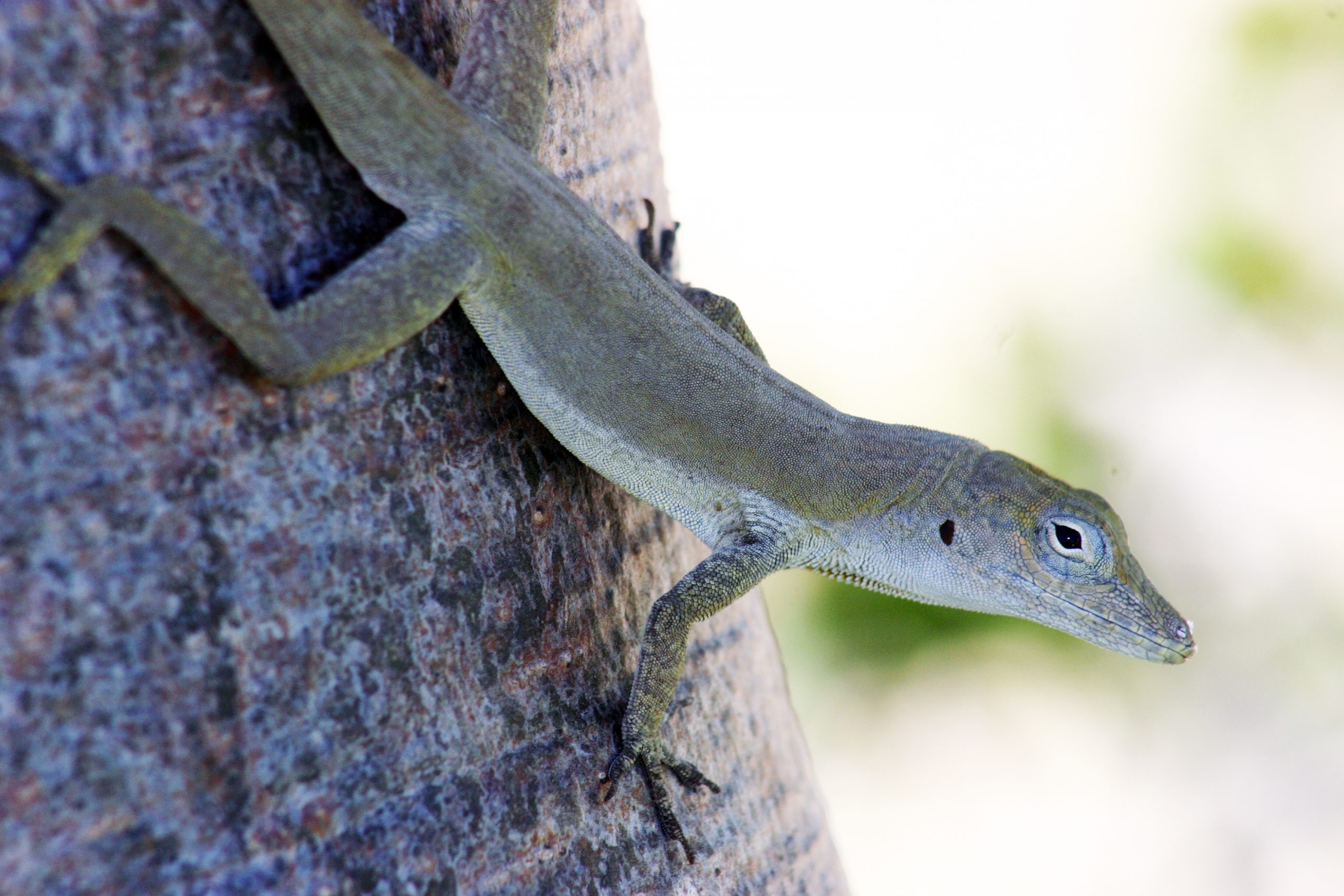
An adult male Turks and Caicos Anole (Anolis scriptus scriptus) watching his territory from the trunk of a tree. Big Ambergris Cay, Turks and Caicos Islands. Photograph by R. Graham Reynolds, UNC Asheville.
Dr Reynolds began studying the islands’ reptiles in 2006, in his first year of graduate school, working alongside Dr Glenn Gerber of the San Diego Zoo Wildlife Alliance:
“This quickly turned into a passion, and I have made studying these animals the focus of my career.
I conduct fieldwork several times a year on the islands, and this year is the 20th year of this work. In that time, I have published dozens of papers on the reptiles of the region and collected a huge amount of data, and I felt that, after two decades, it was time to produce something to showcase everything we’ve learned about these animals.”
Although information on the islands’ reptiles has existed scattered across books, online databases and journal articles, no single resource has previously combined photographs, distribution maps, natural history and conservation status for every species.
“Somewhat surprisingly, there has never been a comprehensive checklist for the terrestrial reptiles of the region.
“Portions of this are available elsewhere, such as distribution maps and some photographs on the online database CaribHerp, or island checklists and natural history information in a book chapter. But this is the first time that all of this information has been brought together to fully describe and illustrate the amazing terrestrial reptiles of the Turks and Caicos.”
Dr Reynolds
Seven of the 11 native species are of conservation concern. The Turks Island Skink is Critically Endangered and may now survive as a single protected population, while the Turks and Caicos Iguana, classified as Endangered, has been lost from around 90% of its historical range. Introduced predators, particularly feral cats and rats, are identified as the main cause of these declines, alongside habitat loss and road mortality.
An adult male Turks and Caicos Curlytail (Leiocephalus psammodromus apocrinus) perches on top of a Turks cap Cactus (Melocactus intortus). Big Ambergris Cay, Turks and Caicos Islands. Photograph by R. Graham Reynolds, UNC Asheville.
The study also revises the taxonomy of the Curly-tailed Lizard, recommending that six previously recognised subspecies be reduced to two, reflecting recent genetic evidence.
Original source
Reynolds RG (2026) An annotated checklist and species accounts of the native terrestrial reptiles of the Turks and Caicos Islands. ZooKeys 1290: 1-33. https://doi.org/10.3897/zookeys.1290.198843
For more articles on zoology, visit the ZooKeys website and follow the journal on BlueSky and Facebook.
New research expands the knowledge on chalcid wasps in Cyprus, with five new species described from the island. One was named after the Greek goddess Aphrodite.
Scientists have described five new species of parasitoid wasp from Cyprus, more than doubling the number of chalcid wasps known to be found nowhere else on the island. The wasps, all belonging to the family Pteromalidae, are small insects that play an important role as natural pest controllers, yet remain poorly studied across much of Southeastern Europe and the Middle East.
“Before the start of this study, our knowledge regarding the chalcid wasp fauna of the Akrotiri Sovereign Base Area (SBA) and the rest of the island of Cyprus was extremely limited,” said Koutsoukos.
Chalcid wasps comprise a hyperdiverse group of insects that serve as biological controllers both in natural and manmade ecosystems, and as such it is crucial to enrich our knowledge, towards understanding their true extend of biodiversity, ecology, and their role in the various trophic webs they participate across different ecosystems.
Ablaxia makrisi, photo credit to Evangelos Koutsoukos.
Erythromalus makrisi, photo credit to Evangelos Koutsoukos.
“Each of the five new species was named with a story behind it. Two of the species [Ablaxia makrisi and Erythromalus makrisi] were named after Mr. Christodoulos Makris, prominent Cypriot entomologist, for his contributions on the Cypriot biodiversity, and for collecting the holotypes of these two species,” Koutsoukos explained.
Hemitrichusakrotiriensis. Photo credit to Evangelos Koutsoukos.
Hemitrichus akrotiriensis takes its name from the Akrotiri peninsula, described by Koutsoukos as “a protected area and one the greatest biodiversity hotspots in Cyprus, where the holotype was also collected from.” Another species, Ablaxia toxeftrae, was named after Toxeftra beach in the Akamas peninsula, where its holotype was found.
The final species carries perhaps the most evocative name of all:
Janssoniella aphrodite was named after the Greek Ancient Goddess Aphroditi, since the holotype of this species was collected in Yeroskipou area of Paphos, where the Goddess was worshipped during ancient times.
said Koutsoukos
Janssoniella aphrodite. Photo credit to Mircea-Dan Mitroiu.
Janssoniella aphrodite, Head, frontal view. Photo credit to Mircea-Dan Mitroiu.
Janssoniella aphrodite, fore wing. Photo credit to Mircea-Dan Mitroiu.
Before this study, only three chalcid wasp species were known to be unique to Cyprus. “Our collecting efforts yielded many more interesting specimens, which might represent new species as well,” said Koutsoukos, “and as such it is evident that these numbers are an underestimation of the true biodiversity of the island.”
“The outcomes of this project will contribute towards the enrichment of our knowledge of the biodiversity, not only of the island of Cyprus and the U.K. SBAs, but the whole region’s as well,” Koutsoukos said.
Original study:
Koutsoukos E, Mitroiu M-D (2026) Enriching inventories of rare genera: five new species of Pteromalidae (Hymenoptera, Chalcidoidea) from Cyprus. ZooKeys 1286: 1-16. https://doi.org/10.3897/zookeys.1286.196157
Researchers have discovered a new genus and species of underground earthworm eel living beneath the Indo-Gangetic Plain in Bihar, northern India. The small, colourless creature, named Gangaichthys indonepalicus, is the first subterranean fish to be recorded from the Gangetic Basin.
Close-up of Gangaichthys indonepalicus. Image credit: Ishan Agarwal.
The investigation began after a short video clip posted on TikTok in 2024 showed an unusual tiny fish emerging from a water borewell near the border between India and Nepal.
“The unique morphology of the fish in the video, and the fact that there are no known stygobitic fish known from the region, motivated us to track down the species to ascertain its identity.”
The Research Team
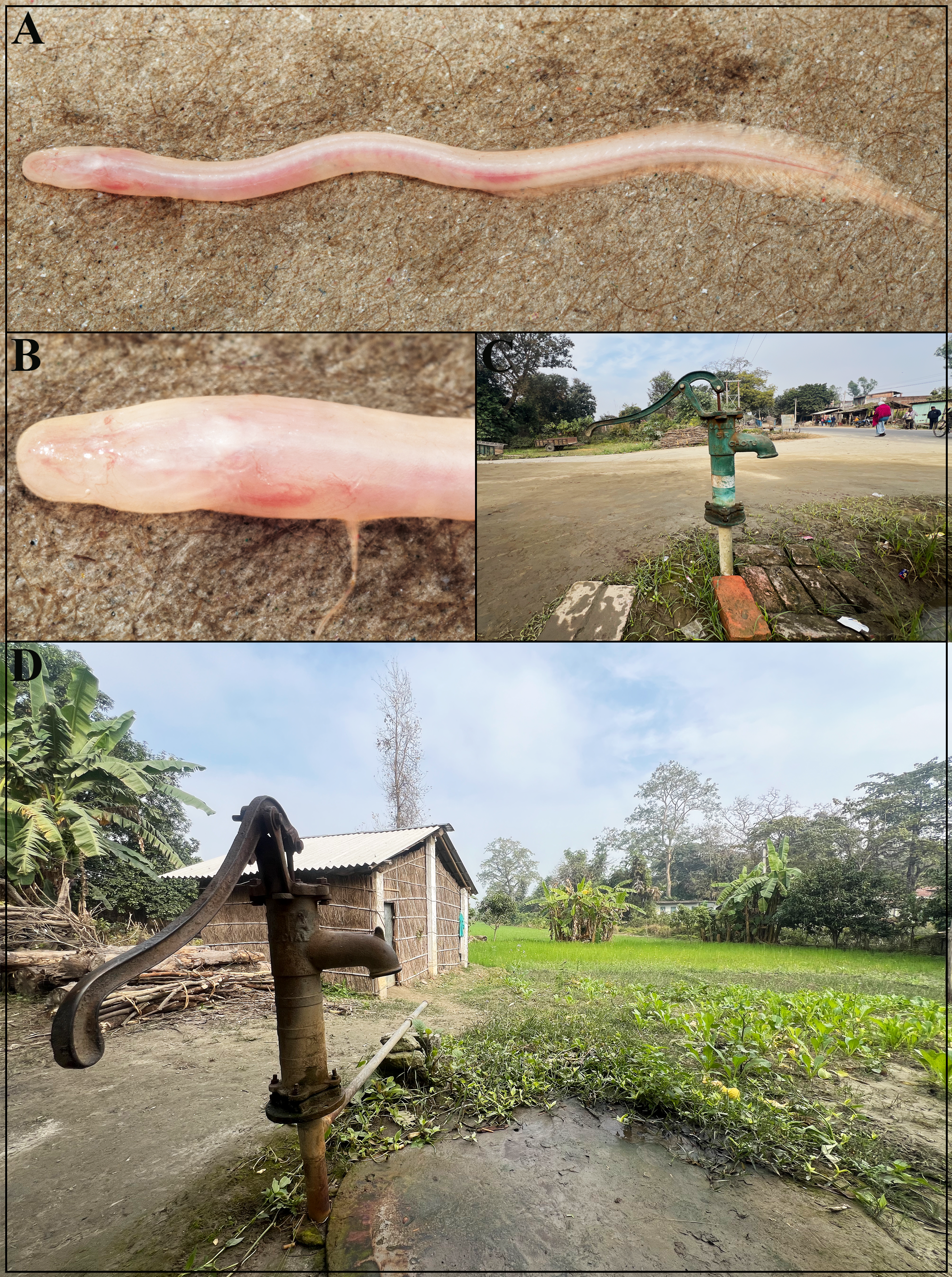
Securing physical samples required an intensive fieldwork effort in Bihar, where the scientists manually pumped thousands of litres of water from local handpumps.
“Procuring samples of this unusual fish was challenging. Identifying potential handpumps (borewells) and wells, and obtaining permission from their owners to extract water for the purpose of searching for the fish proved difficult. This became more intensive when we finally began manually pumping water.”
Akshay Khandekar, Thackeray Wildlife Foundation
Live and habitat photos Gangaichthys indonepalicus: NRC AA 9519, holotype, 40.6 mm SL: Dorso lateral view of: A. Full body; B. Head; C. Bore-well from which holotype and one (damaged) paratype was collected; D. Bore-well from where another damaged specimen was collected. Image credit: Akshay Khandekar et al., 2026.
The first specimen emerged after pumping approximately 2000 litres of water but sustained damage during the process and died immediately. The second and only intact specimen (later designated as the holotype of this species) was found from the same borewell after pumping an additional 500 litres of water.
Gangaichthys indonepalicus in a syringe. Image credit: Ishan Agarwal.
The newly described fish measures roughly four centimetres in length and features physical adaptations suited to life in total darkness, including reduced eyes covered by skin, an unpigmented translucent body, and an apparent absence of ribs.
Advanced micro-CT scanning and genetic analysis confirmed that it represents a completely distinct genus within the earthworm eel family Chaudhuriidae.
“Gangaichthys means fish of the Ganga. The Ganga or Ganges is one of the most important rivers in India, both as a source of fresh water, food and livelihood for millions of people; besides having an important role in the Hindu religion.
This is the first stygobitic fish from the Indo-Gangetic plains and from the Gangetic basin.”
Ishan Agarwal, Thackeray Wildlife Foundation
As for the naming of the species itself, Tejas Thackeray commented:
“As the species occurs on the border between India and Nepal we picked indonepalicus as the specific epithet, which reflects the distribution of the species.”
Agarwal also reflected on the broader context of the find and the challenges of studying subterranean habitats:
“India is an incredibly diverse country, spanning huge gradients in climate and topography and multiple biogeographic regions. However, there is a huge gap in knowledge, both Linnaean and Wallacean shortfalls, with many more species yet to be discovered.
This exciting discovery is in some ways symptomatic of general biodiversity research in India, though sampling subterranean habitats is especially challenging.”
Original source:
Khandekar A, Thackeray T, He Y, Mohapatra A, Agarwal I (2026) Gangaichthys indonepalicus, a new genus and species of miniature stygobitic earthworm eel (Synbranchiformes, Chaudhuriidae) from alluvial aquifers in the Indo-Gangetic Plain, Bihar, northern India. ZooKeys 1289: 185-202. https://doi.org/10.3897/zookeys.1289.188089
For more articles on zoology, visit the ZooKeys website and follow the journal on BlueSky and Facebook.