Call to contribute to a Special Collection “Vegetation of the Balkan Peninsula” in Vegetation Classification and Survey

A newly launched Special Collection “Vegetation of the Balkan Peninsula” in the open-access, peer-reviewed IAVS journal is now welcoming submissions.

Guest blog post by Jürgen Dengler, Erwin Bergmeier and Urban Šilc

We are pleased to announce the Special Collection on the vegetation of the Balkan Peninsula in IAVS’ gold open access journal Vegetation Classification and Survey (VCS).

This Special Collection is launched in conjunction with the annual conferences of two IAVS Working Groups in 2026, namely the 21st Eurasian Grassland Conference of the EDGG in Sofia, Bulgaria, and the 34th Conference of the European Vegetation Survey (EVS), in Clermont-Ferrand, France.

Within Europe, the vegetation of the Balkan Peninsula is particularly diverse yet understudied in terms of composition, variation and range. With this Special Collection, we thus want to advance the knowledge on the Balkan vegetation, take a fresh look both within and beyond national borders and contribute to an improvement of the “EuroVegChecklist” as the common syntaxonomic backbone of the continent. Following VCS’s scope, contributions either need to develop or to apply a vegetation classification framework of any type. For example, this can be based on a phytosociological classification system, habitat types, or synusiae. Studies on any kind of vegetation from the coasts to the highest mountains, from natural through semi-natural to anthropogenic are welcome.

We envisage particularly the following types of contributions:

  • Revisions of syntaxa (classes, orders, alliances…) at the national or supranational level
  • Vegetation monographs of a certain region
  • Synthetic overviews (category Review and Synthesis) of all syntaxa of a country or other larger regions
  • Nomenclatural proposals related to Balkan syntaxa
  • Habitat typologies and their application
  • Long and Short Database Reports
  • Perspectives on how to harmonize and how to utilize syntaxonomic knowledge

Apart from Research Papers, also Reviews and Syntheses and Forum Papers as well as Long Database Reports and Nomenclatural Proposals are welcome. We hope to see submissions from the Balkan countries (Slovenia, Croatia, Bosnia and Herzegovina, Serbia, Montenegro, Kosovo, North Macedonia, Albania, Bulgaria, Greece and Turkey-in-Europe), while syntheses across multiple countries are particularly welcome. Please consult the author guidelines whose formal requirements also apply to the Special Collection.

Editors: Jürgen Dengler (Switzerland), Erwin Bergmeier (Germany) and Urban Šilc (Slovenia); in case of a high number of submissions, one or two additional guest editors might be appointed.

Procedure and deadlines:

  • Until 31 October 2026: Please submit your (preliminary) abstract online at: https://forms.gle/gxofv8FuZQkqFmeK7. The abstract must follow the VCS Author Guidelines.
  • Until 30 November 2026: The Guest Editors will evaluate the abstracts and inform the authors which manuscripts are invited for submission.
  • Until 30 May 2027: Invited manuscripts can be submitted at: https://vcs.pensoft.net/ 
  • Spring 2028: The Special Collection will be completed with a synthesizing editorial by the Guest Editor team.

Please note that VCS is a gold open access journal where authors are normally required to pay article processing charges (APCs). First authors who are IAVS members receive 50% or 75% discount on regular APCs. If you are an IAVS member but cannot afford the reduced APCs (e.g. because your university does not provide APC funds), you can – after invitation and prior to submission – apply to IAVS’ Global Sponsorship Committee (GSC) for a complete waiver of the APCs, i.e. publishing free of charge. If interested, please get into contact with the chair of the Guest Editors.

We look forward to receiving your contributions and hope that you will join us in making this Special Collection a valuable resource for the IAVS community.

Follow Vegetation Classification and Survey on Facebook and Bluesky to stay up to date on the journal’s latest developments. Or subscribe to the journal’s newsletter via the homepage.

Pensoft Joins the Global Lichenology Community at IAL10 in Trieste

The 10th Symposium of the International Association for Lichenology took place in Trieste, where Pensoft showcased its plant science and mycology journal portfolio.

Last week, the 10th Symposium of the International Association for Lichenology (IAL10) took place in Trieste, Italy, from 26 to 31 July 2026, organised by the International Association for Lichenology, the University of Trieste’s Department of Life Sciences and the Italian Lichenological Society.

Held once every four years, the symposium is an important event for the global lichenology community, and this edition proved more popular than ever, drawing over 350 participants from around the world – more than double the number originally expected.

Lichenology is a wonderfully niche field, but IAL10 showed just how far-reaching and collaborative the community is. Delegates travelled from every corner of the globe to discuss taxonomy, lichen-associated microorganisms, biodiversity and conservation, ecophysiology, environmental biomonitoring, and cultural heritage preservation. 

Pensoft’s stand at IAL10

We were pleased to have our own stand at the symposium, where we showcased our journals in plant science and mycology, including:

  • MycoKeys: publishes papers on the monophyletic kingdom Fungi containing taxonomic or ecological data on any taxon of any geological age from any part of the world with no limit to manuscript size;
  • IMA Fungus: considers contributions from all areas of mycology expected to be of interest to the wider mycological community, from basic research to applications
  • PhytoKeys: publishes papers in systematic Botany containing taxonomic/floristic data on any taxon of any geological age from any part of the world 
  • Italian Botanist: publishes original research covering all fields of Botany in its wider sense, including Mycology, ranging from molecular to ecosystem studies
  • Biodiversity Data Journal: publishes papers in biodiversity science containing taxonomic, floristic/faunistic, morphological, genomic, phylogenetic, ecological or environmental data on any taxon of any geological age from any part of the world 
  • Vegetation Classification and Survey: publishes original papers that develop new vegetation typologies as well as applied studies that use such typologies, for example, in vegetation mapping, ecosystem modelling, nature conservation, land use management or monitoring 

It was a great opportunity to speak directly with researchers and students about publishing their work, and to reconnect with authors and editors already part of our community.

Talks that caught our attention

Among the many excellent presentations at IAL10, two in particular stood out to us:

Juri Nascimbene, a subject editor and author at MycoKeys and an author for Italian Botanist, Vegetation Classification and Survey, and Biodiversity Data Journal, presented on the historical lichen collections held at the University of Bologna’s herbarium (BOLO). His talk explored how these collections, some dating back to the work of Ulisse Aldrovandi in the sixteenth century, allow researchers to track species distributions across centuries. 

Using material such as Antonio Bertoloni’s Hortus Siccus Florae Italicae, which contains 850 georeferenced lichen specimens, Nascimbene’s team has been able to trace the long-term presence of species such as Lobaria pulmonaria in the chestnut groves of the Northern Apennines, and the disappearance of cold-adapted species such as Alectoria ochroleuca from high-altitude sites.

It was a fascinating look at how historical herbaria can inform our understanding of global change today!

We also attended a talk by Martin Grube, a reviewer and author at MycoKeys, who challenged the common perception of lichens as slow-growing organisms. His presentation examined the hygroscopic movements lichens undergo as they take up and lose water, and the mechanical stresses this creates within their thalli.

Grube introduced tools for measuring these mechanical properties and discussed what they might reveal about the evolution and function of lichen structures, thus offering a compelling primer on comparative thallus mechanics.

A new special issue in MycoKeys

While at IAL10, we were pleased to announce a new special issue in MycoKeys: Proceedings of the 10th International Conference of the International Association for Lichenology (IAL10), edited by Mauro Tretiach, Fabio Candotto Carniel, and Lucia Muggia. The special issue will bring together original research articles and short communications covering the full breadth of lichen symbiosis research. We look forward to seeing the community’s latest work published there.

Celebrating the award winners

Congratulations to all of this year’s IAL10 award winners:

Group photograph of the award winners at IAL10.

Best Posters

  • Honorata Wacławek, “Phylogenetic insights into freshwater Gyalidea (Gomphillaceae, Graphidales) from the high Andes of Bolivia”
  • Ariel Sebastián Udaeta Sanchez, “First axenic cultures of saxicolous lichens from Tucumán (NW Argentina): growth timelines and representation of under-studied neotropical lineages”

Best Flash Talks

  • Ciaran Kelly, “Comparative genomic analyses of antimicrobial proteins encoded by lichen-forming fungi”
  • Anna Pasinato, “The metabolic divide: fungal genomes reveal an unequal distribution of biosynthetic gene clusters”

Best Oral Presentations

  • Victoria K., “Hidden cohabitants: metagenomic insights into global occurrence patterns of black fungi associated with lichens”
  • Diego Garfias Gallegos, “Central metabolism and development are rewired in lichenized cyanobacteria”

Until next time

IAL10 was a wonderful opportunity to reconnect with the lichenology community, and we were delighted to meet so many authors from our journals in person. Thank you to everyone who stopped by our stand, attended a talk with us, or simply shared a conversation about lichens.

We look forward to continuing our collaboration with the Italian Lichenological Society and seeing you all again at the next symposium. 


Follow us on Bluesky, Facebook, X, and LinkedIn for future conference updates.

A Cretaceous Cold Case: The mysterious affair at Mullurina Mayu (Bolivia)

This study reports a large bowl-shaped depression from Late Cretaceous fluvial deposits in Bolivia, associated with sauropod trackways.

Guest Blog Post by Lara Sciscio and Christian A. Meyer

This study, published in Fossil Record, reports a large bowl-shaped depression from Late Cretaceous fluvial deposits in Bolivia, associated with sauropod trackways. Its morphology and scratch-like traces suggest a biogenic origin, possibly representing titanosaurid digging behaviour or an abandoned nest.

A good mystery always starts with a clue of something that was or shouldn’t have been…

Drone overview of the outcrop in the western part of the Maragua Syncline, Bolivia. Can you spot the palaeosurface with titanosaurid trackways?

The sun beats down on the Bolivian Altiplano as we walk across the rocky grey expanse of a now ancient riverbed, following a trail of fossil sauropod dinosaur tracks. We are in the Maragua region, near Sucre, in the heart of Bolivia.

Studying the trackways, we know they were made by titanosaurs, one of the largest long-necked dinosaurs to have walked the Earth. Then we stop. Within these trackways there lies a large bowl-shaped depression, seemingly carved into the rock. It is ~4 metres wide and over half a metre deep with a frayed, ragged margin.

It is unlike anything our ichnologist eyes have seen before.

Drone view of the Mullurina Mayu surface with the circular structure. Parallel sauropod (titanosaurid) trackways diagonally cut across the surface. Two people are the base of the outcrop are for scale.

Stepping closer, we realise that this is a rare oddity cut into the palaeosurface, and a slew of questions arises: Is this hollow formed by weathering, carved by modern waters? Or is it something older, potentially dug by the largest animals to ever walk the Earth? And then frozen in time?

Excavating loose sand from the structure before taking close-up photos for 3D modelling. In the foreground are titanosaurid tracks.

These questions led us on a scientific detective hunt that stretched back 67 million years, to when titanosaurs walked this part of the Earth. And just short of the asteroid impact that would bring the “Age of Dinosaurs” to an end.

Weathering… or Dinosaurs?

Usually, when we encounter oddly shaped depressions in the rock record, ~99% of the time, the explanation for their formation is weathering and erosion. Nevertheless, you gather evidence and then use it to determine how and what happened. These were our first priorities on encountering the Mullurina Mayu bowl-shaped depression.

As we examined the site in detail, those potential abiotic explanations soon began to fall apart. Hydraulic scours usually have smooth walls and are aligned with the flow of water; weathering pits leave characteristic weathering textures and are grouped in smaller concentrations. This bowl structure had neither, and instead, we noticed many parallel grooves grouped in bundles and oriented around its walls and near its base.

It became evident that abiotic mechanisms were unlikely, and these potential abiotic tool marks (a type of sedimentary structure) were biotic in nature. The presence of these scratch-like marks, their shape, orientations, and distribution indicated that something had been digging.

Close-up of scratch-like marks within an imprint inside the depression (scale bar: 20 cm).

Fingerprints

Our evidence was not in the shape of the depression itself, but the multitude of scratch traces around its perimeter. The walls carried bundles of parallel grooves, ~1 cm wide, several cm’s long, and other isolated claw traces preserved in what would have been mud. These traces were not random but oriented in two directions and indicate movement of an animal’s autopod.

Scratch-like traces associated with sauropod tracks are features known to ichnologists, although a rarity, and have been encountered at several sites, from Colorado (USA), Spain, to Mongolia. Recent discoveries in Mongolia have shown that sauropod feet could leave detailed impressions of their keratinised scales (“fingerprints”). These produce distinct striations, and their patterning and the elongate incisions are evidence that their feet moved through or across the sediment.

The grooves in Bolivia closely resemble those skin-drag traces made by a scaled foot as it repeatedly scraped its feet through and across the muddy riverbank sediment. We infer this as behavioural evidence of an animal, and the most likely is the titanosaur which left its footprints nearby. We had found fingerprints of a titanosaur, excavating, but excavating what?

Building a nest?

This is a question that many may ask: could the titanosaurs be trying to construct a nest? The answer – maybe.

There is a limited body of evidence of nesting scrapes in the fossil record. They are described as depressions which cut into the original sediment (tick), have a distinct rim (tick), and would later be infilled with different sediment (tick!). The strongest evidence for a nest structure, however, would be the presence of eggs, eggshell, or embryos, and this is still missing at the Mullurina Mayu depression. This makes our assumption of nesting less confident.

Instead, we can use the evidence we have to say it was most likely a sauropod dinosaur, using its scaley feet, that excavated the ground, and one possible explanation is that this is an abandoned nesting attempt. Ichnologists advance only because we make careful probabilities rather than claiming certainties where evidence is absent. Nonetheless, this is an exciting discovery for what it shows and for where it leads our imaginations!

What were they doing?

Body fossils (bones) tell us what animals look like, tracks tell us how they moved, how big they may be, and traces like the Mullurina Mayu depression give us a small glimpse of what they were doing. The ichnological (trace) fossil record often captures moments of an animal’s life. Here, we can see a giant titanosaur scraping, digging, and interacting with the environment rather than just looking at its bones.

Whether it was nest scraping, digging for fresh water or mineral salts (like modern elephants) or carrying out some other behaviour we have yet to recognise, what we do know is that the most interesting fossils are not of the animals themselves but the traces of their behaviours, short time shots of their lives, frozen and fossilised in the rock record.

Cover image:

Artistic reconstruction of the Mullurina Mayu bowl-shaped depression during the Late Cretaceous, depicting the probable tracemakers responsible for the Calorckosauripus trackways and possibly the bowl-shaped depression. Illustration by Joshua Knüppe (commissioned 2025).

Original source:

Meyer CA, Heymann JH, Ibarra EC, Flores EL, Sciscio L (2026) Digging Sauropods: excavation behaviour or evidence for nest building? An example from the Late Cretaceous El Molino Formation (Maragua, Bolivia). Fossil Record 29(2): 519-532. https://doi.org/10.3897/fr.29.198794

For more articles on palaeontology, visit the Fossil Record website and follow the journal on BlueSky and Facebook.

Pensoft at ESA 2026: Connecting with the Ecology Community in Salt Lake City, USA

Between 26-31 July, Pensoft Publishers joined more than 2,600 ecologists, researchers, and conservation professionals in Salt Lake City for the 111th Annual Meeting of the Ecological Society of America (ESA2026).

Pensoft Publishers joined more than 2,600 ecologists, researchers, and conservation professionals in Salt Lake City for the 111th Annual Meeting of the Ecological Society of America (ESA2026) between 26-31 July.

Ecology in an Era of Uncertainty

  • Opening ceremony of ESA 2026.
  • Opening ceremony of ESA 2026.

This year’s conference theme, “Ecology in an Era of Uncertainty,” could not have felt more timely. Uncertainty is nothing new to ecological research – it’s built into measurements, mechanisms, and predictions.

But new sources of uncertainty are now reshaping the field: the rise of artificial intelligence, post-pandemic shifts in career development, and growing instability in research funding. Throughout the week, the ESA community came together not only to share cutting-edge ecological research, but also to think collectively about how to navigate these emerging challenges – trading multidisciplinary, creative solutions to keep the field resilient in the face of what’s next.

The Opening Session

The Grand Ballroom was packed for the opening session, where Conference Chairs Daniel Stover and Andrea Swei welcomed attendees. Despite a challenging year for funding and travel, the 111th annual meeting of ESA 2026 hosted 2,600 registered attendees 330 sessions and 884 posters,

The opening address was delivered by Diane Pitaki, Chief Scientist and Vice President for Science at the National Wildlife Federation, who spoke about ecology standing at a crossroads amid the biodiversity crisis and shifting political headwinds, urging the community to actively “defend conservation science.”

Among the meeting’s standout moments was the plenary from Tanya Berger-Wolf, Professor of Computer Science and Ecology at Ohio State University and a leading figure in AI for ecology and biodiversity.

Notably, Berger-Wolf will be a keynote speaker at TDWG 2026 in Oslo (20-25 September) – where Pensoft Publishers will once again be exhibiting, so stay tuned for future updates.

Pensoft’s booth

Situated right at the entrance of the exhibition hall, Pensoft’s booth revelled in attention from attendees throughout the week.

  • Pensoft's team at ESA 2026 in Salt Palace Convention Center.
  • Pensoft's busy stand at the 111th Annual Meeting of the Ecological Society of America.
  • Pensoft's busy stand at the 111th Annual Meeting of the Ecological Society of America.
  • The beautiful Denitsa Peneva's illustrations at ESA 2026.

A particular highlight was our trio of diamond open-access journals – free to publish in and free to read – that drew considerable interest from attendees:

  • Individual-Based Ecology promotes a distinctive individual-based perspective on ecology, aiming to bridge individual behaviour and broader ecological patterns.
  • Advances in Pollinator Research is designed as an innovative platform for the full spectrum of pollinator science, from pollination ecology and pollinator-plant interactions to molecular ecology, conservation, and more.
  • Agricultural and Environmental Modelling (AEM), meanwhile, offers an innovative approach to publishing, dedicated to advancing both the science and practice of modelling across agriculture, food systems, natural resources, and environmental sciences.
  • Brochure of the diamond open-access Individual-Based Ecology Journal.
  • Close up photo of the Advances in Pollinator Research brochure at ESA 2026.
  • Nicole Nogoy, managing editor of Agricultural and Environmental Modelling at ESA 2026.

Attendees curious about AEM had the chance to speak directly with its Managing Editor, Nicole Nogoy, who was on site throughout the conference to discuss publishing opportunities and promote the journal’s search for Subject Editors. 

The booth also gave visitors a window into the rest of Pensoft’s open-access portfolio. On the conservation side, that meant Nature Conservation and Neotropical Biology and Conservation; on the ecosystem side, One Ecosystem, Frontiers of Biogeography, and NeoBiota. 

  • NeoBiota brochure presented at ESA 2026.
  • Neotropical Biology and Conservation brochure at ESA 2026.

Attendees also had the chance to learn more about our diamond open-access journal Estuarine Management and Technologies, which was accepted into the Directory of Open Access Journals (DOAJ) earlier this year. 

Estuarine Management and Technologies brochure.

Rounding out the display were several more specialised titles: Biodiversity Data Journal and Metabarcoding and Metagenomics; Quite popular amongst the visitors were also our our fungi-focused IMA Fungus and MycoKeys journals; and our vegetation titles, Vegetation Classification and Survey and Vegetation Ecology and Diversity.

We also introduced attendees to our newest addition, the diamond open-access Journal of Regeneration. For those interested in sharing early-stage research or project outcomes, Research Ideas and Outcomes (RIO) offered another avenue worth exploring, publishing everything from project proposals and data to policy briefs and null results.

Those looking for a new publisher or white-label solutions had the opportunity to explore ARPHA, Pensoft’s own publishing platform, which supports the full journey from manuscript writing and peer review to publication, dissemination, and archiving – all in one seamless workflow. 

Combined brochure of EU-Funded project in which Pensoft participates.

Beyond the journals and publishing solutions, the team took the opportunity to spotlight some of Pensoft’s ongoing EU-funded projects, including our pollination initiatives and our continued work with eLTER. 

Two Interactive Activities at Our Booth

Building on the success of interactive formats at previous events, namely the Fortune Wheel at the 8th European Congress of Conservation Biology in Leiden, our team brought two activities to ESA2026.

The Pensoft Species Quiz

Attendees taking our fun quiz at ESA 2026.

This time around, our team created “Pensoft Species Quiz,” challenging booth visitors to identify the correct Latin name for a series of species beautifully illustrated by Denitsa Peneva. Being more than just a fun activity, it became a natural conversation starter – leading into deeper discussions about Pensoft’s journals, services, and potential collaborations with attendees.

  • Some of the winners from our quiz at ESA 2026.
  • Some of the winners from our quiz at ESA 2026.
  • Some of the winners from our quiz at ESA 2026.
  • Attendees interacting with our fun quiz.

The Agricultural and Environmental Modelling Poster Award

AEM’s Managing Editor – Nicole Nogoy ran a poster competition at the meeting, and it turned out to be one of the highlights of our week. Three researchers stood out:

  • Julian Resasco (University of Colorado, Boulder) took home the prize for overall best presentation with a hand-drawn comic-book poster on climate change effects on Basque country thistles;
  • Gwendolyn Lloyd (Indiana University) impressed us with her research on arthropods and mites in agricultural soils;
  • Emily Redding (Fort Hays State University, KS) joined in with a poster on fire suppression’s effects on Juniper-dependent bird species, having been inspired to bring modelling into her own research. 

We also took part in a raffle organised by ESA, to which each exhibitor contributed a prize.

  • Kanchana Balasubramanian one of the winners of Pensoft Publishers' raffle prizes at ESA2026.
  • Elizabeth Afkhami Searcy received our book "Mapping Ecosystem Services" as part of the Ecological Society of America's conference raffle.

Looking Ahead

ESA2026 was a strong reminder of just how much energy – and uncertainty – is currently shaping the ecology community. Between thought-provoking plenaries on AI and conservation science, engaging conversations sparked by our species quiz, and the enthusiasm we saw around the AEM poster competition, it was a week full of meaningful connections for Pensoft.

We’re already looking forward to the next time, and we hope you’re looking forward to it, too!

Keep up with future updates and news by following us on Bluesky, Facebook, X, and LinkedIn.

China’s First Cave-Dwelling Freshwater Snail Named After A Mythical Mountain God

This study marks the first freshwater cave snail ever recorded in China, and it represents the highest-altitude distribution known among cave-dwelling species in the family Erhaiidae.

Recently published in the journal Subterranean Biology, the research marks a major milestone for the study of subterranean aquatic life in East Asia. Prior to this discovery, there were no records of freshwater cave snails within Chinese territory, and the region’s subterranean freshwater mollusks were generally poorly studied. 

Mythological Namesake and Unique Adaptations 

Perfectly suited to its pitch-black environment, Erhaia dijiang is a true troglobiont, having evolved without eyes entirely while its ocular structures show total degeneration. Its shell is small, conical, and highly translucent, while its body is delicate and unpigmented, with slender tentacles.

 Natural habitats of Erhaia dijiang. Credit to He et al., 2026.

Fittingly, researchers named the species dijiang after “Di Jiang,” a mountain patron god from ancient Chinese mythology described as a faceless beast in the classic text Classic of Mountains and Seas (山海经). The name suits the animal’s habits: in laboratory observations, the snails proved highly photophobic, actively seeking out dark crevices beneath rocks to escape light.

Beyond its mythological namesake, the species is also notable for where it was found. Discovered at an elevation of 2,062 meters, Erhaia dijiang sets a new record for the highest-altitude distribution among all known cave-dwelling snails in Erhaiidae, evidence that freshwater cavesnails can survive in karst caves at altitudes exceeding 2,000 meters.

Erhaia dijiang
Species of Erhaia dijiang. Credit to He et al., 2026.

According to the researchers, the species inhabits underwater gravel and crushed stone at depths of less than one meter, where cave water temperatures remain consistently near 20°C. While rapid water flow during the rainy season occasionally flushes a small number of snails out through the cave’s outlet, they are never found in nearby surface streams and stay strictly within two meters of the cave entrance. In the lab, the snails fed on diatoms growing on rock surfaces as well as artificially supplied fish food.

Urgent Call for Conservation 

Erhaia dijiang new cave snail from China
Erhaia dijiang. Credit to He et al., 2026.

However, despite marking a significant advance for the study of subterranean aquatic life in East Asia, the research team warns that the survival status of this newly discovered species is “far from optimistic.”

During their initial field survey in August 2025, the population density of Erhaia dijiang was found to be extremely low. The team was only able to locate three live adult individuals and a single empty shell in the shallow underground waters, and no juvenile snails were observed.

The researchers are urgently calling for extensive surveys of Chinese caves to improve our understanding of these complex ecosystems, along with the rapid formulation of conservation measures to protect these vulnerable, endemic mollusks.

Original study:

He Y-M, Xiang H-Q, Yang J-M, Zheng H, Yang S-Z, Zhou Y-F, Zheng J (2026) A new eyeless species in Erhaiidae (Gastropoda, Truncatelloidea) from a cave in Yuxi City, Yunnan, China. Subterranean Biology 56: 127-136. https://doi.org/10.3897/subtbiol.56.188075 

Hidden Freshwater Giants Could Become The World’s Next Climate Observatories

International research team identifies South America’s unique coastal lake system as a global hotspot for tracking environmental change

More than 100 shallow lakes stretching over 1,000 kilometers along the Atlantic coast of southern Brazil and Uruguay could become one of the world’s most important natural laboratories for understanding how climate change and human activities reshape freshwater ecosystems.

An international team of researchers reports that these largely overlooked subtropical lakes offer an unparalleled opportunity to monitor biodiversity, water quality, pollution, and ecosystem resilience in a rapidly changing world.

Published in One Ecosystem, the study is the first comprehensive assessment of the Southern American Coastal Shallow Subtropical Lakes, highlighting their global scientific importance and outlining a roadmap for long-term international monitoring.

The Tramandaí Lagoon estuary
The Tramandaí Lagoon estuary, located between the municipalities of Imbé (left side of the channel) and Tramandaí (right side of the channel) in Rio Grande do Sul, Brazil, connects a complex of more than 40 coastal lakes to the Atlantic Ocean. Credit: CECLIMAR Collection (Photo credit: Acervo CECLIMAR).

“Most of what we know about lakes comes from the Northern Hemisphere,” says lead author Mariana Kluge of the Swedish University of Agricultural Sciences (SLU).

These subtropical lakes fill a major gap in global freshwater research. They allow us to test ecological theories under very different environmental conditions while providing crucial insights into how subtropical freshwater ecosystems respond to climate change and increasing human pressures.

adds Prof. Renata Medina-Silva of Pontifical Catholic University of Rio Grande do Sul (PUCRS)

The lake network forms one of the largest continuous coastal shallow-lake systems on Earth. Despite its extraordinary size and diversity, it has received far less scientific attention than well-known freshwater systems elsewhere in the world. Yet the region is already experiencing many of the environmental challenges, expected to intensify in the coming decades – including a direct impact of the El Niño Southern Oscillation – alongside heavy urbanisation, which has  driven eutrophication, agricultural and wastewater pollution, emerging contaminants such as pharmaceuticals and microplastics, and increasingly frequent extreme rainfall and flooding events.

Coastal lakes from South America
Overview of the environmental heterogeneity found across South America’s unique coastal lake systems. Credit: Kluge et al., 2026.

Christian Wurzbacher of the Technical University of Munich argues that these lakes can serve as “sentinel ecosystems“- natural observatories that reveal early signs of environmental change. By combining microbial ecology, environmental DNA, remote sensing, water chemistry, and long-term ecological monitoring, scientists hope to develop new indicators capable of detecting ecosystem stress before irreversible damage occurs.

Our vision is to establish an internationally coordinated monitoring network that not only benefits South America, but also improves our understanding of freshwater ecosystems worldwide. The microbial communities living in these lakes can act as highly sensitive biological sensors, helping us identify pollution, ecosystem degradation, and even emerging public health risks.

says Prof. Haig of the Federal University of Rio Grande do Sul (UFRGS).
lakes in South America
Despite their high ecological value, these lakes are under increasing pressure from eutrophication, urban growth, and competing human uses such as water supply, irrigation, navigation, fishing, recreation, and sewage disposal. Credit: Kluge et al., 2026.

The publication emerged from an international workshop held at two universities – PUCRS and UFRGS – in Porto Alegre, Southern Brazil, bringing together researchers from Brazil, Uruguay, Germany, and Sweden to define future research priorities. The team identified four representative large-scale lake regions that together capture the broad environmental gradients across the system and offer ideal sites for coordinated long-term observation.

As climate change accelerates and pressures on freshwater resources continue to grow, the researchers believe that protecting and studying these remarkable lake systems will generate knowledge extending far beyond South America – informing global strategies for safeguarding biodiversity, improving water management, and strengthening resilience to environmental change.

Original source:

Kluge M, Shubeita A, Uchaikina A, Alonso C, Herrman B, Menegotto-Silva C, Lopes C, Pagani D, Marques D, Moreira-Silva E, Kristiansson E, Quintana I, Cavalcanti J, Fleck J, Ribeiro K, Varghaei L, Oliveira L, Rodrigues LR, Ramilo L, Crossetti L, Stockenreiter M, Cabezudo M, Lima M, Gonçalves NP, Mazzeo N, Schneider R, Utz LP, Bertilsson S, Wurzbacher C, They NH, Medina-Silva R (2026) Coastal subtropical Southern American shallow lakes as unique ecosystems for monitoring anthropogenic induced ecosystem changes. One Ecosystem 11: e186107. https://doi.org/10.3897/oneeco.11.e186107 

Connecting Science and Conservation: Pensoft at the 21st Eurasian Grassland Conference

As a longstanding supporter of vegetation science publishing, and publisher of Vegetation Classification and Survey, Pensoft was proud to sponsor EGC 2026 and attend throughout the week.

From 19 to 23 July 2026, Sofia hosted the 21st Eurasian Grassland Conference (EGC 2026), organised by the Eurasian Dry Grassland Group (EDGG), a working group of the International Association for Vegetation Science (IAVS). EDGG is dedicated to research on, and the conservation of, natural and semi-natural grasslands across the Palaearctic biogeographic realm, spanning any taxonomic group, whether plants and vegetation, animals or fungi.

This year’s conference was held under the theme “Connecting science and conservation for grassland sustainability”, with the aim of highlighting how research into grassland ecosystems connects with management practices and conservation goals on the ground.

Grasslands, particularly species-rich semi-natural grasslands and Eurasian steppes, are among the most threatened habitat types in one of the most heavily urbanised and intensively managed regions in the world, despite providing a wide range of ecosystem services. Bringing scientific knowledge together with conservation practice was therefore a central thread running through the week.

The conference was hosted by the Institute of Biodiversity and Ecosystem Research (IBER) at the Bulgarian Academy of Sciences. IBER conducts research across fundamental and applied ecology, biodiversity, nature conservation and the sustainable use of biological resources. The institute also provides scientific and methodological support to state institutions and NGOs, making it a fitting host for a conference concerned with the practical application of grassland science.

As a longstanding supporter of vegetation science publishing, and publisher of Vegetation Classification and Survey (VCS), one of IAVS’s official journals, Pensoft was proud to sponsor EGC 2026 and attend with an information stand throughout the week.

A gathering of the grassland community

EGC 2026 brought together around 60 participants, from early-career researchers to established names in vegetation science. Among the attendees were several members of the editorial board of VCS, including Editors-in-Chief Idoia Biurrun and Jürgen Dengler, as well as members of the IAVS council:

We were also delighted to catch up with authors who have published with us across several of our journals, including Biodiversity Data Journal (Naim Berisha), PhytoKeys (Marcin Nobel) and VCS (Arkadiusz Nowak).

Our stand attracted a steady flow of visitors over the course of the week:

Throughout the event, we shared our vegetation science portfolio, including VCS and Vegetation, Ecology and Diversity (VED), with strong additional interest in our following open-access journals:

  • Biodiversity Data Journal (BDJ) – a community peer-reviewed journal, designed to accelerate publishing, dissemination and sharing of biodiversity-related data of any kind.
  • MycoKeys – dedicated to the taxonomy, phylogeny, biogeography, evolution and ecology of the fungal kingdom, including lichens, and publishing everything from new species descriptions to checklists, monographs and methodology papers.
  • Nature Conservation – a rapid, peer-reviewed journal spanning all aspects of nature conservation, from populations to whole ecosystems, and from microorganisms and fungi to higher plants and animals.

A new special feature on the way

We were pleased to learn, just ahead of the conference, of a forthcoming VCS special feature tied to the event: “Vegetation of the Balkan Peninsula”, edited by Jürgen Dengler, Erwin Bergmeier and Urban Šilc.

The special feature welcomes contributions on any vegetation type from the Balkan Peninsula, including syntaxon revisions at national or supranational level, regional vegetation monographs, synthetic overviews of a country’s or region’s syntaxa, nomenclatural proposals, habitat typologies and applications, and long and short database reports.

VCS offers Gold Open Access publishing, holds a Journal Impact Factor of 2.7, and provides reduced article processing charges for IAVS members, with the option of complete waivers. Further details on the special feature will be announced soon on the VegSciBlog and across Vegetation Classification and Survey’s channels.

Scientific highlights

The five-day scientific programme was organised around five sessions: patterns, classification and biogeography of Palaearctic grasslands; grasslands of the Balkan Peninsula; animals in Palaearctic grasslands; innovative methods, experimental approaches and open science in grassland research; and global change, conservation, restoration and management of Palaearctic grasslands.

One of the highlights of the week was our own Head of Journal Development and PR, Iva Boyadzhieva, presenting on how Pensoft supports FAIR publishing for biodiversity and conservation research. Her talk set out how, as biodiversity and sustainability research gains momentum through greater international and interdisciplinary collaboration and the pressures of an unfolding environmental crisis, bridging scientific knowledge and conservation practice has become ever more critical.

We also enjoyed Editor-in-Chief of VCS Jürgen Dengler’s talk on global change in European grasslands, which drew on regional resurveys of historic vegetation plots, combined analyses of multiple resurvey datasets, and decades of plot data from the European Vegetation Archive (EVA).

Anna Kuzemko’s talk on the impact of military actions on the steppe ecosystems of Ukraine was another highlight of the week. Her research offered a valuable basis for prioritising and planning the restoration of Ukraine’s damaged steppe habitats going forward.

Awards

Pensoft also sponsored a best presentation and poster competition at the conference. Best Presentation was awarded to Sara Nigro for her talk “Climate and management changes drive semi-natural grassland community assembly over twenty years”, based on the resurvey of 49 vegetation plots in central Italy over two decades, revealing how climatic warming and shifting management practices are reshaping mountain semi-natural grasslands.

Best Poster went to Nadiia Skobel for “Drivers of vascular plant diversity in cultural heritage sites: a case study of old cemeteries (southern Ukraine)”, which showcased how old cemeteries in the grass steppe zone of southern Ukraine act as important refuges for native and steppe specific flora amid widespread habitat loss elsewhere in the region.

Looking ahead

EGC 2026 offered a valuable opportunity to connect with the authors, editors and researchers who make up the vegetation science community, and to see first hand how grassland research is being put to work for conservation across the Palaearctic. The next Eurasian Grassland Conference will take place in 2027 in Dilijan, Armenia – stay tuned for further updates!

Follow us on Bluesky, Facebook, X, and LinkedIn for more future updates.

Amazonian ‘zombie’ fungus harbours a hidden stage inside forest mosses, new study reveals

Research led by INPA scientists reveals that the parasite, famous for altering ant behavior, also shelters within vegetation, suggesting a dual ecological journey never before observed in manipulating lineages of the genus.

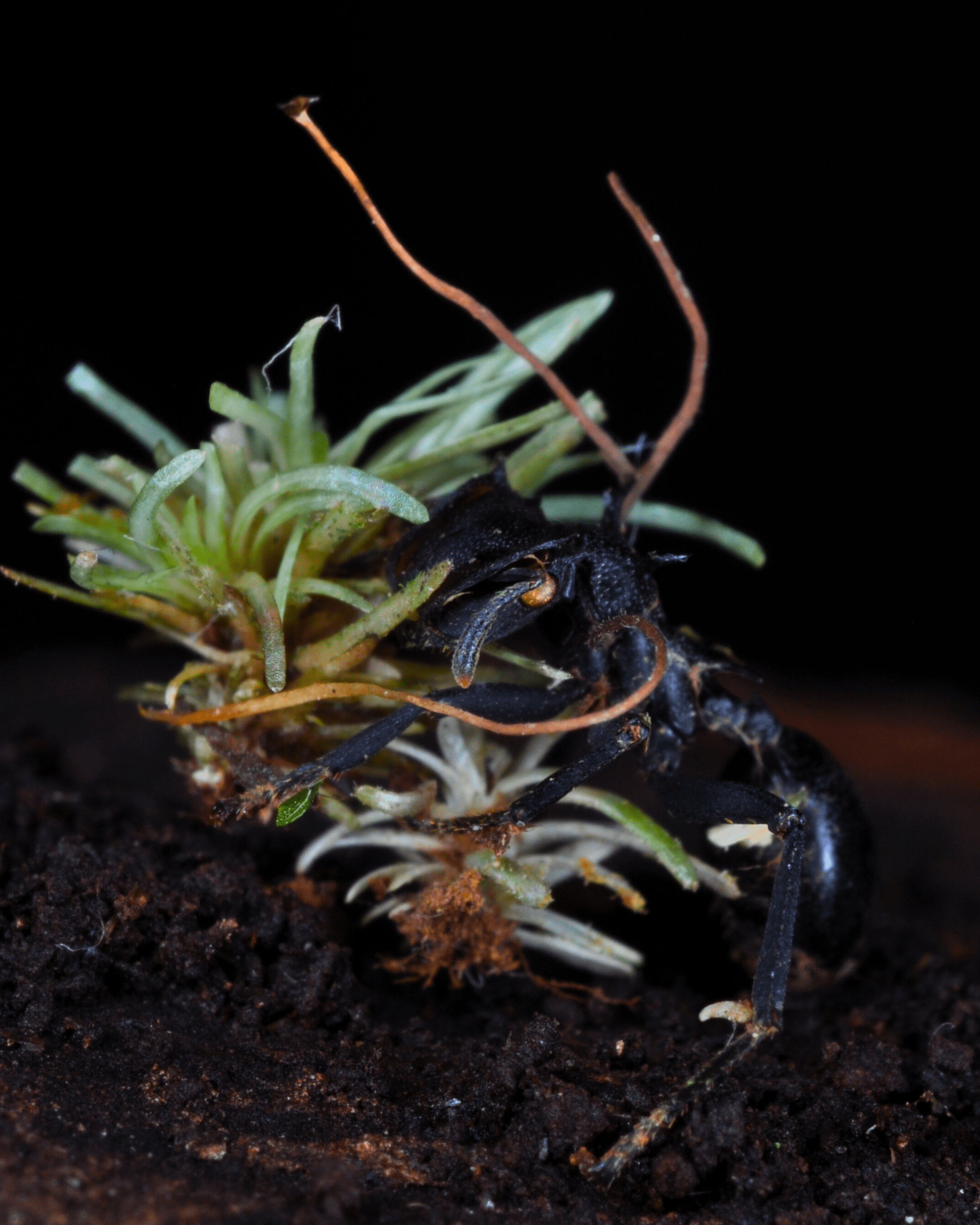
A team led by researchers at the National Institute for Amazonian Research (INPA), in Manaus, has found evidence that the “zombie-ant” fungus (genus Ophiocordyceps), globally known for controlling ant behavior and forcing infected ants to bite onto plants before dying, also lives hidden inside mosses in the Amazon rainforest.

By analysing the DNA of mosses collected at the Ducke Reserve in Manaus, the scientists detected the same parasitic fungus present not only in infected and manipulated insects, but also in the mosses where the infected insect is manipulated to bite. This indicates that the fungus has one life stage as an insect parasite and another, endophytic (living inside the plant) stage that had gone unnoticed until now.

The genus Ophiocordyceps comprises more than 350 species of fungi known for infecting a wide range of insects. Some of these species are famous for a behaviour that sounds like science fiction: after infecting an ant, the fungus alters its behaviour and forces it to leave the colony, climb the vegetation, and clamp its mandibles onto a specific spot, the so-called “death grip,” shortly before dying and releasing its spores.

In 2020, studies in China had already shown that a species from the same genus, known as “Himalayan gold” (O. sinensis), lived endophytically in plants in alpine regions. The major breakthrough of this new INPA study is demonstrating this same dual lifestyle in fungi that manipulate the insect to specifically and consistently bite plants that harbor the endophytic stage of the “zombie fungus.”

This suggests that the behavioral manipulation goes beyond the fungus-ant association, and that the plant harbouring the fungus’ endophytic phase may also possibly influence the manipulation itself.

The research, published in the open-access journal IMA Fungus, was carried out at the Adolpho Ducke Forest Reserve, north of Manaus, and relied on metabarcoding, a technique that allows researchers to read the DNA of all fungi present in an environmental sample at once.

Ophiocordyceps-infected insects found attached to bryophytes. Camponotus renggeri ant infected by O. camponoti-renggeri (TAJ32) biting into a Plagiochila liverwort while gripping an Octoblepharum moss with its tarsal claws. Image credit: Tales Alves-Júnior et al.

The results revealed that the fungus was present not only in infected ants but also consistently in the surrounding mosses, including in plants located more than 10 metres away from any ant infected by the parasite.

In the Amazon, researchers had already noticed that some manipulated ant species predominantly seek out mosses to bite for the “death grip,” but little was known about a possible prior colonisation of the moss by the same insect-parasitising fungus.

DNA analyses showed that even highly host-specialised fungal lineages, such as O. camponoti-nidulantis (infecting Camponotus nidulans) and O. kniphofioides (infecting Cephalotes atratus), were sheltered within bryophytes in the surrounding vegetation.

Ophiocordyceps kniphofioides in a turtle ant (Cephalotes sp.), found attached to an Octoblepharum moss. Image credit: Tales Alves-Júnior.

The discovery reshapes our understanding of the life cycle of these fungi and how these organisms evolve and survive. The ability to associate with plants may help the fungus persist through periods when insect hosts are scarce, and could also help explain the intriguing fidelity of certain fungal lineages to specific moss types.

“We have always thought of this fungus (Ophiocordyceps) as a parasite exclusive to insects, especially the ones it manipulates. What our data suggest is that the story is much larger: the same fungus appears to be ubiquitous in the surrounding moss communities. Our results illustrate a far closer link between the lifecycles of the plants and fungi involved in the behavioral manipulation of Amazonian ants.”

Tales Alves Jr., biologist, Master’s in Botany from INPA and lead author of the study.

“The well-known behavioral manipulation caused by Ophiocordyceps may not result solely from the interaction between fungus and ant, but from a complex relationship among the fungus, its host, and the plant where the same fungus lives silently as an endophyte.”

João Paulo Machado de Araújo, co-author and researcher at the Natural History Museum of Denmark (University of Copenhagen).

Original source

Alves-Júnior T, Araújo JPM, Góes-Neto A, Mendes-Pereira T, Zartman CE (2026) Metabarcoding reveals a hidden endophytic stage of the ‘zombie-ant’ fungus in Amazonian mosses. IMA Fungus 17: e196998. https://doi.org/10.3897/imafungus.17.196998

A New Checklist For The Birds Of Calabria: 363 Species At Mediterranean Crossroads

Calabria’s updated bird checklist now lists 363 species, 43 more than in 1993, including Italy’s first documented breeding White-rumped Swift and continued Egyptian Vulture nesting.

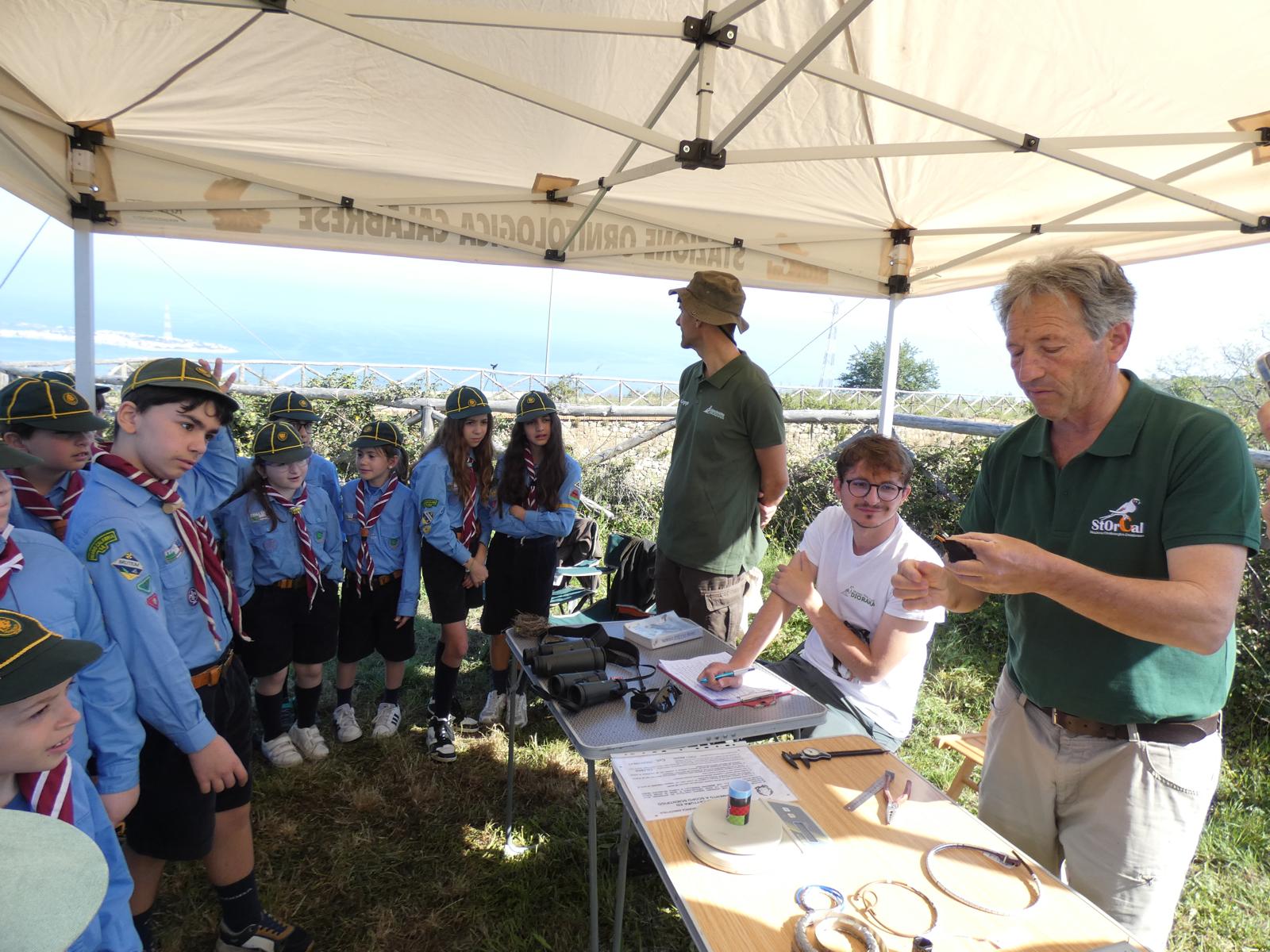
Guest blog post by Stazione Ornitologica Calabrese (StOrCal)

Calabria, the toe of the Italian peninsula, lies between the Tyrrhenian and Ionian seas, a short crossing from Sicily and the North African coast. That position has long made it a place where birds from very different regions turn up. Yet its avifauna had not been reviewed in full for more than thirty years.

Our study in Biodiversity Data Journal brings that picture up to date. Drawing on published papers, technical reports, ringing bulletins, museum specimens and validated citizen-science records up to 31 December 2025, we compiled an updated checklist of 363 species and nine subspecies.

That is 43 species more than the previous regional list of 320 (Scebba et al. 1993). None of the older records was dropped, so the additions represent a real gain in regional knowledge.

White-rumped Swift Apus caffer
White-rumped Swift, whose first Italian and central-Mediterranean breeding was documented in Calabria (Pucci et al. 2022). Photo credit: Mario Pucci.

One addition stands out. At an inland site in the province of Crotone, White-rumped Swift (Apus caffer) was found nesting, the first documented breeding of the species in Italy and in the central Mediterranean Basin (Pucci et al. 2022). An African swift breeding this far north suggests Calabria may be a bridgehead for Afro-Iberian species reaching Europe.

Bird ringing
Bird ringing at Punta Alice, where several of the region’s rare vagrants were first detected. Photo credit: Mario Pucci

Most of the other new entries tell a quieter story. Thirty-five of the 43 additions are accidental or vagrant birds, and they point to decades of more systematic fieldwork rather than to genuine range change. Targeted ringing at coastal stations such as Punta Alice (Crotone) and San Michele di Cetraro (Cosenza) has turned up Siberian warblers and flycatchers, among them Pallas’s Leaf Warbler, Dusky Warbler and Red-flanked Bluetail, that would otherwise pass unnoticed. In all, the vagrants recorded in Calabria come from Asia, Africa, northern Europe and even North America, a spread that makes the region a meeting point of separate migration systems.

The checklist also shows what is at stake for conservation. Of the 363 species, 125 are listed in Annex I of the EU Birds Directive, and national Red List categories are available for 230, including nine Critically Endangered.

Egyptian Vulture Neophron percnopterus
Egyptian Vulture, one of the Critically Endangered raptors still breeding in Calabria. Photo credit: Pierpaolo Storino

Most of the Critically Endangered birds depend on wetlands, tied to a small and fragmented network of coastal marshes. Among the region’s emblematic raptors is the Egyptian Vulture (Neophron percnopterus), still breeding in Calabria but represented in Italy by a small population with worrying fluctuations in the number of breeding birds, a reminder of how precarious the country’s cliff-nesting and scavenging raptors remain.

The full dataset is openly available on Zenodo, and the work is coordinated by the Stazione Ornitologica Calabrese (StOrCal), which brings the region’s observers together under shared standards. Much is still missing: the inland massifs of Pollino, Sila and Aspromonte remain under-surveyed, and breeding densities are poorly known for most species. The checklist gives that work a verifiable point to build on.

Original source:

Urso S, Martino G, Muscianese E, Policastrese M, Pucci M, Vena M, Storino P (2026) Updated checklist of the birds of Calabria (southern Italy). Biodiversity Data Journal 14: e195967. https://doi.org/10.3897/BDJ.14.e195967

Sunrise Over the Seabed: New Shrimpgoby Species Named for the “Sunrise of Java”

Researchers have described a beautiful new species of shrimpgoby from the coastal waters off Banyuwangi, East Java, and given it a name that pays tribute to both its fiery colouration and birthplace.

Researchers have described a beautiful new species of shrimpgoby from the coastal waters off Banyuwangi, East Java, and given it a name that pays tribute to both its fiery colouration and its birthplace.

Published in the open-access journal ZooKeys, a team led by Kunto Wibowo of the Museum Zoologicum Bogoriense, part of Indonesia’s National Research and Innovation Agency (BRIN), has formally described Tomiyamichthys oriens sp. nov., a small reef fish characterised by radiant orange blotches along its flanks and a pair of elegant filaments trailing from the first dorsal fin of males.

Holotype of Tomiyamichthys oriens sp. nov., male, 35.6 mm SL, off Banyuwangi, East Java, Indonesia. Image credit: Kunto Wibowo et al.

The two specimens on which the description is based, a male and a female each measuring roughly 35.5 mm in length, were first brought to the researchers’ attention by the ornamental fish exporter CV Cahaya Baru, having been collected from sandy shallows off Banyuwangi. Both are now housed at the Museum Zoologicum Bogoriense in Bogor.

The name oriens is where this discovery really shines. It is a Latin participle meaning “east” or “the rising sun”, chosen for two reasons. Firstly, it evokes the fish’s own vivid orange markings, said to recall the hues of a sunrise. Secondly, it honours the species’ place of origin: Banyuwangi sits at the easternmost tip of Java and is popularly known throughout Indonesia as “The Sunrise of Java”. The authors have given the fish the English common name Oriens Shrimpgoby.

Tomiyamichthys oriens belongs to a genus of shrimp-associated gobies found across the tropical Indo-Pacific, from the Red Sea to Fiji. Its closest known relative is T. hyacinthinus, a species only recently described from southern Japan. The two share a rare combination of features within the genus: nine segmented rays in both the dorsal and anal fins, and, in males, two elongated filamentous spines on the first dorsal fin.

Paratype of Tomiyamichthys oriens sp. nov., female, 35.5 mm SL, off Banyuwangi, East Java, Indonesia. Image credit: Kunto Wibowo et al.

Despite this resemblance, the Indonesian fish can be told apart by a suite of subtle differences, including its number of pectoral fin rays, branched caudal fin rays, longitudinal scale rows and gill rakers, as well as finer details of its colour pattern. Genetic analysis of the mitochondrial COI gene reinforced the case for a distinct species, revealing a divergence of 3.1% between the Indonesian and Japanese fish.

The discovery adds to an already remarkable tally for Indonesia, which sits at the heart of the Coral Triangle and now hosts 13 recognised species of Tomiyamichthys, more than any other country. According to local fishermen consulted during the study, the new species favours sandy bottoms in shallow coastal water, though its relationship with the burrowing alpheid shrimps typically associated with the genus has yet to be directly observed in the wild.

The description brings the total number of valid Tomiyamichthys species worldwide to 21, underscoring how much remains to be learned about the small reef fishes that share Indonesia’s waters with its shrimp partners.

“It is always exciting to discover a species that is new to science. We hope this finding will inspire further exploration of Indonesia’s fish biodiversity, where many small and overlooked species are likely still awaiting discovery.”

Kunto Wibowo

Original source:

Wibowo K, Pratiwi HM, Dharmayanthi AB, Tjiptadi D, Tarmini W, Priyadi A, Kusumah RV (2026) Tomiyamichthys oriens, a new species of shrimpgoby (Teleostei, Gobiidae) from the coast of Banyuwangi, East Java, Indonesia. ZooKeys 1283: 67-77. https://doi.org/10.3897/zookeys.1283.194940

For more articles on zoology, visit the ZooKeys website and follow the journal on BlueSky and Facebook.